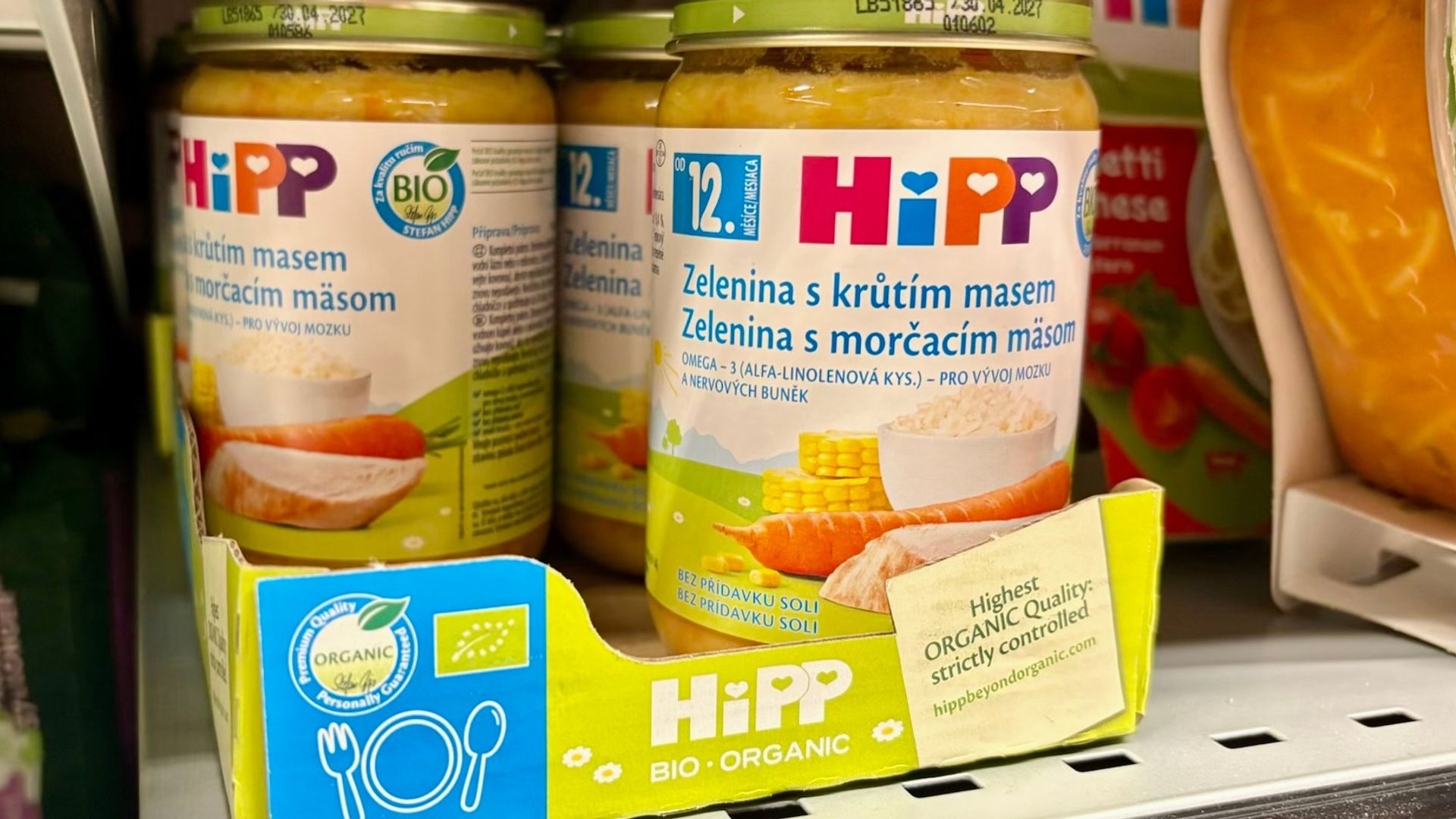
The safety seal on a 190-gram jar of HiPP carrot and potato puree is designed to pop with a reassuring click, a sound that serves as a universal guarantee of industrial purity for parents. In Austria this week, that click became a potential death warrant. Authorities confirmed that multiple jars of baby food sold through SPAR supermarket chains were laced with rat poison, a discovery that has triggered a massive recall across Central Europe and exposed a chilling vulnerability in the retail supply chain.
This is not a story of factory negligence or a breakdown in hygiene standards. It is a criminal act. While the initial headlines focused on the immediate danger to infants, the underlying reality points toward a calculated extortion attempt aimed at one of Europe’s most trusted brands. The Austrian Agency for Health and Food Safety (AGES) and police in the Burgenland region are now navigating a landscape where the weapon is a common rodenticide and the target is the psychological security of every parent in the Eurozone.
The Anatomy of the Tampering
The mechanics of the contamination suggest a deliberate, manual intervention rather than a systemic failure. The affected jars, specifically those containing carrot and potato puree for infants aged five months and older, were found with a specific marker: a white label with a red circle on the bottom. Investigators believe this was either a code for the extortionist to identify their work or a grim "warning" meant to prove their capability to the manufacturer.
Police have noted that the tampered jars often emit a spoiled odor. In some cases, the vacuum seal had been compromised, meaning the characteristic "pop" was absent when opened. The chemical identified is an anticoagulant rodenticide, likely bromadiolone. This substance works by preventing blood from clotting, leading to internal hemorrhaging. In a five-month-old infant, even a trace amount is potentially fatal. Symptoms such as bleeding gums, nosebleeds, and bruising may not appear for two to five days after ingestion, making the window for medical intervention dangerously narrow.
HiPP, the German-based manufacturer, has been aggressive in its defense of its production line. The company issued a statement asserting that the jars left their facilities in perfect condition. They are treating this as a "criminal act" occurring after the product entered the distribution network. This distinction is vital for the brand's survival, as it shifts the blame from quality control to a security breach at the retail or transport level.
The Economics of Fear
Food extortion is an old ghost that has returned to haunt European retail. In 2026, the stakes are higher due to the speed at which panic spreads through social media. This incident mirrors the 2017 case in Friedrichshafen, Germany, where an extortionist threatened to poison food products across Europe unless paid millions in euros. He, too, targeted baby food because of the high emotional and reputational stakes.
The financial motive is rarely about the single jar. It is about the "fee" demanded to stop the contamination. By choosing a high-volume retailer like SPAR and its subsidiaries—including EUROSPAR, INTERSPAR, and Maximarkt—the perpetrator maximizes the pressure on both the manufacturer and the merchant. The recall now extends beyond Austria, with Slovakian and Czech authorities removing HiPP products from shelves as a precaution.
This crisis hits at a moment of extreme sensitivity for the European food industry. Just months ago, the continent was rocked by a separate contamination event involving cereulide toxins in infant formula, which saw hospitalizations across seven countries. That incident was linked to raw material contamination from China. In contrast, the current Austrian case is a localized, surgical strike. It proves that despite the most advanced testing for bacteria and heavy metals, the industry remains defenseless against a person with a syringe and a grudge in a supermarket aisle.
Identifying the Risk
Parents have been told to look for several red flags that indicate a jar has been compromised. These include:
- Visual Markers: The presence of a white sticker with a red circle on the base of the jar.
- Seal Integrity: A lid that does not resist when twisted or fails to make a clicking sound.
- Olfactory Warnings: Any unusual, "off," or chemical smell upon opening.
- Physical Appearance: Any sign that the lid has been pried or the safety film damaged.
The Failure of Retail Security
If the manufacturer's facility is secure, the focus must turn to the supermarket floor. The ease with which these jars were planted highlights a systemic failure in retail surveillance. Most supermarkets focus their security on "shrinkage"—preventing theft—rather than preventing the introduction of hazardous materials.
In past extortion cases, perpetrators have been caught by reviewing thousands of hours of CCTV footage to find the moment a "customer" places a jar back on the shelf without buying anything. However, with the rise of self-checkout and reduced floor staff, the opportunities for such tampering have increased.
The immediate fallout is a total recall of all HiPP jars from SPAR locations in Austria. The company is offering full refunds, even without a receipt, a move that will cost millions but is the only way to begin rebuilding the shattered trust of their consumer base. Meanwhile, the investigation has expanded into a cross-border effort involving German and Slovakian police, as authorities attempt to trace the origin of the poisoned jars and the communications of the potential extortionist.
The Industry Under Siege
The Austrian baby food scare is a reminder that the food supply chain is only as strong as its most public link. While we have mastered the science of eliminating pathogens like salmonella and listeria during production, we are far less prepared for the human element of malice. This isn't just a health crisis; it's a security crisis.
Manufacturers are now being forced to reconsider the "twist-off" lid, a design that has remained largely unchanged for decades. While tamper-evident bands exist, they are easily mimicked or bypassed by a determined actor. The move toward more complex, multi-layered packaging is no longer a matter of shelf-life extension, but of national security.
The Austrian police have not yet announced an arrest. They are currently analyzing forensic evidence from the seized jars and monitoring "dark web" forums and encrypted channels for any sign of a ransom demand. For now, the advice to parents is simple and grim: trust nothing that doesn't click.
The era of assuming safety because a product is on a shelf has ended. In its place is a new, cynical reality where every jar must be inspected as if it were a weapon. The investigation continues, but the damage to the collective psyche of the European consumer will take far longer to heal than the duration of a product recall. The goal of the extortionist was to weaponize the nursery, and in that regard, they have already succeeded.