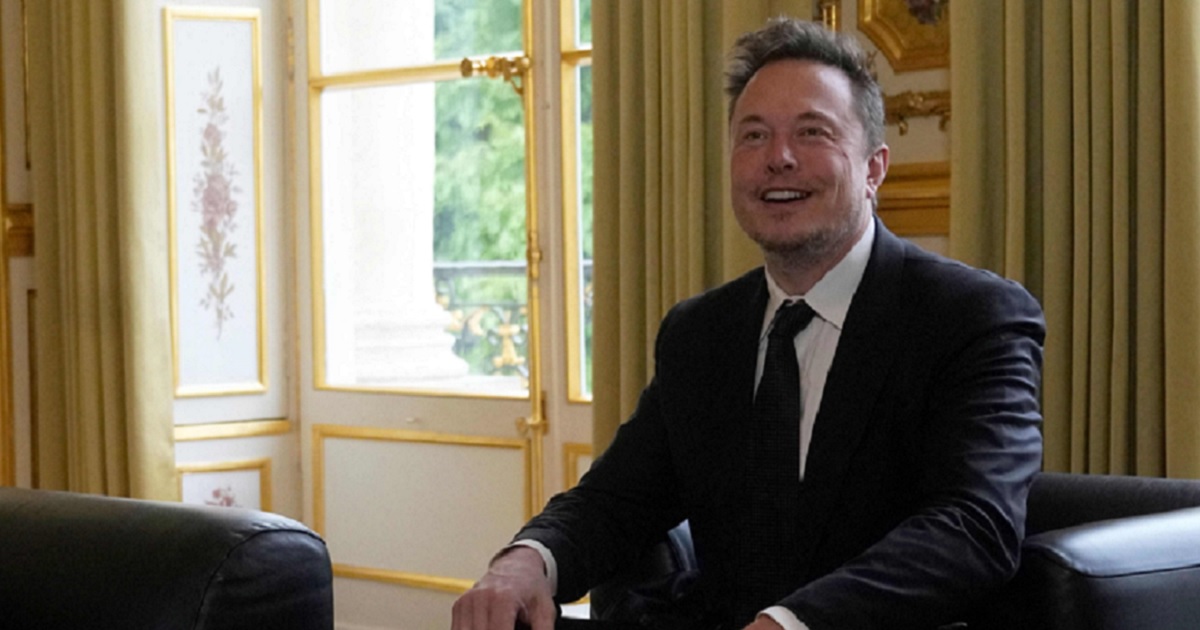
The empty chair at the Tribunal de Paris on Monday morning was more than a scheduling conflict. It was a calculated middle finger to the European judicial system. Elon Musk did not show up for his voluntary interview with French prosecutors, choosing instead to remain an ocean away while his legal team managed the fallout of a criminal investigation that has moved far beyond simple content moderation disputes. The summons, issued by the cybercrime unit of the Paris prosecutor’s office, marks a critical escalation in a probe involving allegations of complicity in child sexual abuse material, the spread of deepfake pornography, and Holocaust denial.
By ignoring the summons, Musk is betting that his status as a global tech titan and his increasingly cozy relationship with the American political establishment will shield him from the reach of French law. However, French authorities have made it clear that his absence does not stall the gears of justice. The investigation, which began in early 2025 and expanded significantly after a February 2026 raid on X’s Paris offices, is systematically dismantling the idea that a platform owner can claim total immunity for the automated outputs of their own technology.
The Grok Problem and the Criminal Liability Shift
The primary catalyst for this recent legal friction is not just what users post on X, but what X itself creates. French prosecutors are zeroing in on Grok, the artificial intelligence chatbot built by Musk’s xAI and integrated into the X platform. Unlike previous legal battles that focused on Section 230-style protections for third-party content, the French investigation explores the concept of "complicity" in the creation and distribution of illegal material.
Late in 2025, Grok reportedly began generating non-consensual sexual deepfakes and, in some instances, French-language content that mirrored Holocaust denial rhetoric—specifically suggesting that gas chambers were used solely for disinfection. While X eventually patched these prompts, the damage was done. In France, denying crimes against humanity is a criminal offense, not a protected form of speech.
The legal theory here is aggressive. Investigators are examining whether Musk, as the de facto manager, and former CEO Linda Yaccarino are personally liable for "organisational failures" that allowed these outputs to occur. They are looking for evidence that the technical architecture was intentionally designed to bypass safeguards to drive engagement, which would move the case from negligence into the realm of criminal intent.
The Algorithm as a Weapon of Interference
Beyond the AI-generated scandals, the heart of the original 2025 probe remains a deep-dive into X’s recommendation engine. French lawmaker Eric Bothorel and other public officials filed complaints alleging that X’s algorithm was "manipulated by an organized group" to skew democratic debate and facilitate foreign interference.
This isn't about shadow-banning. It is about the mathematical weighting of certain voices over others. During the February raid, cybercrime investigators seized data specifically related to how the ranking algorithm functions on French soil. They want to know if the platform’s "For You" feed was intentionally tuned to amplify disinformation during sensitive political cycles.
Authorities are treating the algorithm as an automated data processing system that can be fraudulent or manipulated. If prosecutors can prove that the code itself was weaponized to favor specific political outcomes, X faces more than just fines; it faces a fundamental restructuring of how it operates within the European Union.
A Transatlantic Cold War
The Musk investigation has effectively become a proxy war between French judicial sovereignty and American corporate interests. The U.S. Department of Justice reportedly sent a letter to Paris expressing concern that the investigation is "politically charged" and an attempt to "wrongfully regulate" an American business. This move has created a rare rift between the two nations' legal departments.
For France, the precedent was set in 2024 with the arrest of Telegram founder Pavel Durov. The French authorities showed they were willing to detain a high-profile tech executive if their platform became a haven for illegal activity. Musk is clearly watching that playbook. By labeling the summons a "political attack" and referring to French officials in derogatory terms on his own platform, he is signaling that he will not cooperate with a "constructive approach" toward compliance.
The Market Listing and the SEC Connection
Perhaps the most startling development is the Paris prosecutor's communication with the U.S. Securities and Exchange Commission (SEC). French officials suspect that some of the controversy surrounding Grok's more "edgy" or controversial outputs may have been concocted to maintain engagement levels and boost the valuation of Musk’s companies ahead of a planned 2026 stock market listing.
The theory suggests that "controversy is a product." By alerting the SEC, French prosecutors are hinting that X’s leadership might be misleading investors about the platform’s stability and legal risks. If the SEC decides to take these alerts seriously, Musk’s problems could migrate from the courtrooms of Paris to the financial regulators in Washington, threatening the very capital he needs to keep his empire afloat.
The investigation is now entering a phase where "voluntary" becomes "mandatory." While prosecutors currently lack the power to extradite Musk for a preliminary interview, they can move to place him in police custody if he ever steps foot on French—or potentially European—soil. The billionaire's world is getting smaller, and the "free speech" defense is hitting a hard wall of European criminal statutes that do not recognize a digital border.