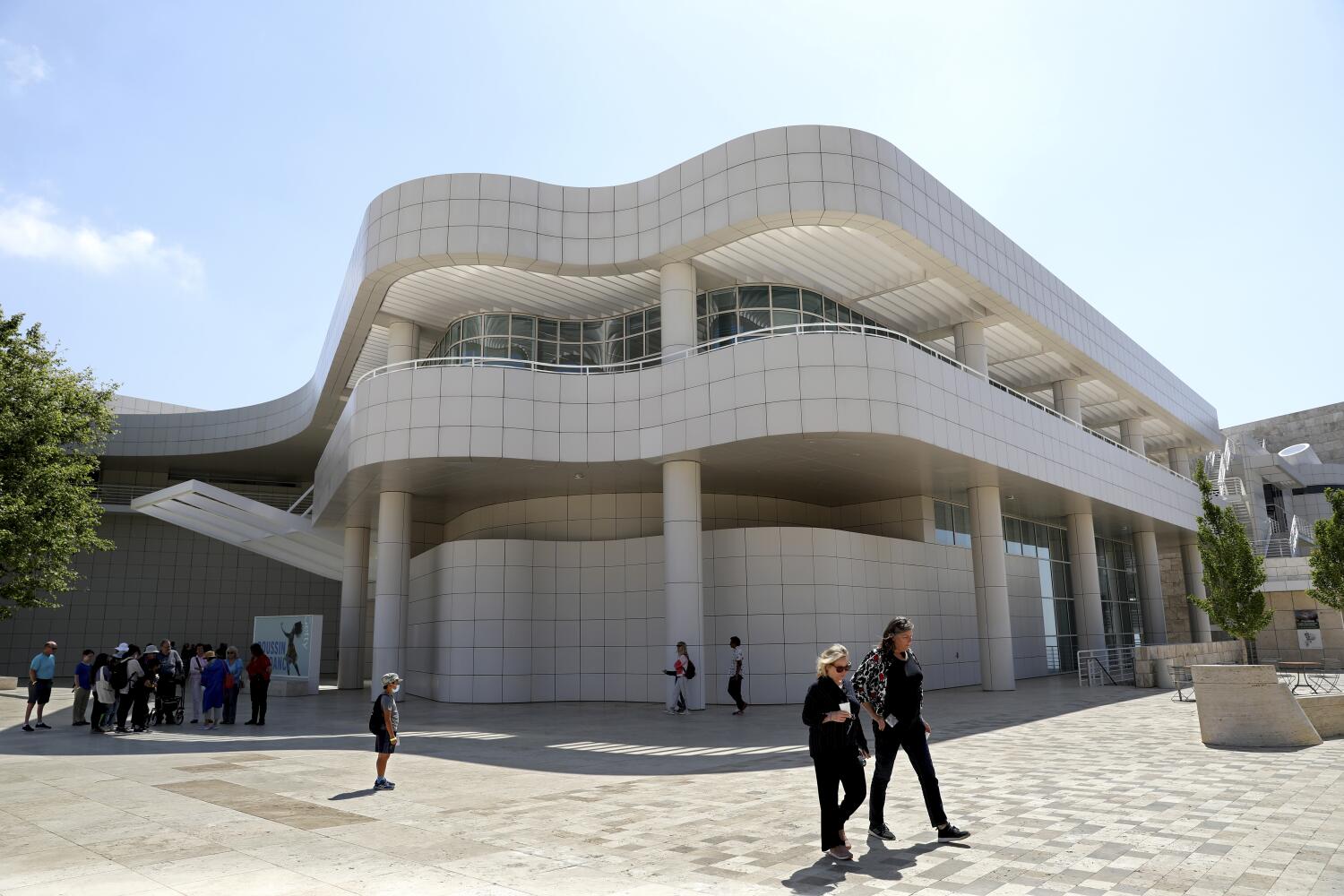
The white travertine fortress perched atop Brentwood is going dark. After nearly three decades of serving as the definitive cultural crown of Los Angeles, the Getty Center has confirmed a multi-year closure for extensive renovations. While the official narrative frames this as a routine facelift to prepare for the global spotlight of the 2028 Olympic Games, the reality is far more complex. This isn't just about fresh paint or modernizing the gift shop. It is a desperate race against time to future-proof a billion-dollar asset against a changing climate and a shifting demographic.
The Getty’s decision to shutter its doors now is a calculated gamble. By removing itself from the tourism map during a peak period of post-pandemic travel, the trust is acknowledging that its current infrastructure cannot handle the projected influx of millions of international visitors expected in 2028. The logistics of the Getty—dependent on a single computer-operated tram system and a highly specific microclimate control for its priceless art—are fragile. If the system fails during the Olympics, it isn't just a maintenance hiccup; it is a global embarrassment.
The Infrastructure Debt of an Icon
Richard Meier’s design was hailed as a masterpiece when it opened in 1997. But the brutal truth is that 1.2 million square feet of Italian stone and glass comes with a staggering maintenance bill that has finally come due. The "unclosed" nature of the campus, with its sprawling gardens and outdoor walkways, makes it an engineering nightmare in an era of extreme heat and unpredictable air quality.
Insiders suggest the renovation focuses heavily on the Central Plant and the mechanical systems that regulate the air for the J. Paul Getty Museum’s four pavilions. These systems are the lungs of the institution. They have been running 24/7 for twenty-seven years. Replacing industrial-scale HVAC units in a building perched on a steep hillside requires more than a weekend shift. It requires a total shutdown of the galleries to ensure that dust, vibration, and temperature fluctuations do not compromise the $14 billion collection.
The tram system, a signature part of the Getty experience, is also reaching its mechanical limit. It was designed for the capacity needs of the late 1990s. Today, it creates a bottleneck that leaves tourists baking in the sun at the lower parking garage. Part of this overhaul involves a massive upgrade to the transit flow, ensuring that by 2028, the "arrival experience" doesn't feel like waiting in line for a DMV appointment.
Fire and Water Risks
The Getty sits in a high-risk fire zone. The 2019 Getty Fire proved that the building’s sophisticated brush clearance and internal air filtration systems work, but it also exposed how isolated the campus becomes when the 405 Freeway is threatened. A major component of this closure involves hardening the perimeter further and upgrading the automated fire suppression systems within the North and South Pavilions.
Water is the other silent enemy. The complex plumbing that feeds the famous Central Garden and the various fountains has begun to show signs of seismic wear. In California, the ground is always moving. Micro-fissures in the travertine cladding and the waterproofing membranes beneath the plazas have led to intermittent leaks in the underground archives. Addressing these structural "weeps" now is the only way to prevent a catastrophic failure during the 2028 rainy season, which could coincide with the lead-up to the Games.
The Olympic Deadline Pressure
Los Angeles is notorious for missing construction deadlines. By closing now, the Getty Trust is giving itself a three-year window to complete what is essentially a five-year job. The 2028 Olympics serve as a hard "drop dead" date. Every major cultural institution in the city, from LACMA to the Lucas Museum of Narrative Art, is currently in a frantic sprint to be operational and polished before the torch arrives.
If the Getty remains under scaffolding when the world's media descends on Los Angeles, it will be seen as a failure of civic planning. The pressure is immense. The Trust is reportedly moving its primary research and conservation staff to the Getty Villa in Malibu and other off-site facilities to allow contractors 24-hour access to the Brentwood site. This is a wartime footing for a peacetime organization.
The Financial Fallout for Local Tourism
The closure of the Getty Center creates a massive vacuum in the Southern California tourism economy. It is consistently ranked as one of the top three most-visited sites in the city. Small businesses, tour operators, and nearby hotels in the Bel-Air and Brentwood corridors rely on the 1.5 million annual visitors the museum attracts.
We can expect a temporary surge in traffic to the Getty Villa, but the Malibu site has strict attendance caps due to coastal zoning laws. It cannot absorb the Getty Center's crowds. This leaves a "culture gap" in the city that other smaller museums will struggle to fill. The economic impact of this closure will be felt in the millions, yet the Trust views this as a necessary price for long-term survival.
A Shift in the Curatorial Mission
This period of physical renovation will likely mirror a quiet revolution in how the Getty presents itself. The museum has faced increasing scrutiny over its focus on the European canon. While the buildings are being scrubbed, the curatorial teams are likely using this hiatus to rethink the permanent collection’s layout.
When the doors reopen, don't expect the same galleries you saw in 2023. The "reimagining" will involve more than just new lights; it will likely feature a more integrated approach to global history, moving away from the rigid chronological silos of the past. They are building a museum for the mid-21st century, not the late 20th.
The Risk of Irrelevance
Three years is a long time to be out of the public eye. In the current attention economy, being "closed for renovations" is a dangerous state. There is a risk that the Getty loses its status as the default destination for the casual tourist.
To combat this, the Getty is expected to ramp up its digital presence and "pop-up" exhibitions across the city. However, the physical experience of the Getty—the wind off the Pacific, the smell of the gardens, the blinding white stone—cannot be replicated on a smartphone. The institution is betting that the absence will make the public’s heart grow fonder, rather than simply making them forget.
The Getty Center is a machine. Like any machine, it requires a complete teardown to keep running at peak performance. This isn't a sign of weakness, but an admission of the physical reality of maintaining a mountain-top monument. The "reopening" in 2027 or early 2028 will be the most scrutinized event in the American art world. If they succeed, the Getty remains the gold standard. If they miss the Olympic window, it becomes a cautionary tale of institutional overreach.
The heavy machinery is already moving in. The gates are swinging shut. For the next thousand days, the most famous view in Los Angeles will be a construction site.