The rusted needle on a pressure gauge doesn't care about geopolitics. It doesn't listen to speeches in Tehran or monitor the frantic trading floors in London. It simply reacts to the weight of the liquid pushing through the steel. Right now, that needle is twitching toward a red zone that the world hasn't visited in a long time.
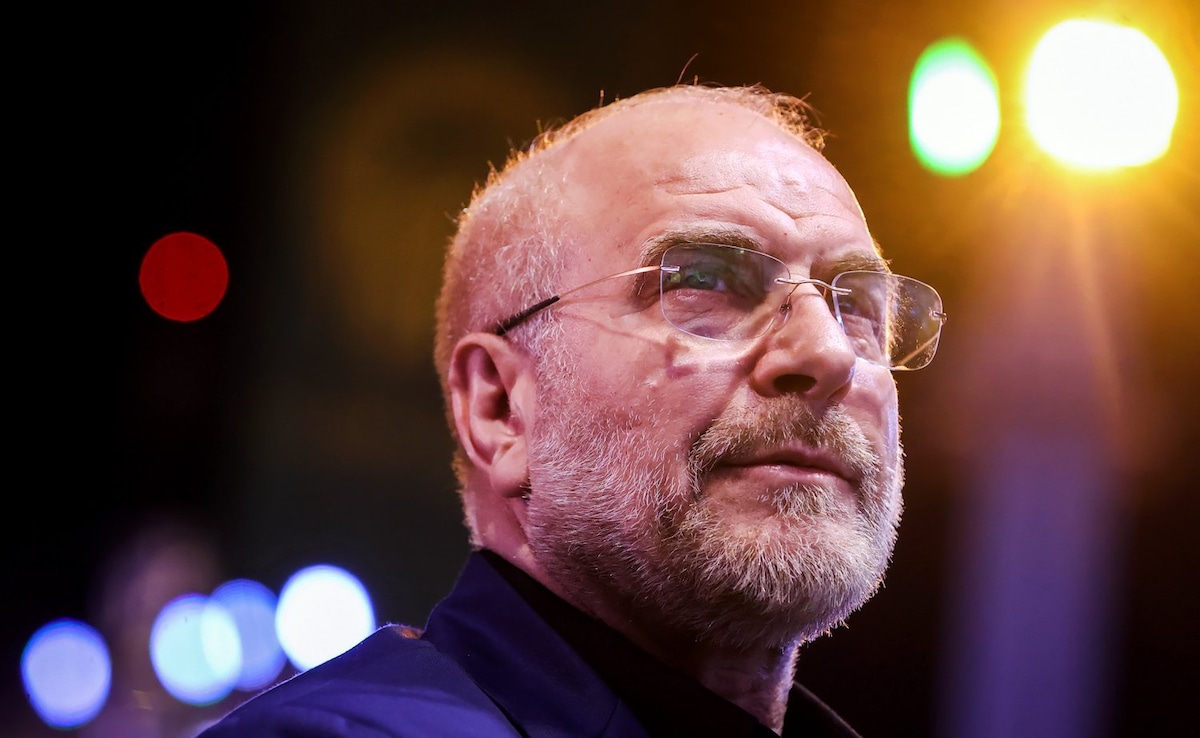
Mohammad Bagher Ghalibaf, the Speaker of Iran’s Parliament, recently stood before a room of officials and issued a warning that felt less like a political statement and more like a weather report before a hurricane. He spoke of oil hitting $140. To most, that is a statistic. To the person sitting in a sedan at a gas station in a suburb of Ohio, or a small business owner in Berlin trying to keep the lights on, it is a slow-motion collision with reality.
We often treat the energy market as a series of tickers and green-red bars on a screen. We forget that every dollar added to the price of a barrel is a tax on human movement. It is the reason a bag of groceries costs five dollars more this week than it did last month. It is the invisible friction that slows down the entire world.
The Friction of Reality
Consider a truck driver named Elias. He is a hypothetical man, but his bank account is very real. Elias hauls produce across borders. When oil was $70, his margins allowed him to fix the slow leak in his radiator and put a little aside for his daughter’s tuition. At $90, the radiator stays leaky. At $140—the number Ghalibaf insists is coming—Elias stops driving.
When Elias stops driving, the grocery store shelves don't just get more expensive; they get empty. This is the "Big Warning" stripped of its suit and tie. It is the realization that our global civilization is essentially a machine that eats oil and exhales convenience. When the food becomes too expensive to find, the convenience dies first. Then, the stability follows.
Ghalibaf’s prediction isn't born out of a vacuum. It is the result of a world that has spent years trying to move away from fossil fuels without actually building the bridge to get to the other side. We find ourselves suspended over a canyon. On one side is the old world of carbon; on the other is a green future that isn't quite ready to carry the weight of 8 billion people. Beneath us is the volatility of the present.
A Perfect Storm of Scarcity
The math behind a $140 barrel is brutally simple. Supply is a brittle thread. Demand is a rising tide. For years, investment in new oil fields has dwindled, partly due to environmental pressures and partly due to a global pandemic that made us think we might never need to commute again. We were wrong.
The world came back to life with a hunger that the current infrastructure can barely satisfy. Then came the fractures in the Middle East. Then came the sanctions. Every time a drone flies over a refinery or a diplomat walks out of a meeting, the price of that barrel jumps.
Iran sits at the heart of this tension. Ghalibaf knows that when he speaks of $140, he is talking about a world where the West is forced to make impossible choices. Do you fund your social programs, or do you keep the heat on in the winter? Do you support an ally in a war, or do you lower the price of gas to prevent a riot at home?
The Ghost in the Machine
There is a psychological threshold to energy prices. When oil crossed $100, the world flinched. When it hit its historic highs years ago, it triggered a fundamental shift in how we lived. We bought smaller cars. We stopped flying for fun. We grew quiet.
The current rise is different because the safety nets are gone. Most nations have already drained their strategic reserves to keep prices artificially low. We are playing a game of poker where we have already shown our hand, and the house—the producers—knows we are desperate.
Ghalibaf’s warning serves as a reminder that oil is the only commodity that can effectively topple a government. It is the most sensitive nerve in the body politic. When a leader warns of a price hike of this magnitude, they aren't just talking about revenue for their own country; they are pointing at the ticking clock of their neighbors.
The Human Cost of High Numbers
If you want to understand what $140 oil looks like, don't look at the stock market. Look at the shipping containers stacked in a port. Look at the cost of fertilizer, which is inextricably linked to the price of natural gas and oil. High oil means high food prices. It means the farmer in Brazil can’t afford to plant as much corn. It means the baker in Cairo has to raise the price of bread.
History tells us that bread riots start when energy becomes a luxury.
We often talk about "energy independence" as if it’s a destination we can reach by clicking our heels together. In reality, we are all tied to the same global nervous system. If one part of the world experiences a shock, the rest of us feel the tremor. The warning from Tehran is a signal that the tremor is becoming a quake.
The Choice We Never Made
We are living through the consequences of indecision. We want cheap energy, but we want it to be clean. We want global trade, but we want it to be local. We want stability, but we live in an era of constant disruption.
The $140 barrel is the price of our collective hesitation. It is the bill coming due for decades of ignoring the fragility of our supply chains. It is the ghost of a hundred-dollar barrel returning to haunt a world that thought it had moved on.
As the needle on that gauge continues to climb, the rhetoric will get louder. Politicians will point fingers. Protesters will take to the streets. But the oil will continue to flow—or not flow—according to the cold, hard logic of scarcity and demand.
The man at the gas station doesn't need to read the headlines to know things are changing. He can feel it in the weight of his wallet. He can see it in the way the people around him drive—slower, more cautious, as if they are trying to stretch every drop of liquid gold just a little bit further.
The world is tightening its belt. The question is how much more it can shrink before it snaps.
The silence that follows a warning like Ghalibaf’s is perhaps the most telling part of the story. It is the sound of a world holding its breath, waiting to see if the needle finally hits the red, and what happens to the machine when it does.