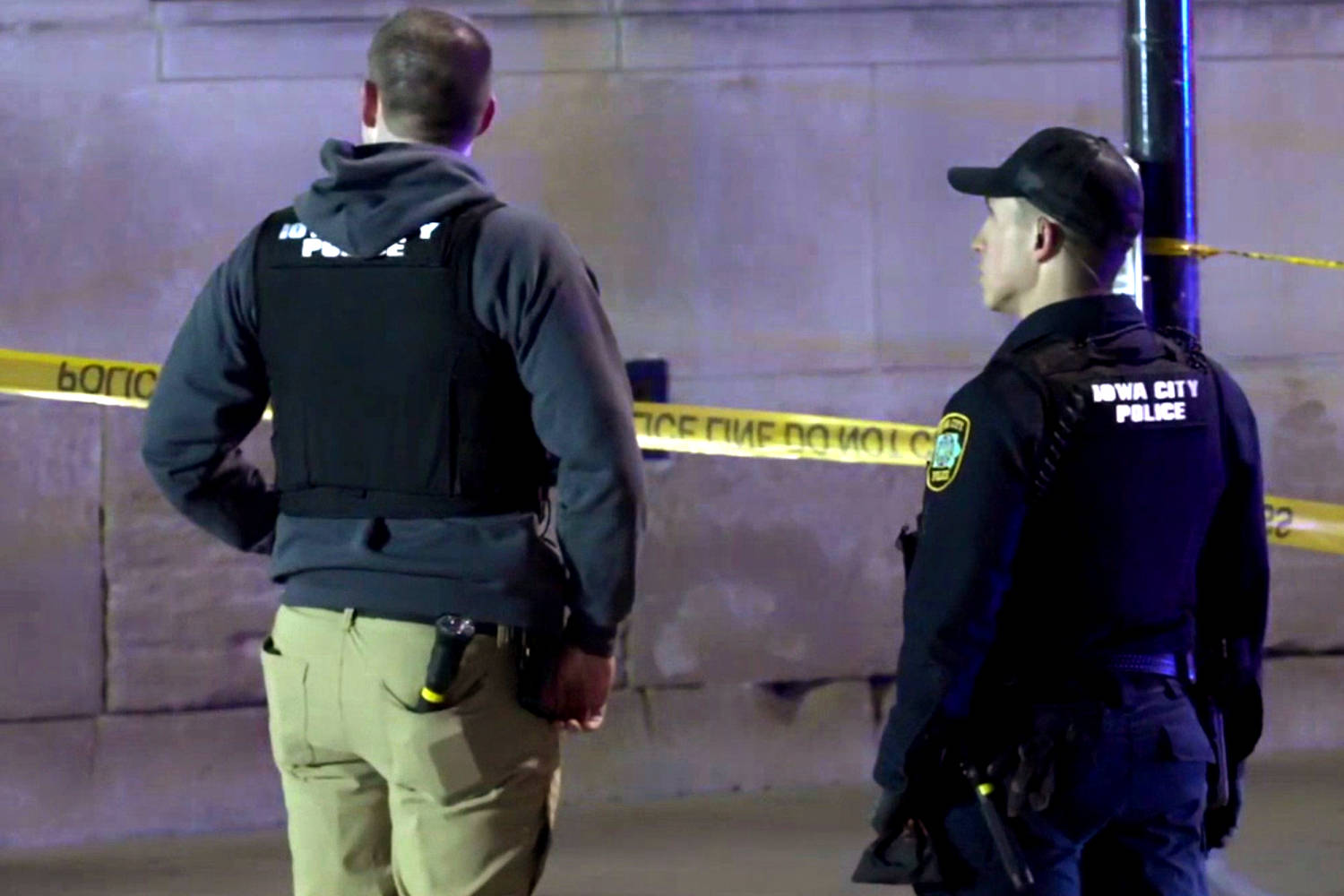
The headlines are predictable. They read like a script we’ve all memorized: a "senseless" act of violence, a university campus in shock, and a frantic police hunt for a teenage suspect. We are currently watching the standard procedural machinery grind into gear regarding the shooting near the University of Iowa. Law enforcement releases a grainier-than-necessary CCTV still, the public is told to "remain vigilant," and the media focuses entirely on the logistics of the escape.
They are asking the wrong questions. While the authorities obsess over which direction a nineteen-year-old fled, they ignore the structural rot that makes these "manhunts" a repetitive, performative exercise in closing the barn door after the horse has bolted.
The Myth of the Lone Outlier
The standard narrative treats this suspect as a glitch in an otherwise functional system. If we just find this one kid, the "safety" of the University of Iowa returns to baseline. This is a comforting lie.
In reality, these incidents are the logical output of a specific environment. When you have a high-density student population bordering areas with significant socio-economic friction, and you layer on the absolute ease of firearm acquisition, violence isn't a "shock." It’s an actuarial certainty. By focusing exclusively on the "hunt," we treat the symptom and ignore the pathology.
I have spent years analyzing crime data and crisis response. The pattern is always the same: reactive resources (police, sirens, perimeter tape) receive 90% of the funding and 100% of the glory, while the preventative measures that actually stop a teenager from pulling a trigger are dismissed as "soft" or "expensive."
Why Manhunts are Pure Theatre
Let’s be honest about what a police hunt actually achieves in the digital age. Most "suspects at large" are caught because they get hungry, they call a girlfriend, or they post something stupid on social media. The massive deployment of armored vehicles and tactical gear in the hours following a shooting is often less about capture and more about optics. It is a show of force designed to soothe a terrified middle class, not a surgical operation to minimize future risk.
If the goal were truly public safety, the conversation wouldn't be about the perimeter. It would be about the pre-incident indicators that were almost certainly ignored.
- The Behavioral Leakage: In nearly every campus-adjacent shooting involving a young suspect, there is a trail of digital breadcrumbs.
- The Infrastructure Gap: Universities love to spend money on "Safety Apps" and "Alert Systems" that tell you to hide after someone is already bleeding. They rarely spend that money on physical environmental design that prevents conflict in the first place.
The University Liability Shield
The University of Iowa, like any major institution, is currently in damage control mode. Their primary objective isn't just catching a suspect; it's mitigating liability.
By framing this as a "police matter" involving an external "teen suspect," the institution distances itself from the reality of its own campus ecosystem. They want you to believe that the campus is a bubble and the violence is an intrusive species. But the geography of Iowa City tells a different story. The integration of the city and the school means that student safety is inextricably linked to the health of the surrounding community.
When a university fails to invest in the security of its peripheral zones, it is essentially gambling with student lives to save on overhead. They count on the fact that when the "inevitable" happens, the police will take the heat for not catching the guy fast enough, while the administration hides behind a "Thoughts and Prayers" email template.
Stop Asking "Where is He?" and Start Asking "Why Here?"
The "People Also Ask" sections of your search engines are filled with queries like "Is Iowa City safe?" or "What happened at UIowa?"
The honest, brutal answer is that Iowa City is as safe as any other Midwestern hub that refuses to address the intersection of juvenile crime and weapon access. The "safety" you feel is a fragile consensus that relies on everyone agreeing not to be violent today. Once that agreement is broken, the police hunt is just a cleanup crew.
We need to dismantle the idea that "catching the bad guy" is the pinnacle of justice. True justice is the absence of a victim.
The High Cost of the Reactive Model
The resources spent on a 48-hour manhunt—helicopters, overtime for dozens of officers, multi-agency coordination—could fund years of targeted intervention programs for at-risk youth in the same area. But intervention doesn't make for a "breaking news" chyron. A SWAT team moving through an alleyway does.
We are addicted to the drama of the chase. We prefer the catharsis of an arrest over the boring, difficult work of systemic reform. As long as we prioritize the "hunt" over the "why," we are just waiting for the next grainy photo to drop.
The suspect in the Iowa shooting will likely be caught. He will enter a legal system that is more interested in punishment than rehabilitation. The university will hold a "town hall" to talk about healing. And six months from now, another teenager with a gun will walk onto a campus-adjacent street, and we will act surprised all over again.
Stop looking for the suspect. Start looking at the system that produced him and the institutions that benefit from your fear. The manhunt isn't a solution; it's a confession of failure.