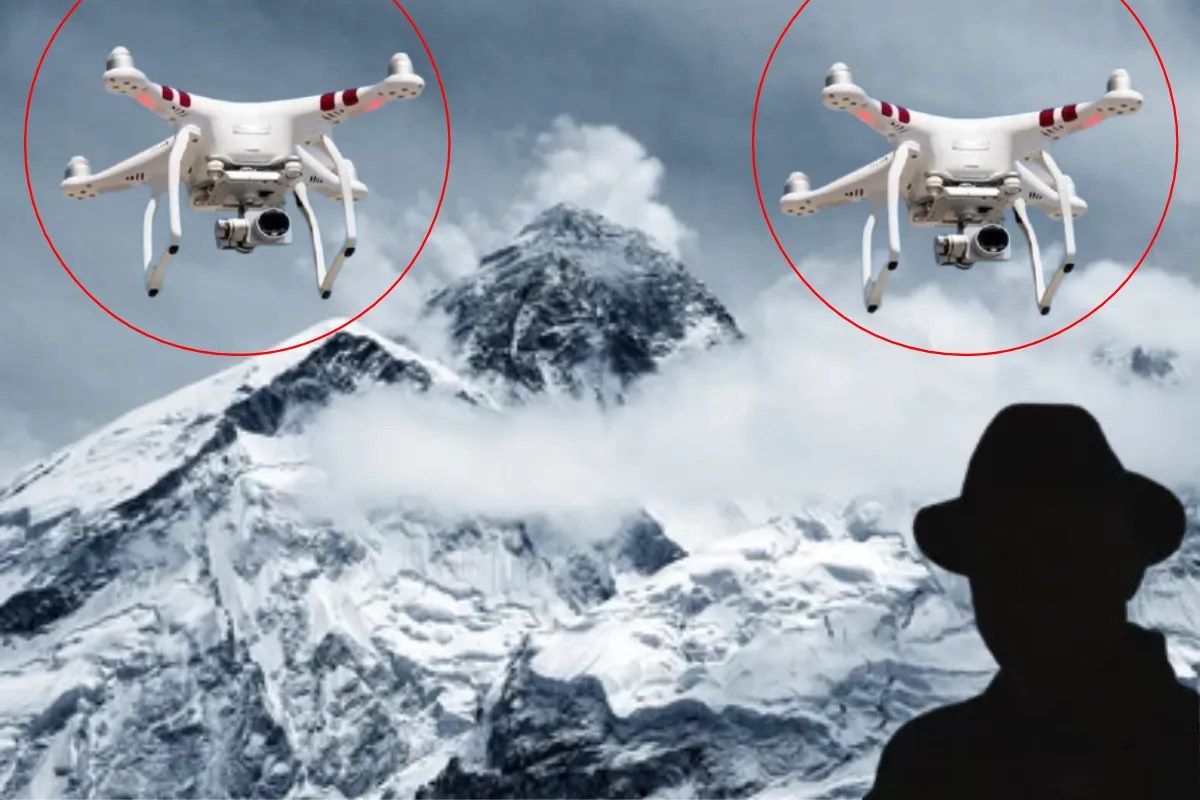
Israel spent billions building the world's most sophisticated electronic dome, only to have it punctured by a spool of glass thread. It sounds like a bad joke, but for Israeli soldiers in southern Lebanon, it's a lethal reality. Hezbollah has started deploying "fiber-optic" drones—weapons that basically trade high-tech wireless signals for a physical leash.
You’ve probably seen the footage. A grainy, high-resolution feed shows a quadcopter weaving through rubble, ignoring every jammer in the vicinity, and slamming into the open hatch of a Namer armored vehicle. It’s a terrifyingly simple solution to a complex problem. By tethering the drone to the operator with a cable the width of dental floss, Hezbollah has made electronic warfare (EW) completely irrelevant.
The Physical Link That Beats Electronic War
Traditional drones are vulnerable because they talk. They use radio frequencies to receive commands and transmit video. If you blast those frequencies with enough noise—jamming—the drone loses its mind and falls out of the sky. Israel is arguably the best in the world at this. Their EW systems can create "dead zones" where no radio signal survives.
But a fiber-optic drone doesn't care about your "dead zone." It doesn't use radio.
The operator’s commands travel through a physical glass fiber that unspools from a reel on the back of the drone. It’s like a modern version of those old wire-guided anti-tank missiles, but with a crucial difference: it’s attached to a nimble, $500 quadcopter that can hover, hide behind walls, and wait for the perfect moment to strike.
Since there's no wireless signal, there's nothing to jam. There’s also no "electronic signature" for Israeli sensors to track back to the launch site. If you can’t see the drone and you can’t jam the drone, you’re basically sitting in a very expensive metal box waiting to get hit.
Lessons Imported From the Ukrainian Front
If this tech feels familiar, it's because we've seen it before. Russia began using "Prince Vandal" fiber-optic drones in the Kursk region earlier in the war to devastating effect. Hezbollah isn't just coming up with this on their own; they're students of the most brutal drone laboratory on earth.
In Ukraine, these drones have been known to unspool up to 15 kilometers (roughly 9 miles) of cable. That’s plenty of range to sit in a reinforced basement in Lebanon and fly a drone across the border into an IDF staging area.
Think about the economics here. A single Iron Dome interceptor costs around $50,000. An advanced EW suite on a Merkava tank costs even more. Hezbollah’s "toy" drones? They’re built from off-the-shelf parts, a small explosive charge (often an Iranian-made PG-7-AT-1 "Fath" warhead), and a spool of glass. It’s a "low-tech" victory over "high-tech" arrogance.
Why Early Detection Is Failing
The Israeli military (IDF) is facing a detection crisis. Radar systems are designed to pick up metal objects moving at certain speeds or heights. These drones fly low—sometimes just feet off the ground—and are made largely of plastic and carbon fiber.
Because the drone provides a crystal-clear video feed through the fiber-optic line, the operator doesn't need to fly high to see the target. They can stay below the treeline or navigate through the ruins of Lebanese villages.
The Weakness of the Spool
It’s not all sunshine for the drone operators, though. Fiber-optic tech has some serious physical constraints:
- The Snag Factor: If that thin cable gets caught on a tree branch, a jagged piece of rebar, or even a sharp corner of a building, the drone is dead. It can’t "reconnect."
- The Weight: Carrying 10 kilometers of glass fiber adds weight, which kills battery life and limits the drone’s speed compared to wireless FPVs.
- One-Way Trip: These are strictly suicide drones. You aren't reeling that cable back in.
Living in the Spiderweb
Reports from the front lines describe a surreal landscape. In some areas, the ground is literally covered in shimmering, translucent strings—the leftover "spiderwebs" of spent drone cables. It's a visual reminder of just how many of these things are being flown.
So, how does the IDF fight back? Right now, the answer is surprisingly primitive. You might see Israeli tanks covered in "cope cages"—metal nets and screens designed to catch the drone before it hits the armor. Some units are even using soccer nets or trying to shoot them down with shotguns.
Honestly, it’s a desperate look for a military that prides itself on being the most advanced in the region.
The Brutal Reality of 2026 Warfare
The "Children's Toy" moniker is a dangerous understatement. These aren't toys; they’re the ultimate equalizer in asymmetric warfare. Hezbollah has realized that they don't need a multi-million dollar air force to challenge Israel's air superiority. They just need enough glass thread and a few skilled pilots.
The immediate next step for anyone following this conflict is to watch the development of "hard-kill" systems—things like 30mm cannons with smart airburst ammo or high-energy lasers. Until those are deployed at scale, the advantage stays with the guy holding the spool.
If you’re on the ground, the only real defense right now is physical: more nets, more situational awareness, and staying under cover. The era of the "un-jammable" drone is here, and it’s a nightmare for anyone relying on traditional electronic defenses.