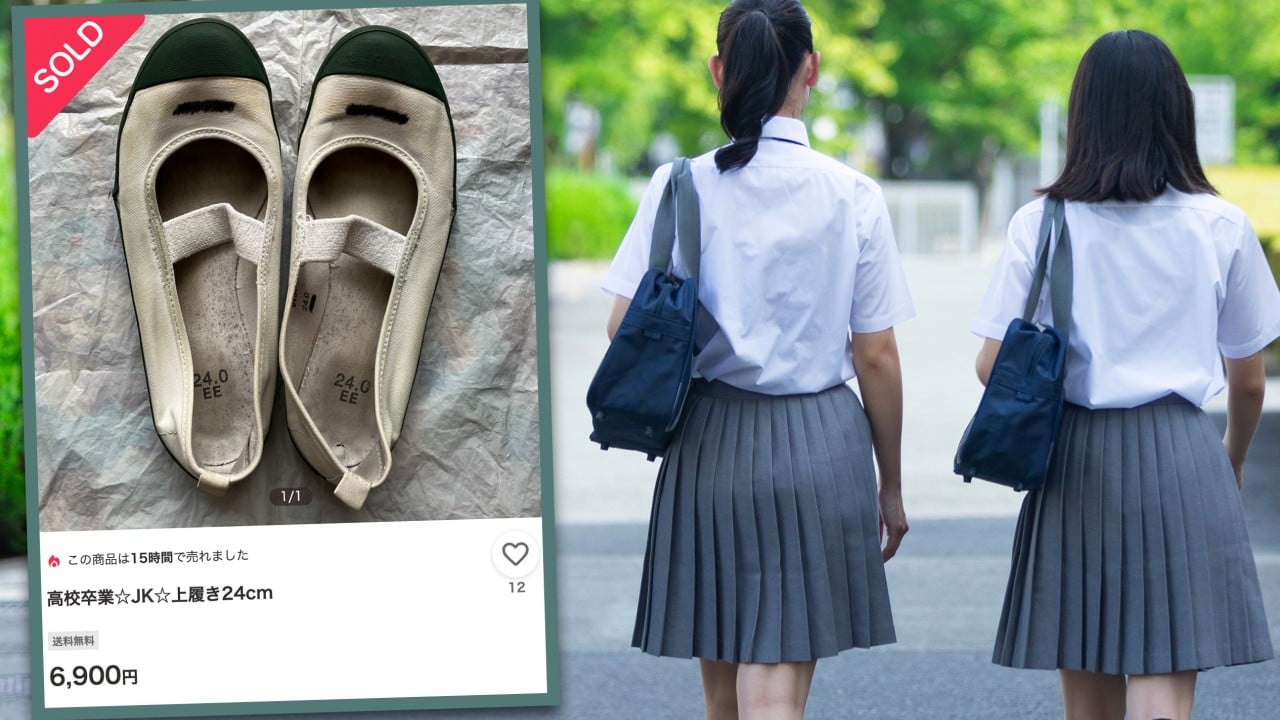
Selling used footwear isn't usually a crime. If you've got a pair of old sneakers sitting in the back of your closet, listing them on eBay or Mercari is just common sense. But in Japan, a specific corner of the secondhand market has triggered a massive police probe and a national conversation about child safety. Authorities are currently investigating major online marketplaces after finding listings for used schoolgirl indoor shoes—known as uwabaki—selling for as much as US$320.
These aren't rare collectibles or designer collaborations. They're standard-issue school shoes that typically cost about $15 new. The price hike isn't about the brand; it’s about the "history" of the item. When a pair of scuffed, name-tagged shoes from a minor starts bidding at twenty times its retail value, everyone knows exactly what's being sold. It’s not footwear. It's a fetish item.
The underground market for school uniforms
Japan has a long, complicated history with the resale of "used" school items. This specific trade often falls under the umbrella of burusera shops—a portmanteau of "bloomers" and "sailor" (uniforms). While physical shops were largely regulated out of existence in the early 2000s, the trade didn't vanish. It just moved to the one place where it's hardest to police: flea market apps and auction sites.
The current investigation focuses on platforms like Mercari and Yahoo Auctions. For years, these sites have been a cat-and-mouse game between moderators and sellers. Sellers use coded language or "innocent" descriptions to bypass filters. A listing might say "Used school shoes, girl's size 23cm, worn for three years, unwashed." To a casual observer, it’s a detailed product description. To a buyer in this niche, "unwashed" is a high-value keyword.
Why police are stepping in now
The jump from "creepy" to "criminal investigation" happened because of the age of the sellers. Under Japan's Child Welfare Act and various prefectural ordinances, the sale of items that promote or facilitate the sexualization of minors is strictly prohibited. When an adult sells their own old clothes, it’s a grey area. When the items clearly belong to current students—or worse, when students are encouraged to sell their own gear—it becomes a matter of child exploitation.
Police aren't just looking at the buyers. They're looking at the platforms. The argument is simple: if a site allows a pair of $15 shoes to sell for $320 without flagging it, they're providing the infrastructure for exploitation.
- Financial incentive: High prices tempt cash-strapped students to sell their belongings.
- Safety risks: High-value transactions often lead to requests for "extra" photos or personal meetings.
- Algorithm failure: Standard AI moderation often misses the context behind a name-tagged shoe.
The US$320 price tag explained
You might wonder who pays that kind of money for dirty shoes. The value in this market is driven by authenticity. Name tags, specific school logos, and visible wear-and-tear serve as "proof" that the item is genuine. In Japan, schools are often very specific about their gear. Each school has its own color-coded uwabaki. A buyer looking for items from a specific prestigious academy will pay a premium to ensure they aren't getting a generic knockoff from a discount store.
Honestly, it’s a disturbing realization of how "purity" and "authenticity" are commodified. The higher the price, the more the buyer is paying for the perceived connection to a specific, real-world minor. This is exactly why the Japanese government is tightening the screws on these digital marketplaces.
What happens next for online marketplaces
The pressure is on for tech giants to do more than just update their banned keywords list. We’re likely to see a shift in how secondhand items are listed.
Don't be surprised if platforms start requiring "proof of age" for certain categories or implementing hard price caps on school-related items. If a school shoe can't be sold for more than its retail value, the incentive for fetish buyers disappears overnight. Some platforms have already started banning the sale of "unwashed" clothing entirely, regardless of the item's age.
It’s a reactive move, but a necessary one. The internet has a habit of turning every niche interest into a profitable industry, often at the expense of those who can't protect themselves. Japan's current probe is a loud signal that the "wild west" era of schoolgear resale is coming to an end.
If you're a parent or a student, the best move is the most boring one: dispose of old school gear properly. Cut up name tags, deface school logos, or just throw them in the trash. The few hundred yen you might get from a legitimate resale isn't worth the risk of your personal information or school identity ending up in the wrong hands. It’s better to lose a few bucks than to accidentally fuel an industry built on exploitation.