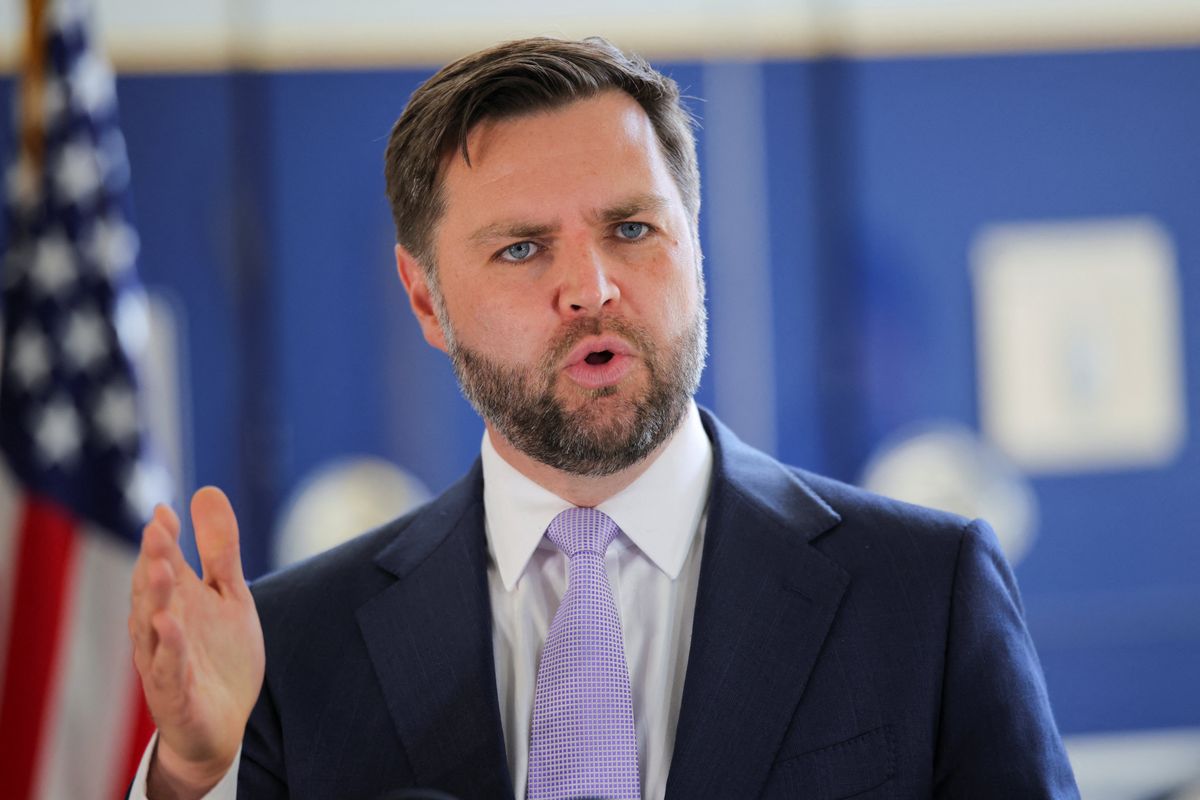
Optimism is the favorite mask of the unprepared. When JD Vance steps off a plane in Islamabad talking about "positive outcomes," he isn't just being diplomatic; he is ignoring fifty years of failed South Asian precedent. The mainstream media loves a "hopeful" narrative. It sells ads. It keeps the markets calm. But hope is not a strategy, and in the volatile intersection of American populism and Pakistani internal collapse, it is a liability.
The lazy consensus suggests that a fresh face from a new administration can simply reset the button on a relationship defined by mutual suspicion. It assumes that if we just talk about trade, counter-terrorism, and regional stability with enough sincerity, the decades of institutional friction will evaporate. Building on this topic, you can also read: The Baltic Powderkeg and the End of Freedom of Navigation.
They won't.
I have watched administrations from both sides of the aisle walk into these high-walled compounds with the same naive grin. They leave with a handful of vague joint statements and a "strategic partnership" that lasts exactly until the first drone strike or the next IMF bailout request. Analysts at Reuters have also weighed in on this matter.
The Myth of the Clean Slate
The primary error in the "JD Vance is hopeful" narrative is the belief in a clean slate. You do not get a clean slate in Islamabad. You get a ledger written in blood and debt.
Pakistan’s current economic state is not just a "challenge" to be discussed over tea. It is a structural nightmare. When Vance speaks of positive movement, he is ignoring the math. The country is currently trapped in a cycle of needing new loans just to service the interest on old ones. This is not a business partner; it is a distressed asset that the U.S. is terrified to let go of and even more terrified to keep holding.
If you are looking at this through the lens of business, think of it as a forced merger between a tech giant and a bankrupt manufacturing plant. The tech giant (the U.S.) wants the plant to stop selling secrets to the competition (China) and to fix its internal security. The plant (Pakistan) just wants enough cash to keep the lights on for another month.
Why Populism and Pakistan Don’t Mix
Vance represents a specific brand of American economic nationalism. His "America First" roots are fundamentally at odds with the current requirements of the Islamabad relationship.
- Security vs. Subsidy: Vance’s base hates foreign aid. Yet, the only leverage the U.S. has left in the region is a combination of military assistance and IMF influence. You cannot be an isolationist and a regional influencer simultaneously.
- The China Factor: While Vance talks about decoupling from China, Pakistan is more deeply entrenched in the China-Pakistan Economic Corridor (CPEC) than ever. You cannot walk into a room and ask a nation to choose between their biggest creditor and a country that hasn't had a consistent regional policy since 2001.
To think this trip will yield "positive" results is to fundamentally misunderstand the friction between a populist's desire to withdraw and a globalist's need to manage a nuclear-armed state.
The Counter-Terrorism Delusion
The competitor article likely glosses over the "security cooperation" aspect. Let’s be blunt: The U.S. and Pakistan have entirely different definitions of what a "terrorist" is.
For the U.S., it is any group threatening international stability or domestic targets. For the Pakistani security establishment, groups are categorized by their utility. This is the "good militant vs. bad militant" strategy that has frustrated every American envoy for two decades. Vance can be as hopeful as he wants, but he is walking into a room with people who have perfected the art of the "double game" long before he entered politics.
Imagine a scenario where a private equity firm tries to buy a company where the board of directors is secretly working for the competitor. That is the Islamabad negotiation table. Vance isn't bringing a new deal; he’s bringing a different font on the same contract that has been rejected a dozen times.
The Debt Trap as a Weapon
Everyone asks: "Will the talks improve trade?"
The answer is a resounding no. There is no meaningful trade to be had with a country whose currency is in a tailspin and whose energy infrastructure is failing. The real conversation is about the IMF.
The U.S. uses the IMF as a leash. Pakistan uses its proximity to collapse as a threat. "Help us, or we fail, and you won't like what happens to a failed state with 165 nuclear warheads." This is not diplomacy. It is a hostage situation with better catering.
If Vance wanted to be truly "positive," he would stop pretending this is a partnership and start treating it like a managed liquidation. We should be discussing how to contain the fallout of a systemic collapse rather than pretending we can spark a manufacturing renaissance in a region that lacks reliable electricity.
The Price of False Optimism
When leaders like Vance project hope, they signal to the markets and the voters that there is a solution just around the corner. This delays the necessary, painful pivot.
The honest truth? The U.S. interest in Pakistan is shrinking. As we move away from the "War on Terror" era and toward a "Great Power Competition" with China, Pakistan becomes less of a vital ally and more of a regional complication.
The real move is not to find "positive outcomes" but to define the terms of a graceful exit. We need to stop subsidizing a stalemate. Every dollar we pour into the current Islamabad regime is a dollar we are not spending on building alliances in the Indo-Pacific that actually align with our 21st-century goals.
The Reality Check
Let’s look at the "People Also Ask" garbage that usually surrounds these events.
- "Will this trip lower gas prices?" No. Pakistan has nothing to do with your commute.
- "Is this about peace in Afghanistan?" Afghanistan is a closed chapter for the U.S. but a permanent headache for Pakistan. We aren't going back, and they can't handle what’s left.
- "Does Vance have the experience?" It doesn't matter. You could send the ghost of Kissinger or a high-school debate champion; the structural realities of the Pakistani military's grip on the economy remain unchanged.
I have seen billions of dollars "invested" in this relationship only to see it evaporate the moment a new regional crisis emerges. To call this "positive" is a slap in the face to anyone who has tracked the actual data on regional stability.
The Pivot That Nobody Wants to Admit
If the U.S. were serious, we would stop the charade of high-level diplomatic "resets."
Instead of a "hopeful" visit, Vance should be delivering a cold, hard ultimatum regarding transparency and Chinese military expansion within Pakistani borders. But he won't. He'll take the photo op. He'll talk about the "historic ties" between the two nations. He'll fly home, and nothing will change.
The downside to my contrarian view is that it's uncomfortable. It admits that we have no good options. It admits that we are throwing good money after bad. It acknowledges that the "hope" Vance is selling is just a political anesthetic for a domestic audience that doesn't want to hear that we are stuck in a geopolitical quagmire with no exit ramp.
Stop looking for the "positive" in these talks. Look for the exit.
Pakistan is not a problem to be solved by a charismatic Vice President or a few days of dialogue. It is a reality to be managed. The moment we start believing our own press releases about "positivity," we have already lost the negotiation.
Vance is walking into a trap of his own making: the belief that a better personality can overcome a broken system.
Stop buying the hope. Start counting the cost.