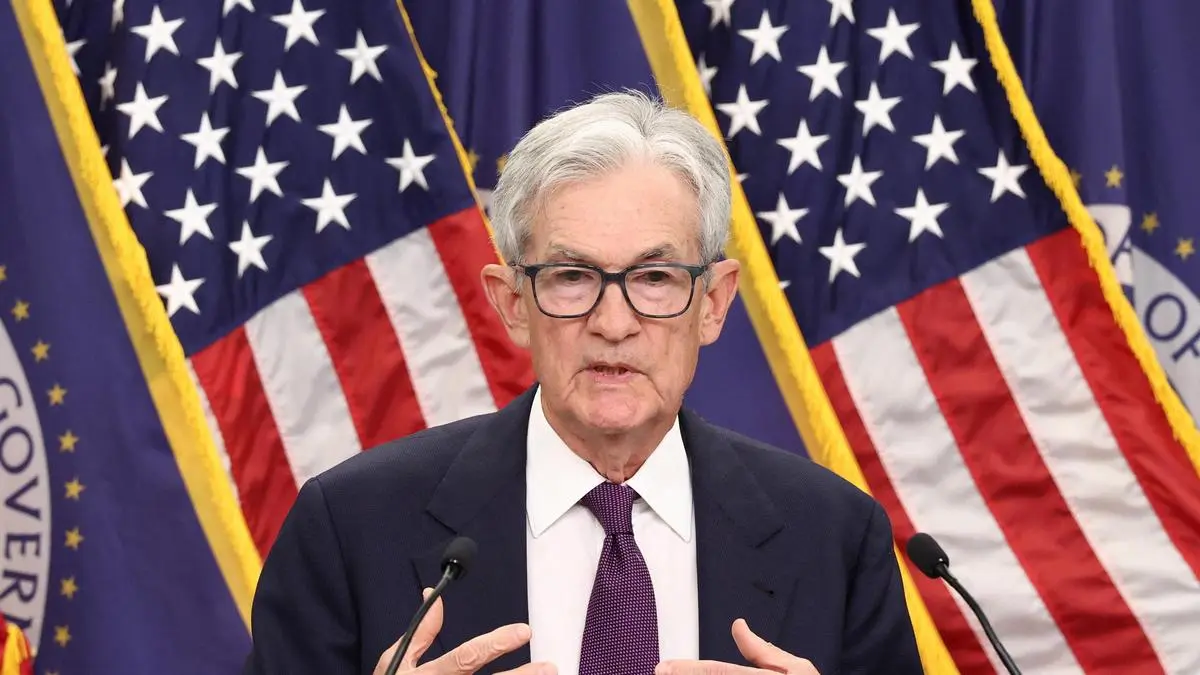
Jerome Powell intends to finish his term as Chair of the Federal Reserve because the alternative—resigning under political pressure—would permanently damage the independence of the American central bank. While critics point to his personal wealth or a desire for status, the reality is a cold calculation regarding institutional survival. Powell knows that if a sitting chair steps down because the executive branch demands it, the Fed effectively becomes a wing of the Treasury. This isn't just about one man’s career; it is a desperate attempt to keep the setting of interest rates out of the hands of politicians who prioritize election cycles over long-term price stability.
The Constitutional Moat
The Federal Reserve was designed to be insulated, but that insulation is thinner than most investors realize. Under the Federal Reserve Act, a president can only remove a governor "for cause." Legal experts and historical precedents suggest this means inefficiency, neglect of duty, or malfeasance in office—not a disagreement over whether the federal funds rate should be 25 basis points lower. Powell’s decision to stay is a dare. He is forcing the executive branch to either find a legitimate legal fireable offense or back down, knowing that a messy legal battle would rattle global markets and likely end in a Supreme Court showdown.
By remaining in his post, Powell maintains the "quiet period" of central banking. This is the space where data, not polling, dictates move. If he were to leave early, he would validate the idea that the Fed Chair serves at the pleasure of the President, a shift that would immediately lead to higher long-term bond yields as investors bake a "political risk premium" into U.S. debt.
Inflation and the Ghost of Arthur Burns
Powell is haunted by the 1970s. He has spent years studying Arthur Burns, the Fed Chair who succumbed to Richard Nixon’s demands for easy money, which helped trigger a decade of runaway inflation. Burns chose cooperation over conflict, and the result was a catastrophe that required Paul Volcker’s "shock therapy" to fix. Powell views his current tenure as a chance to avoid that specific historical trap.
He understands that the "last mile" of returning inflation to the 2% target is the most treacherous. This is where the pressure to cut rates becomes loudest, coming from both the corporate boardrooms and the halls of Congress. Staying in the seat allows him to act as the heat shield for the rest of the Federal Open Market Committee (FOMC). When he stands at the podium and insists that the job is not yet done, he is taking the political arrows so that the regional bank presidents don't have to.
The Logistics of Defiance
Staying on isn't just about making speeches. It involves a grueling schedule of congressional testimony and internal management. Powell has spent significant energy building a consensus within the Fed. If he were to depart, the internal coalition he built to maintain a "higher for longer" stance might fracture. A new, more dovish interim leader could shift the trajectory of the economy overnight, potentially reigniting price pressures that have only just begun to cool.
He is also managing the Fed's massive balance sheet, a process known as quantitative tightening. This is the unglamorous side of central banking. It involves shrinking the supply of money in the system to ensure that the fight against inflation isn't just talk. This process requires a steady hand and a long-term view that a politically appointed successor might lack the stomach to continue.
The Global Stakes of a Fed Resignation
The U.S. Dollar remains the world’s reserve currency, which means Powell is essentially the world’s central banker. If the market perceives that the Fed has lost its independence, the ripple effects would be felt from Tokyo to London. Central banks in other nations often take their cues from the Fed. If the leader of the most powerful financial institution on earth can be bullied into quitting, the independence of every other central bank is suddenly in question.
Foreign central banks hold trillions in U.S. Treasuries. They do so because they believe the Fed will maintain the value of those dollars. The moment the Fed becomes a political tool, that trust evaporates. Powell’s stubbornness is a signal to the world that the dollar is backed by a predictable, rule-bound institution, not the whims of a four-year administration.
Institutional Memory as a Shield
Powell is the first Fed Chair in decades without a Ph.D. in economics, but he has something perhaps more valuable: a deep understanding of how markets actually function. His background in private equity and at the Treasury Department gave him a front-row seat to the 2008 financial crisis. He knows that markets don't just react to numbers; they react to credibility.
Credibility is earned over decades and lost in an afternoon. If he walks away now, he hands over a weakened institution to whoever follows. By staying, he ensures that the next Chair inherits a Fed that has proven it can stand its ground. He is effectively building a "precedent of persistence" that will protect his successors.
The Hidden Cost of Stability
There is a human cost to this standoff. The higher interest rates Powell is defending have made mortgages unaffordable for a generation and squeezed small businesses. He is not blind to this. However, his philosophy is built on the belief that a short-term recession is a tragedy, but long-term inflation is a terminal illness for a country. He stays because he believes he is the only one willing to be the "bad guy" for as long as it takes.
He also faces internal scrutiny. The Fed isn't a monolith, and there are voices within the system who believe the tightening has gone too far. Powell’s role is to balance these internal debates while projecting a unified front to the public. This requires a level of political maneuvering that few academics possess. He is a creature of Washington, and he is using every bit of that experience to outmaneuver those who want him gone.
The End Game
Powell’s term as Chair ends in 2026. His term as a Governor doesn't end until 2028. There is a distinct possibility he remains on the board even after his chairmanship concludes, just to ensure a smooth transition and to prevent a radical shift in policy. This is about the long game.
The markets are currently betting on a "soft landing," where inflation falls without a major spike in unemployment. If Powell pulls this off, he will be remembered alongside Volcker as a savior of the American economy. If he fails, he will be the man who stayed too long. But for Powell, the risk of failure is preferable to the certainty of institutional collapse that would follow a politically motivated resignation. He remains in the building because the walls are thinner than they look, and he is the one holding them up.
Every time he takes the podium, the subtext is the same: the Fed belongs to the data, not the ballot box. He will continue to sit in that chair, staring down the cameras and the critics, until the clock runs out or the job is finished. There is no middle ground in the defense of an institution that the entire global financial system relies upon. You either hold the line or you watch the line disappear.