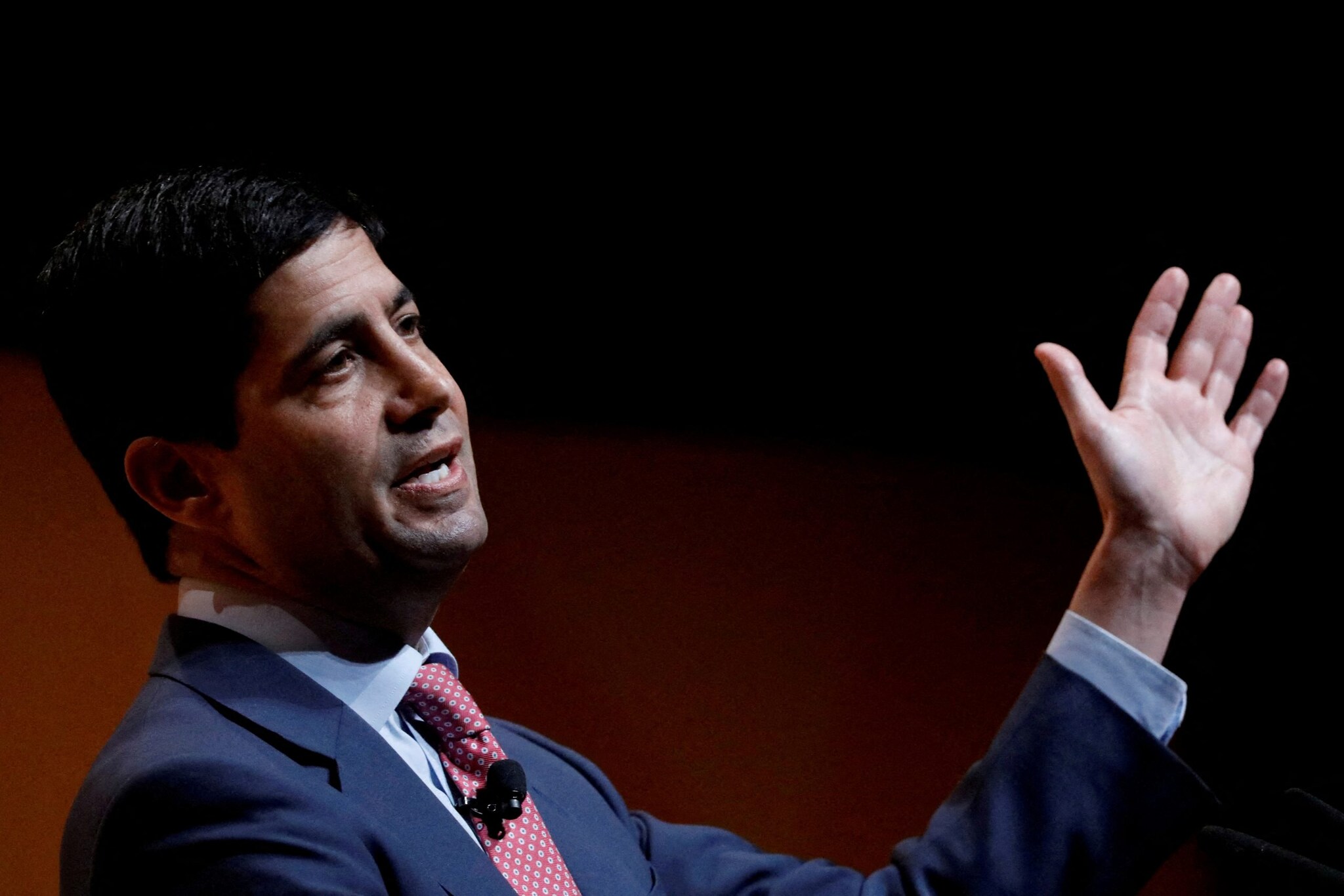
The financial press is currently obsessed with a script that reads like a political thriller: Donald Trump’s hand-picked loyalist, Kevin Warsh, is marching toward the Federal Reserve chairmanship to dismantle the "deep state" of central banking. With a 13-11 party-line vote in the Senate Banking Committee this morning, the narrative is set. The media portrays Warsh as a disruptor who will slash rates on command, shrink the balance sheet to a nub, and finally end the era of Jerome Powell’s "mission creep."
It is a compelling story. It is also fundamentally wrong.
The lazy consensus suggests that swapping a "staid institutionalist" like Powell for a "firebrand reformer" like Warsh will fundamentally pivot the American economy. But this ignores the gravitational pull of the institution itself. I have watched for two decades as the Fed swallows reformers whole, turning would-be revolutionaries into bureaucrats who eventually bow to the same "data-dependent" altar as their predecessors. Warsh isn't a regime change; he’s a rebranding exercise.
The Independence Theater
The loudest criticism of Warsh—led by Senator Elizabeth Warren—is that he will be a "sock puppet" for the White House. This view is intellectually cheap. It assumes that the Fed Chair is a dictator who can unilaterally move the federal funds rate because the President sent an angry tweet.
In reality, the Chair has exactly one vote on the Federal Open Market Committee (FOMC). Even if Warsh wanted to turn the Fed into a branch of the Treasury to satisfy Trump’s demand for the "lowest rates in the world," he would be met with immediate internal mutiny from the regional presidents and a Board of Governors that includes figures like Lisa Cook and Philip Jefferson.
The institutional design of the Fed is a heat shield against personality-driven policy. If Warsh tries to force a 50-basis-point cut while inflation is north of 2% and energy prices are spiking due to the conflict with Iran, the dissenting votes would trigger a bond market revolt that would spike the very long-term rates Trump wants to lower. Warsh knows this. He is a creature of Morgan Stanley and a former Fed governor. He understands that "independence" isn't a moral virtue at the Fed; it is the source of their market-moving power.
The AI Productivity Trap
Warsh’s most interesting, and perhaps most dangerous, intellectual pivot is his argument that Artificial Intelligence is creating a supply-side productivity boom that allows for lower rates without inflation. This is his "get out of jail free" card—a way to satisfy the White House’s demand for cheap money while maintaining his credentials as a hawk.
Imagine a scenario where the Fed cuts rates because "AI is making us more efficient," but the actual productivity gains don't hit the GDP numbers for another five years. We’ve been here before. In the late 1990s, Alan Greenspan famously bet on productivity gains to keep rates low during the dot-com boom. It worked—until it didn't.
By leaning on the "AI exception," Warsh is not being a contrarian; he is providing a sophisticated academic cover for a standard dovish pivot. It’s a convenient theory that allows him to be the "Trump guy" without looking like he’s ignoring the Fed's dual mandate. But calling a rate cut "AI-driven" instead of "politically motivated" doesn't change the fact that you're pumping liquidity into an economy that is already running hot.
The Balance Sheet Bluff
Warsh has been a vocal critic of the Fed’s bloated $6.6 trillion balance sheet, calling it "distortionary." He talks a big game about shrinking it "deliberately and well-choreographed."
Here is the inconvenient truth: The Fed cannot aggressively shrink the balance sheet without breaking the plumbing of the global financial system. When the Fed pulls liquidity out (Quantitative Tightening), it relies on private banks to step in and buy that duration. But current banking regulations—many of which Warsh claims to want to "overhaul"—make it expensive for banks to hold those assets.
If Warsh moves too fast on the balance sheet, he creates a repo market crisis like we saw in September 2019. If he moves too slow, he’s just Jerome Powell with a better haircut. His "regime change" on the balance sheet is a mathematical impossibility unless he simultaneously deregulates the big banks to the point of systemic risk—a move that even a Republican-led Senate would eye with extreme caution.
The Communication Fallacy
Warsh wants to end the "dot plot" and reduce the number of press conferences. He argues that the Fed talks too much and gives "forward guidance" that anchors it to outdated forecasts.
While the "less is more" approach sounds refreshing to those tired of parsing every syllable of a Powell speech, it creates a vacuum. Markets hate vacuums. If the Fed stops telling the market what it thinks, the market will start guessing based on more volatile signals. You don't get stability by being mysterious; you get volatility spikes.
Warsh is betting that he can shrink the "surface area of political confrontation" by staying quiet. But in the age of 24/7 financial news and social media, a silent Fed Chair isn't an independent one; he’s an irrelevant one. The moment he stops communicating, the White House will fill that silence with its own narrative, effectively surrendering the Fed’s control over market expectations.
The Powell Shadow
The most overlooked variable in this transition is Jerome Powell himself. Powell has the option to stay on as a Governor until 2028. This would be a move of unprecedented institutional defiance. If Powell remains, he becomes the "Shadow Chair," a focal point for the internal opposition and a constant reminder of the "old guard."
Warsh isn't walking into a clean office; he’s walking into a civil war. Every time he proposes a "reform," he will have to fight through a committee that still views Powell as the defender of the faith.
We are not seeing the birth of a new era of monetary policy. We are seeing a high-stakes rebranding of the same old trade-offs. Warsh will find that the "independence" he defended in his hearing is actually a cage. He will talk like a reformer, he will use AI as a rhetorical shield, and he will claim to be shrinking the Fed’s footprint—all while the structural realities of debt, inflation, and market stability force him to act exactly like the man he is replacing.
The Senate will vote, the gavel will pass, and the market will eventually realize that the more things change at the Eccles Building, the more they stay the same.