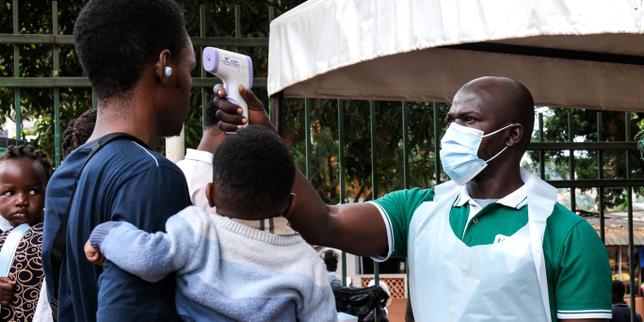
Goma is not a remote village. It is a sprawling, chaotic border city of two million people. When the virus reaches a place like this, the old rules of outbreak containment go straight out the window.
The World Health Organization (WHO) just triggered an international health emergency. This comes immediately after a confirmed Ebola case hit Goma, a strategic hub in the eastern Democratic Republic of the Congo (RDC). For weeks, health officials watched the virus creep through the rural corners of Ituri province. Now, it has a foothold in a major urban center. If you think we are looking at a repeat of past outbreaks, you are missing the terrifying detail that makes this situation completely different: we have zero approved vaccines or treatments for this specific strain.
The Bundibugyo Strain and the Illusion of Safety
Most people assume we have Ebola figured out. We have the Ervebo vaccine, right? We have monoclonal antibody treatments that turned a once-inevitable death sentence into a survivable infection.
That applies to the Zaire strain. The virus tear-assing through eastern RDC and crossing into Uganda right now is the Bundibugyo strain. It is the rarest, least-understood variant of the virus.
http://googleusercontent.com/image_content/192
Because it appears so infrequently, pharmaceutical companies and research institutions never finished developing targeted tools for it. The vaccines sitting in global stockpiles will not protect the population against it. The standard diagnostic tests used in field clinics are struggling to detect it quickly. We are essentially fighting a ghost with our hands tied.
The data trickling out from Africa CDC paints a grim picture. We are looking at roughly 246 suspected cases and 80 deaths in Ituri alone. Now, the virus has hitchhiked. The confirmed case in Goma is the wife of an Ebola victim who died in Bunia. She traveled to Goma while already infected, carrying the pathogen directly into a dense urban environment. Another case has popped up as far away as the capital, Kinshasa. Uganda has already logged a death in Kampala from a traveler returning from the outbreak zone.
Conflict Zones Make Contact Tracing Impossible
Containing an outbreak relies on a simple, meticulous process called contact tracing. You find the infected person, isolate them, map out every single human being they interacted with, and monitor those people for 21 days.
That is easy to map out on a whiteboard. It is a logistical nightmare when the urban center in question is controlled by a rebel militia.
Goma and the surrounding Nord-Kivu province are currently under the thumb of the M23 group, a powerful anti-government militia backed by Rwanda. The eastern RDC has endured three decades of armed conflict, but the situation deteriorated rapidly over the last year. When a city is fragmented by active warfare, humanitarian workers cannot move freely.
Consider what happens when a health team shows up in a neighborhood controlled by armed rebels. The community, already deeply traumatized by decades of violence, views outsiders with intense suspicion. They do not see medical heroes; they see a foreign intervention force. People hide their sick relatives. They bury their dead in secret overnight to avoid having teams in biohazard suits take the bodies away. This community mistrust is not irrational—it is the direct result of living in a forgotten war zone where the state has failed to protect them for a generation.
The Border City Nightmare
Urban transmission behaves differently than rural transmission. In an isolated village, a virus eventually runs out of hosts or burns itself out because people do not move around much.
Goma sits directly on the border with Rwanda, right next to the city of Gisenyi. Every single day, tens of thousands of people cross that border to sell vegetables, go to work, or visit family. Goma also boasts an international airport and major transit routes connecting the interior of the Congo to the rest of East Africa.
If the virus spreads through Goma’s informal transport networks—like the crowded minibuses and motorcycle taxis—tracking it becomes a statistical impossibility. The WHO chose not to declare a full global pandemic emergency yet, opting instead for the Public Health Emergency of International Concern (PHEIC) designation. They are trying to walk a very fine line. They need to unlock international funding and sound the alarm, but they desperately want to prevent neighboring countries from shutting their borders.
Closing borders looks good on political television, but it fails in practice. When you shut down official border checkpoints, people do not stop crossing. They just use informal, unmonitored footpaths through the bush. Health workers lose the ability to screen people for fevers, meaning the virus moves across borders completely undetected.
What Needs to Happen Right Now
We cannot rely on a magic bullet vaccine this time. The response has to pivot back to fundamental, grueling public health work.
First, diagnostic labs must be deployed directly to the frontlines in Goma, Bunia, and Kampala. Waiting days for blood samples to fly to a central laboratory kills patients and allows transmission chains to multiply silently.
Second, international donors need to release funding immediately without bureaucratic delays. The Africa CDC noted that slow initial detection and a lack of early resources gave this Bundibugyo strain a massive head start.
Finally, the response teams must stop treating this purely as a medical issue and start treating it as a trust issue. Local community leaders, religious figures, and neighborhood associations need to lead the sensitization campaigns. If the messaging does not come from a trusted local voice, the community will continue to reject the intervention.
The presence of Ebola in Goma means the window for early containment has officially closed. The international community failed to contain it when it was a rural crisis; now it has to deal with an urban emergency in a conflict zone.