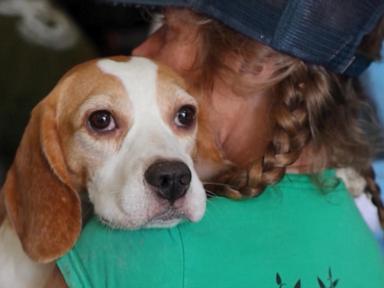
The extraction of 4,000 beagles from an Envigo research breeding facility in Virginia represents a massive supply chain and humanitarian reversal. While media coverage often focuses on the emotional narrative of "rescue," the event is more accurately analyzed as a high-stakes logistics and triage operation. Successfully rehoming 1,500 animals through Wisconsin-based organizations required the synchronization of specialized transport, medical assessment protocols, and the management of a fragmented network of volunteer-based nodes. The success of this operation was not an accident of goodwill; it was the result of a rigorous operational framework designed to handle extreme biological volume under intense public scrutiny.
The Triple Constraint of Massive Animal Extractions
Every large-scale extraction operation operates under a specific version of the project management triangle: speed, capacity, and welfare. In the context of the Envigo beagles, these three variables were under constant pressure.
- Velocity of Removal: Federal mandates or legal settlements often require immediate removal to stop ongoing operational costs or to comply with court orders. Delaying the removal increases the "holding cost" at the source facility, often a site already deemed deficient in care.
- Absorption Capacity: The primary bottleneck in animal rescue is not the willingness to help, but the physical square footage of quarantine-grade housing. Wisconsin organizations had to calculate their "surge capacity"—the delta between their standard operating volume and their absolute maximum occupancy—without compromising the health of their existing animal populations.
- Welfare Integrity: Mass transit introduces high risk for infectious disease transmission, specifically canine parvovirus or respiratory infections. Maintaining welfare integrity requires a strict "pod" system where groups are isolated to prevent a single infection from collapsing the entire 4,000-unit cohort.
The Wisconsin Node Decentralized Distribution Models
Wisconsin emerged as a critical hub for this operation due to a high density of established animal welfare organizations with sophisticated infrastructure. These organizations functioned as regional distribution centers. Instead of a centralized "mega-shelter," the strategy employed a decentralized network model.
By distributing the 1,500 beagles across multiple organizations like the Humane Society of Southern Wisconsin and the Elmbrook Humane Society, the operation mitigated risk. If one facility faced a medical outbreak or a staffing shortage, the other nodes remained operational. This is a classic "fail-safe" architecture. The organizations utilized a hub-and-spoke system where the primary intake facility performed the initial medical "triage" before spokes (foster homes) took over the long-term rehabilitation.
Bio-Security and Medical Triage Protocols
The transition from a laboratory environment to a domestic environment is a physiological shock. These animals were bred in a sterile, controlled environment, meaning their immune systems lacked the "environmental seasoning" of typical domestic strays. The medical protocol followed a three-phase structure:
- Phase I: Immediate Stabilization: Upon arrival, every animal underwent a primary survey. This focused on hydration levels, immediate nutritional needs, and the identification of any contagious markers.
- Phase II: Pathogen Suppression: Vaccination and deworming were executed en masse. In a lab-to-home transition, the risk of zoonotic transfer or cross-contamination is high. Facilities used "clean-room" protocols, including foot baths and PPE, to ensure the beagles did not bring pathogens into the local canine ecosystem.
- Phase III: Behavioral Baselining: Beagles from research facilities often exhibit "kennelosis"—a state of sensory deprivation where they do not understand how to walk on grass or interact with non-lab stimuli. Wisconsin groups implemented behavioral quantification, scoring each dog on a socialization scale to determine the complexity of the required foster placement.
The Cost Function of Rehabilitation
The financial burden of these operations is often underestimated by the public. The "cost per unit" (per beagle) includes more than just food and shelter. It involves a heavy front-loaded investment in veterinary labor, pharmaceutical supplies, and the administrative overhead of processing thousands of adoption applications.
For the Wisconsin organizations, the influx of beagles created a temporary but severe capital requirement. While the Humane Society of the United States (HSUS) coordinated the macro-logistics, the micro-costs—the day-to-day operational expenses—fell on the local chapters. These organizations rely on a "Just-In-Time" (JIT) fundraising model, where the visibility of the crisis is used to generate the capital necessary to resolve it. However, the risk in this model is "donor fatigue," where the massive initial surge of support drops off before the final 10% of the hardest-to-place animals are rehabilitated.
Structural Challenges in Laboratory Animal Transition
The legal and ethical framework surrounding the use of animals in research is shifting, but the infrastructure for their "retirement" is lagging. The Envigo case exposed a structural gap: there is no permanent, federal-level "retirement fund" for laboratory animals.
The burden of care is currently externalized to non-profit organizations. This creates an economic inefficiency where private corporations profit from the use of the animals, while the public and charitable sectors bear the full cost of their "decommissioning." A more sustainable model would involve "End-of-Life" (EOL) bonds required by any facility breeding animals for research, ensuring that the cost of rehabilitation is internalized by the industry itself.
The Strategic Path Forward: Standardizing Large-Scale Triage
To replicate the success of the Wisconsin extraction, the animal welfare sector must move away from ad-hoc responses toward a standardized "Emergency Response Framework." This involves three specific tactical shifts:
- Inter-Agency Data Interoperability: Organizations must use shared database systems for tracking medical records and behavioral profiles in real-time during mass extractions. This prevents the loss of critical health data as animals move through the distribution network.
- Pre-Vetted Surge Networks: Shelters must maintain a "reserve" of foster homes specifically trained for laboratory-animal rehabilitation. These are not standard foster homes; they are specialized units capable of managing high-anxiety, low-socialization animals.
- Legislative Advocacy for "Right to Release": Currently, many research facilities are not legally obligated to offer animals for adoption; euthanasia is often the default "low-cost" exit strategy. Legislating a mandatory "Right to Release" for healthy animals is the only way to ensure that the capacity built by Wisconsin organizations is utilized to its full potential across the country.
The Wisconsin operation proved that a decentralized, highly-professionalized network can absorb a massive volume of specialized "units" without a collapse in the standard of care. However, relying on the heroic efforts of local non-profits is a fragile strategy. The long-term solution requires a fundamental restructuring of how we value and fund the life cycle of research animals, moving from a charity-based model to one of corporate and regulatory accountability.
The next tactical move for stakeholders is the creation of a Regional Animal Emergency Management Agency (RAEMA) that mirrors FEMA's structure, providing a permanent logistical spine for these high-volume extractions, ensuring that "capacity" is never the reason an animal is denied a transition from laboratory to home.