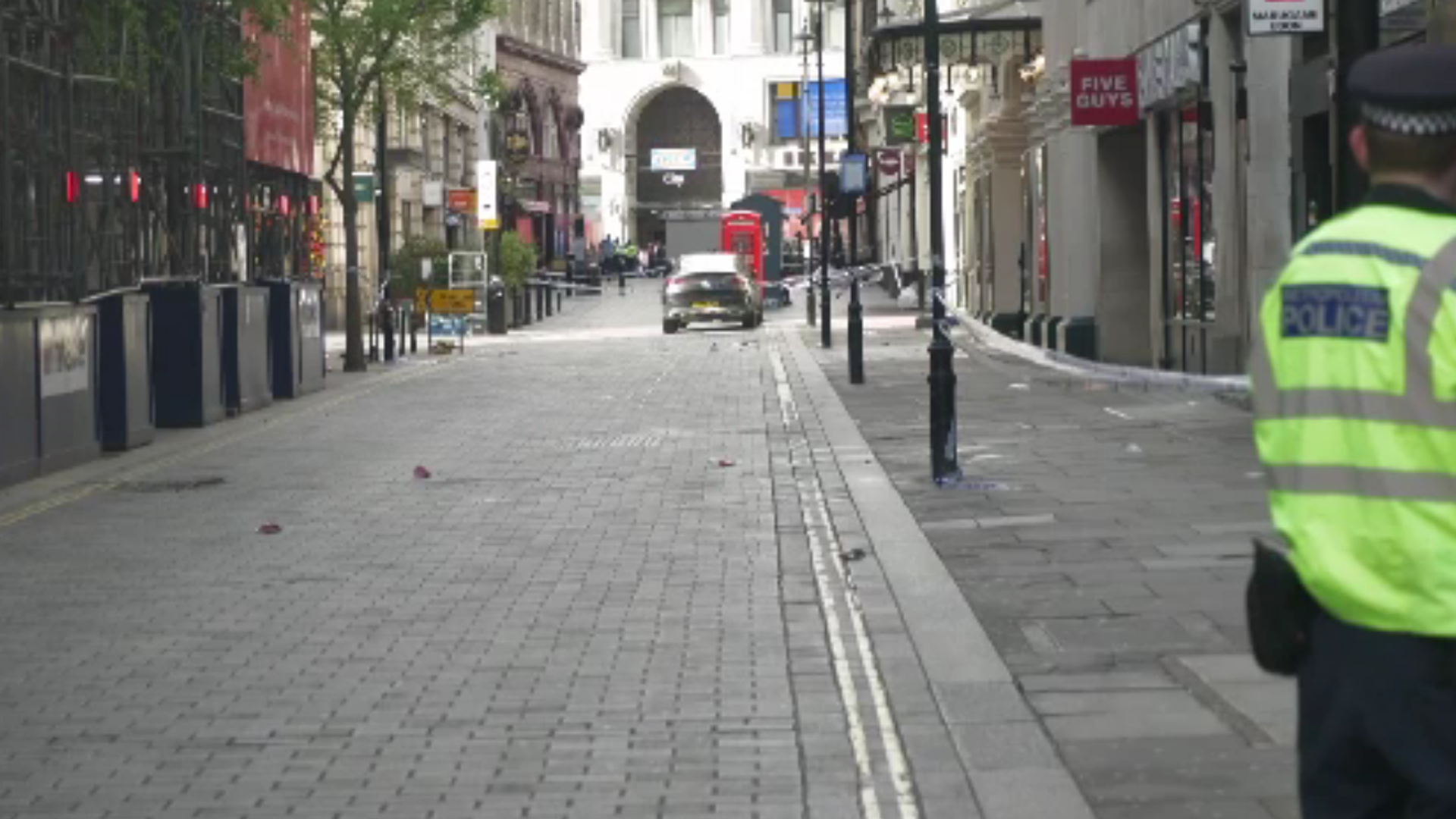
The immediate chaos of a car mounting the pavement in a crowded London district provides a grimly familiar sequence of events. First comes the mechanical scream of the engine, then the sickening thud of impact against stone and flesh, followed by a vacuum of silence before the screaming begins. On a busy weekday afternoon, this scenario unfolded once again, leaving multiple pedestrians injured and a woman in police custody. While the Metropolitan Police quickly moved to contain the scene and assess the nature of the incident, the narrative arc of these events often stops at the arrest. For those living and working in the capital, the deeper investigation begins with why these high-traffic "safe zones" remain so vulnerable to single-vehicle incursions.
Public safety officials are now facing intense scrutiny regarding the physical infrastructure of central London. The incident, which occurred in a high-footfall area, highlights a persistent gap in urban planning where the proximity of heavy vehicles to unprotected crowds creates a constant, low-level risk of catastrophe. Emergency services arrived within minutes, cordoning off the area and providing trauma care to those pinned or struck by the vehicle. The driver was detained at the scene, and while early reports often speculate on intent, the mechanical and environmental factors are frequently the more systemic culprits in these urban disasters. Discover more on a connected subject: this related article.
The Physical Failure of Urban Protection
When a vehicle leaves the roadway, the only thing standing between two tons of steel and a group of tourists or commuters is often a few inches of concrete curbing. This is not a defense. It is a suggestion. In the aftermath of the most recent crash, the absence of high-impact bollards or reinforced street furniture in such a densely populated corridor has become a focal point for critics of current municipal safety standards.
We see a pattern where the "pedestrianization" of London is often half-baked. Local councils frequently expand sidewalk space to accommodate outdoor dining or increased foot traffic without implementing the necessary structural barriers to prevent accidental or intentional vehicular entry. The result is a false sense of security. Pedestrians believe they are in a protected zone, but they are actually standing in a soft target. More journalism by The New York Times highlights similar perspectives on the subject.
The engineering of these spaces requires more than just paint and potted plants. Real protection involves deep-foundation steel posts capable of stopping a vehicle traveling at 40 miles per hour. These are expensive and often unpopular with aesthetic-focused planning committees, but their absence is measured in the frequency of these "accidents."
Driver Impairment and the Modern Commute
The arrest of a female driver at the scene brings the human element into sharp focus. While the legal proceedings will determine the specific cause—whether it was a medical episode, mechanical failure, or criminal negligence—the broader context of driver behavior in central London is deteriorating.
Traffic congestion in the city has reached a tipping point where driver frustration and cognitive load are at an all-time high. Modern vehicles are quieter and more powerful, yet the streets they navigate are narrower and more complex than ever. This creates a dangerous friction.
The Role of Technology in Driver Error
It is a common irony that as cars become smarter, drivers often become less attentive. Advanced driver-assistance systems (ADAS) are designed to prevent the very type of collision that occurred this week, yet they are not infallible. Sensors can be confused by glare, heavy rain, or the complex geometry of London’s historic intersections.
More importantly, there is the issue of "automation bias," where a driver over-relies on their vehicle’s safety features, leading to a delayed reaction when manual intervention is required. If a driver loses control in a high-stress environment like central London, the window to correct that error is measured in milliseconds. By the time the brain registers the danger, the car has already bridged the gap between the road and the shopfront.
Mental Health and Medical Episodes behind the Wheel
We must also consider the reality of medical emergencies. A significant percentage of low-speed pedestrian strikes involve drivers suffering from sudden incapacitation, such as a heart attack or a seizure. In these instances, the driver is a passenger in their own vehicle. This reinforces the argument that safety cannot rely solely on the driver's competence; it must be baked into the street design itself. If the road is designed to "forgive" an error by redirecting a runaway vehicle away from people, the human cost is decimated.
The Economic Impact of Street Closures
Every time a vehicle plows into a crowd, the economic heart of London skips a beat. The immediate area is shuttered for forensic investigation, often for twelve hours or more. Transport for London (TfL) must reroute bus or tube services, and local businesses lose thousands in revenue.
Beyond the immediate disruption, there is a lingering "fear factor" that alters consumer behavior. If people do not feel safe walking through major hubs, the shift toward online shopping and remote work accelerates, further hollowing out the commercial vitality of the city center. The cost of installing proper safety barriers is a pittance compared to the cumulative economic loss of these recurring incidents.
The Legislative Vacuum
There is currently no unified federal mandate in the UK that dictates a minimum standard for physical vehicle barriers in high-density pedestrian zones. Instead, responsibility is fragmented across various borough councils, TfL, and private landowners. This patchwork approach leads to "safety gaps" where one block might be heavily fortified while the next is completely exposed.
Parliamentary discussions regarding "Martyn’s Law"—legislation aimed at improving security at public venues—have primarily focused on terrorism. However, the principles of the law apply equally to the prevention of accidental mass casualty events. The physical requirements to stop a hostile vehicle are the same as those required to stop a driver who has fallen asleep or suffered a stroke.
Examining the Response Time and Trauma Care
One area where London consistently excels is the speed of the "Golden Hour" response. Within minutes of the crash, London’s Air Ambulance and specialized trauma teams were on site. The coordination between the Met Police and the London Ambulance Service is a well-oiled machine, born of years of responding to both accidents and attacks.
However, relying on world-class medical response is a reactive strategy. The goal of urban policy should be to ensure that these medical teams are never needed in the first place. We are currently spending millions on treating the symptoms of poor street design rather than curing the cause.
The Psychological Aftermath for Witnesses
The trauma of seeing a vehicle strike a crowd is not easily erased. First responders are trained for this, but the average office worker or tourist is not. The "ripple effect" of these incidents extends far beyond the physical injuries. It contributes to a sense of urban fragility, a feeling that at any moment, the mundane act of walking to lunch could turn into a life-altering tragedy.
A Shift in Urban Philosophy
The era of viewing these events as isolated "accidents" must end. In a city of nine million people, a car mounting a pavement in a crowded area is a statistical certainty unless the infrastructure makes it a physical impossibility.
We need to move away from the idea that streets are primarily for the movement of private vehicles. If a street is too narrow or too crowded to safely separate cars from people, then cars should not be there. The expansion of the Ultra Low Emission Zone (ULEZ) and various congestion charges are often framed as environmental measures, but they are equally about safety. Fewer cars on the road naturally reduces the probability of a catastrophic collision.
The woman arrested in this latest incident will face the legal system, and justice will likely be served in a courtroom. But for the pedestrians who were simply trying to navigate their city, the real justice lies in a future where their safety is not dependent on the concentration level or health of a stranger behind a steering wheel.
The solution is not more cameras or harsher sentencing; it is more steel in the ground. We have the technology and the engineering capability to make London’s streets invincible to vehicular incursions. What is lacking is the political will to prioritize the lives of pedestrians over the convenience of drivers and the aesthetics of a clear sidewalk. Until that shift happens, the sound of an engine revving on a crowded corner will continue to be a sound of terror rather than just the background noise of a functioning city.
The city must decide if it is a place for people or a place for machines. At the moment, the machines are winning, and the cost is being paid in blood on the pavement.