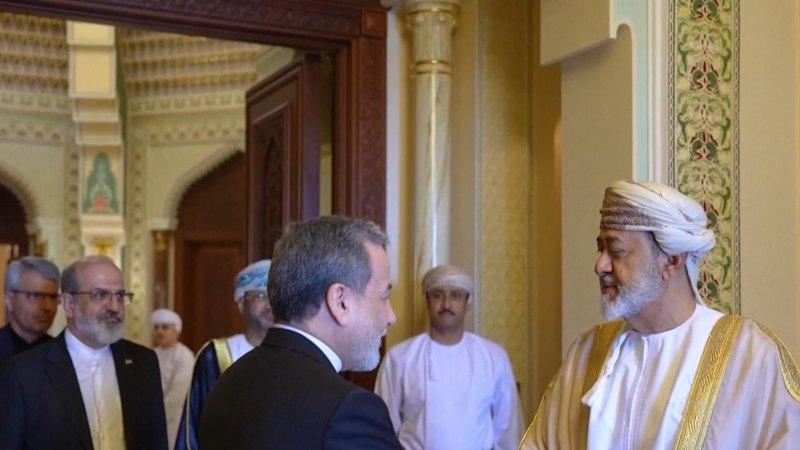
The air in Moscow during the transition from winter to spring carries a specific, metallic sharpness. It smells of melting slush and old stone. Inside the gilded halls of the Kremlin, the atmosphere is even more compressed. When the Iranian Foreign Minister walks across those polished floors to meet Vladimir Putin, the sound of his footsteps isn't just noise. It is a rhythm of necessity.
For months, the world watched the flickering screens of diplomacy in Vienna and Geneva. We were told that a deal with Iran was close. We were told the United States was ready to bridge the chasm left by years of sanctions and broken promises. But the screens have gone dark. The talks didn't just stall; they curdled. Now, the map of the world is being redrawn not in the sunlight of international consensus, but in the amber glow of a private room in Russia.
The Weight of the Empty Chair
Consider a merchant in Isfahan. He doesn't care about the intricacies of enrichment percentages or the precise phrasing of a memorandum of understanding. He cares about the price of cooking oil. He cares that his son’s asthma medication is sitting in a shipping container somewhere because the banking system has locked his country out of the world.
For this merchant, the "faltering" of U.S.-Iran talks isn't a headline. It is a slow-motion catastrophe. When the Western door slams shut, or at least remains stubbornly stuck, the eyes of his leaders turn north.
The Iranian Foreign Minister isn't in Moscow because he prefers the climate. He is there because the West has become a ghost. In diplomacy, as in physics, nature abhors a vacuum. When Washington pulls back, or fails to lean in with the necessary political capital, the space is filled by those who have been waiting in the wings. Putin is the ultimate waiter. He understands the power of being the only person left in the room who is willing to sign a contract.
Two Lonelinesses Meeting
There is a visceral irony in this alliance. Russia and Iran are not natural soulmates. Their histories are peppered with territorial disputes and mutual suspicion. Yet, there is a powerful glue that binds them: the shared experience of being the world's most sanctioned nations.
Imagine two hikers lost in a blizzard. They might not like each other. They might have argued the whole way up the mountain. But when the temperature hits forty below, they huddle together for warmth. This meeting in Moscow is that huddle. It is a strategic embrace born of a common cold.
The stakes are invisible to the naked eye but heavy as lead. They involve "grey market" oil sales, the exchange of drone technology, and a shared desire to prove that the dollar is not the only currency that matters. While the U.S. State Department issues carefully worded press releases about "unacceptable conditions," the real work is happening over tea in Moscow. They are building a parallel world. An economy of the shadows.
The Cost of the Silent Treatment
We often think of international relations as a series of chess moves. That’s too clean. It’s more like a messy, high-stakes divorce where the children—in this case, the citizens of both nations—are caught in the crossfire.
The failure of the Western talks is a failure of imagination. It assumes that if you freeze a country out long enough, they will eventually break. But people don't just break; they adapt. They find new friends. They find the people who were also kicked out of the party.
When Putin greets the Iranian envoy, he isn't just looking for an ally. He is looking for a mirror. He sees a country that has survived decades of isolation and he wants to know the secret. In return, Iran sees a superpower with a permanent seat on the UN Security Council that is willing to play spoiler to Western interests. It is a transaction of defiance.
The U.S. officials who walked away from the table might have thought they were holding a firm line. They might have believed that time was on their side. But time is a fickle thing. While the pens remained capped in the West, the ink was flowing in the East.
The Mirror and the Wall
The tragedy of this shift is that it makes the world smaller and more dangerous. Every time a bridge to the West is burned, a wall in the East gets higher. This isn't just about nuclear reactors or oil pipelines. It’s about the soul of global order.
If you spend enough time studying the faces of these diplomats, you see a peculiar kind of exhaustion. They are tired of the same arguments. They are tired of the "maximum pressure" campaigns that yield minimum results. In that exhaustion, the simplest path is often the one that leads away from the difficult, messy work of compromise with an old enemy.
The Iranian minister’s visit to Russia is a signal sent in a bottle across a very dark sea. The message is simple: We are not alone.
As the sun sets over the Moskva River, the light hits the red stars of the Kremlin towers. Somewhere in a quiet office, papers are being exchanged that will dictate the flow of energy and weapons for the next decade. The West is not in that room. The West isn't even in the hallway.
The silence from the failed talks is deafening, but it is being drowned out by the sound of two old powers whispering in the dark. They are carving out a future that doesn't require permission. They are moving on. And the world they are building is one where the old rules no longer apply.
The shadows are getting longer. The ice is cracking. And the man in Isfahan is still waiting for his medicine, while the men in Moscow are deciding exactly how much he will have to pay for it.
Power doesn't disappear when you walk away from the table. It just changes hands.