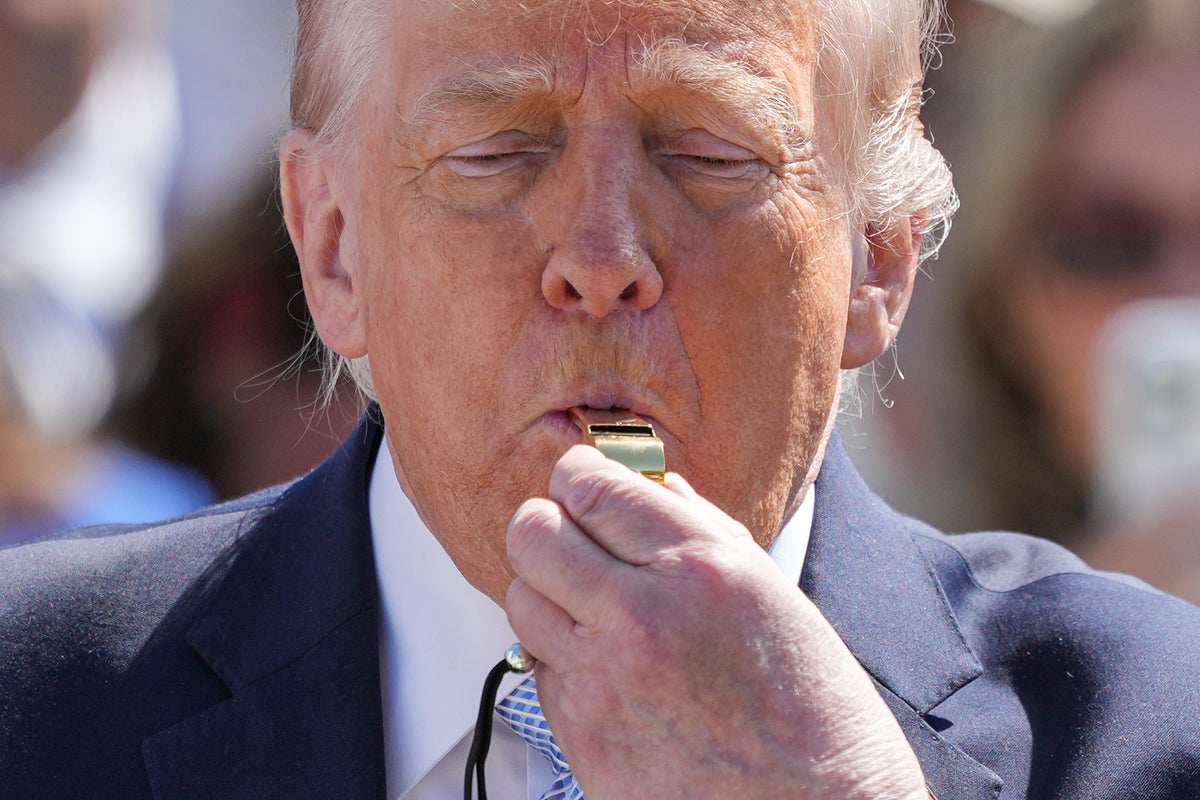
The pearl-clutching over executive mental fitness is the oldest play in the political playbook. It is also the most intellectually dishonest. When Democrats demand a White House evaluation of a sitting president following aggressive foreign policy maneuvers, they aren’t concerned with clinical psychology. They are performing a ritual of strategic ignorance. They are mistaking a specific, high-stakes negotiation tactic for a medical emergency.
I’ve spent two decades watching corporate boards and geopolitical analysts panic every time a leader refuses to follow the "rational actor" script. The assumption is always the same: if a leader’s actions aren’t predictable, they must be broken. This is a fundamental misunderstanding of power dynamics. In reality, the most dangerous thing a leader can be in a room full of enemies is "sane" by their standards.
The Rational Actor Trap
Traditional diplomacy is built on the foundation of the Rational Actor Model. This model assumes that leaders will always seek to maximize gains and minimize losses through a series of logical, predictable steps. It is a comforting lie. It suggests that if we just give the "right" input, we will get the "correct" output.
When a leader deviates—using inflammatory rhetoric or making sudden, asymmetric threats—the establishment reacts with calls for medical intervention. They call it "unhinged." In truth, it’s often a application of Game Theory known as the Madman Theory.
The Madman Theory, famously associated with Thomas Schelling and later utilized by Nixon, posits that if your opponent thinks you are volatile enough to do something truly destructive, they are more likely to blink first. If the other guy thinks you’re "sane," he can calculate exactly how much pressure to apply before you break. If he thinks you’re capable of anything, the math changes. You become a black box. You become expensive to oppose.
The Diagnostic Industrial Complex
We have entered an era where political disagreement is being medicalized. It’s a lazy way to win an argument. Instead of debating the efficacy of a threat against Iran or the long-term impact of a tariff, critics reach for the Diagnostic and Statistical Manual of Mental Disorders (DSM).
This is a dangerous precedent. It suggests that the only "healthy" mental state for a leader is one that conforms to the status quo. I’ve seen this in the tech sector for years. The founder who sleeps under his desk and fires half the staff in a weekend is "bipolar" until the IPO hits $$50$ billion. Then, he’s a "visionary." The label is entirely dependent on the observer's bank account or political affiliation.
The demand for a "White House evaluation" is a bureaucratic attempt to neuter the executive branch's ability to use unpredictability as a weapon. If a president’s brain can be regulated by a committee of government-appointed psychiatrists, then the president no longer holds the "football." The committee does.
High-Stakes Volatility as a Feature Not a Bug
Let’s look at the actual mechanics of the "threats" that trigger these calls for evaluation. Usually, they are loud, public, and seemingly disproportionate.
- Information Asymmetry: The public sees the tweet or the soundbite. They don’t see the intelligence reports or the back-channel communications. Aggression in public often buys space for concessions in private.
- Cost Imposition: By appearing "unstable," a leader forces their opponents to spend an enormous amount of energy and political capital just trying to "manage" them. This creates fatigue.
- Overton Window Shifting: When a leader makes an "insane" demand, the previously "radical" demand suddenly looks like a reasonable compromise.
I once worked with a CEO who was notorious for "losing his mind" during contract negotiations. He would scream, throw chairs, and walk out over the smallest clauses. His competitors thought he was a liability. The board tried to oust him three times for "erratic behavior." Ten years later, that company owned 40% of the market because no one dared to lowball them. They were terrified of triggering him. Was he crazy? No. He was the most disciplined person in the building. He was simply willing to use his reputation as a blunt instrument.
The Data of "Unpredictability"
If we look at the historical data of leaders who were labeled "mentally unfit" by their contemporaries, a pattern emerges. These are almost always leaders who are attempting to dismantle a calcified system.
The status quo protects itself by pathologizing dissent.
- Churchill was called a depressive alcoholic by those who wanted to appease the Axis.
- Lincoln was mocked for his "melancholy" and strange anecdotes while he was trying to hold a dying union together.
- Reagan was dismissed as a senile actor when he called the Soviet Union an "evil empire."
In every case, the "sanity" of the establishment was actually a form of paralysis. They were so sane they were willing to walk calmly into a disaster because it followed the rules.
The Cost of the "Sane" Alternative
The people demanding evaluations want a leader who is "stable." But in a global theater where your opponents (Iran, Russia, China) are actively seeking to disrupt every international norm, "stability" is just another word for "predictability."
Predictability is a death sentence in modern warfare and high-finance. If your enemy knows exactly how you will react to a provocation, they own you. They can slice away at your interests with "salami tactics"—small provocations that never quite trigger your "sane" threshold for a response until it’s too late.
A leader who is perceived as a "madman" doesn't have this problem. They create a "risk premium" for every action their enemies take.
The Ethics of the Performance
Is it possible for a leader to actually be mentally compromised? Of course. But a clinical diagnosis is not something that can be performed via a television screen or a news feed. The Goldwater Rule exists for a reason: it is unethical for psychiatrists to provide a professional opinion on a public figure without an examination and consent.
When politicians ignore this rule, they aren't protecting the country. They are engaging in "weaponized empathy." They pretend to care about the leader's health while using it as a shiv to bypass the democratic process. It is a soft coup disguised as a check-up.
Actionable Skepticism
The next time you see a headline questioning a leader’s mental state because they made a "threat" or broke a "norm," stop asking "Are they crazy?" That is the wrong question. It’s the question the article wants you to ask so you don't look at the scoreboard.
Instead, ask these three questions:
- Who benefits from this leader being labeled "unfit"? Usually, it’s the people whose influence is bypassed by the leader's direct, "unfiltered" actions.
- What was the immediate reaction from the adversary? If the adversary reacted with caution or sought a meeting, the "madness" worked.
- Is the "erratic" behavior consistent with a specific goal? If the "outbursts" always happen right before a major negotiation or vote, it isn't a breakdown. It's a breakthrough.
Stop Looking for a Doctor and Start Looking for a Strategist
The demand for a White House evaluation is a confession of intellectual defeat. It is an admission that the opposition cannot defeat the leader's policies, so they must attack the leader's biology.
We don't need leaders who fit into a neat, "sane" box constructed by people who haven't won a meaningful fight in thirty years. We need leaders who understand that in a world of wolves, appearing "domesticated" is the quickest way to get eaten.
The volatility isn't the problem. Your desire for a predictable, "safe" leader in a fundamentally unsafe world is the real delusion.
The "madman" knows exactly what he’s doing. The real question is: why are you so afraid of him being right?
Everything you think you know about leadership "stability" is a fairy tale designed to keep you compliant and the gears of the machine turning. Efficiency isn't always quiet. Sometimes, the most functional machine in the world is the one that sounds like it's about to explode.
Stop checking the president's pulse and start checking the results. If the results are there, the "madness" is just a gift you aren't brave enough to use.



