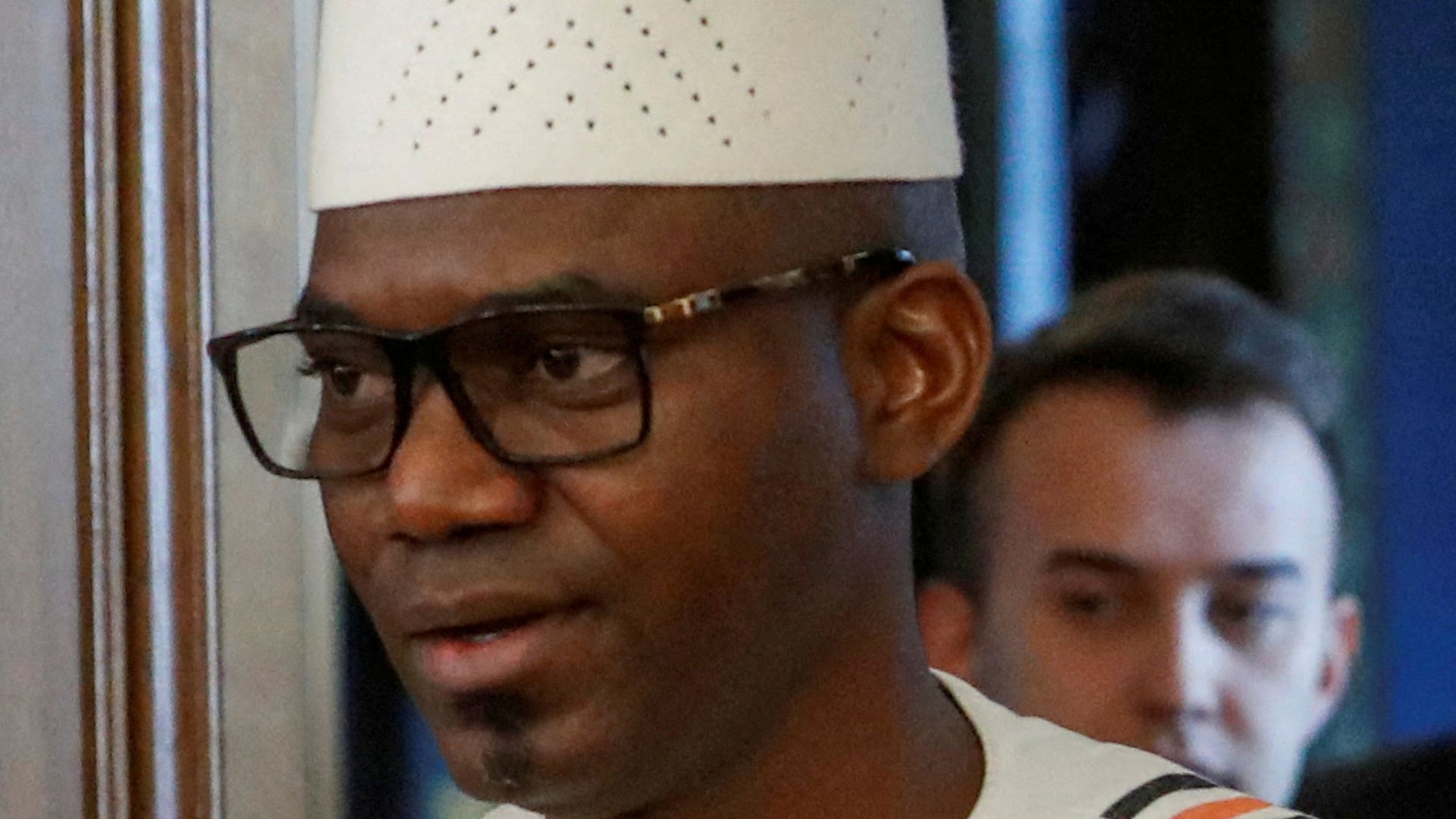
The reports surfacing from the central and northern regions of Mali point toward a catastrophic security failure that has culminated in the death of the country’s Minister of Defense. This is not merely another skirmish in a decade-long insurgency. It is a systemic breakdown. The assassination occurred during a high-stakes coordinated assault by insurgent forces, likely the Jama'at Nusrat al-Islam wal-Muslimin (JNIM), targeting a military convoy or a forward operating base. While the transitional government in Bamako often projects an image of total control through its alliance with Russian paramilitary forces, this event shreds that narrative. The defense minister is gone. His death leaves a vacuum in the heart of the junta’s military strategy and signals that the insurgents have achieved a level of intelligence penetration and operational reach that the current administration cannot contain.
The "why" behind this specific escalation is rooted in the junta’s decision to abandon traditional Western security partnerships in favor of a more aggressive, mercenary-backed approach. This shift has not brought stability. Instead, it has radicalized local populations caught in the crossfire and emboldened insurgent groups who now view the state as a hollowed-out shell propped up by foreign guns.
The Intelligence Breach and the Fall of the Defense Minister
Insurgent groups do not stumble upon a defense minister by accident. This was a targeted strike. To pull off an assassination of this magnitude, the attackers required precise, real-time data on the minister’s movements, his security detail, and the specific vulnerabilities of his route.
The security apparatus in Mali is currently fragmented. On one hand, you have the regular Malian Armed Forces (FAMa), which are struggling with morale and equipment shortages. On the other, you have the remnants of various local militias and the heavy-handed presence of Russian contractors. This fragmentation creates a fertile ground for double agents and informants. When a defense minister travels to a conflict zone to boost troop morale or inspect a frontline, he is at his most vulnerable. The insurgents clearly exploited a gap in the communication chain.
The assault itself was reportedly a multi-phase operation. It began with improvised explosive devices (IEDs) to disable the lead vehicles, followed by heavy small-arms fire and rocket-propelled grenades from elevated positions. This is a classic "L-shaped" ambush. It’s designed to trap a convoy in a kill zone where escape is nearly impossible. The fact that the minister’s security detail could not extract him suggests they were either overwhelmed by sheer numbers or that the insurgents had better tactical positioning from the start.
The Russian Gamble and the Erosion of Sovereignty
For years, the Malian junta has argued that the departure of French and UN forces would allow them to take the "gloves off." They brought in the Wagner Group—now rebranded under various Russian state-linked entities—to provide the kinetic force they felt the West was unwilling to provide.
But mercenaries are not nation-builders. They are force multipliers for short-term objectives. Their presence has indeed allowed the Malian state to retake certain towns, such as Kidal, but at a staggering cost. The heavy-handed tactics used during these "cleansing" operations have driven entire communities into the arms of the JNIM and other radical factions. When a village sees its elders detained or disappeared by foreign contractors, the local insurgent recruiter doesn't have to work very hard.
This death proves that the Russian shield is porous. If the man responsible for the entire nation’s defense cannot be kept safe, the average soldier in a remote outpost has zero chance. The junta is now facing a credibility crisis. They traded international legitimacy for a promise of security, and today, they have neither.
The Tactical Evolution of Central Sahel Insurgents
We are no longer dealing with disorganized bands of desert rebels. The groups operating in Mali, Burkina Faso, and Niger have evolved into a sophisticated shadow state. They collect taxes. They provide rudimentary justice systems. Most importantly, they have mastered the art of asymmetrical warfare against conventional armies.
Their tactics have shifted from simple hit-and-run attacks to complex, multi-site offensives. By hitting the defense minister, they have sent a message to the entire African Union: no one is out of reach. This psychological warfare is just as important as the physical damage. It forces the military to pull back from rural areas to protect high-value targets in the cities, effectively ceding the countryside to the insurgents.
The Problem with the Bamako Bubble
There is a growing disconnect between the political elite in Bamako and the reality on the ground in regions like Mopti or Gao. In the capital, the narrative is one of "sovereignty" and "national pride." But sovereignty is a ghost if you cannot protect your borders or your cabinet members.
The junta has consistently silenced journalists and activists who point out the deteriorating security situation. By controlling the airwaves, they’ve managed to keep a lid on domestic dissent. However, the death of a figure as prominent as the defense minister is impossible to hide or spin as a minor setback. It is a blinking red light on the dashboard of a failing state.
Resource Competition and the Economic Engine of Conflict
To understand how these insurgent groups fund such high-level operations, one must look at the gold mines and the smuggling routes. Mali is one of Africa’s top gold producers, and much of the artisanal mining happens in areas where the state’s presence is minimal.
Insurgents have effectively "taxed" these mines, creating a steady stream of revenue that pays for high-end weaponry, night-vision gear, and the loyalty of local informants. They are running a business. The war is the environment in which that business thrives. As long as the central government focuses solely on military solutions while ignoring the economic desperation of the north and center, the insurgents will always have a pool of recruits and a bankroll to support them.
The Geopolitical Fallout
This assassination will reverberate far beyond Mali’s borders. The Economic Community of West African States (ECOWAS) has already been struggling with how to handle the "coup belt" across the Sahel. The death of the defense minister makes Mali look like a liability to its neighbors. If the Malian state collapses or retreats further, the spillover into coastal states like Ghana, Togo, and Benin will accelerate.
Western intelligence agencies are likely watching this with a mix of "we told you so" and genuine alarm. While they have been pushed out of the country, the rise of a jihadist proto-state in the heart of West Africa is a direct threat to European and American interests. Yet, there is no easy way back in. The bridge has been burned.
The Internal Power Struggle
Within the Malian junta itself, this death will trigger a scramble for power. The defense minister was a key pillar of the transitional government. His replacement will need to be someone who is both loyal to the junta leader, Assimi Goïta, and acceptable to the Russian partners.
There is also the risk of internal blame-shifting. Was there a failure in the military command? Did the intelligence services miss the warnings? When a high-ranking official dies, the knives usually come out within the palace walls. This internal friction only serves to further distract from the primary mission of securing the country.
The Reality of Counter-Insurgency in the Sahel
Counter-insurgency is 20% kinetic action and 80% governance. Mali is currently attempting to flip those percentages. You can kill insurgents all day, but if the local population doesn't trust the police, doesn't have access to water, and sees the army as an occupying force, the insurgency will never end.
The death of the defense minister is a symptom of a government that has lost its grip on the fundamental duties of a state. It is a reminder that a military uniform does not inherently provide the skills needed to manage a complex, multi-ethnic crisis. The junta’s reliance on "strength" has been exposed as a facade.
Mali is at a crossroads where the path of pure military force has led to the doorstep of its own leadership. The insurgents have proven they can strike the head of the snake. If the response from Bamako is simply more of the same—more Russian-backed sweeps, more arrests of dissidents, and more isolation from the global community—then this assassination won't be an outlier. It will be the beginning of the end for the current transitional experiment.
The state must find a way to re-engage with its alienated populations and rebuild a security architecture that isn't dependent on foreign mercenaries who have no stake in Mali’s long-term survival. Without a radical shift in strategy, the map of Mali will continue to shrink until the "Bamako Bubble" is all that remains.