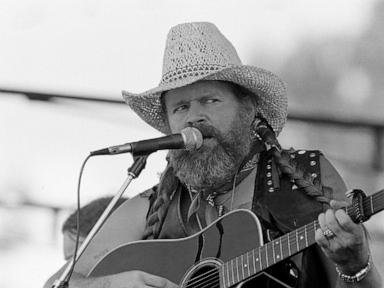
The air in the bars along Lower Broadway in Nashville usually smells like stale beer and broken dreams, but today it feels a little heavier. It’s the weight of a silence that hasn't existed for decades. David Allan Coe, the long-haired, tattooed outlaw who gave a voice to every frustrated worker stuck behind a punch-clock, has finally hung up his guitar at the age of 86. He didn't just die; he exited a stage he had been haunting since the 1970s, leaving behind a legacy that was as messy, offensive, and brilliant as the man himself.
He was the "Mysterious Rhinestone Cowboy." He was a convict. He was a cult leader to some and a pariah to others. But to the millions of people who ever felt the soul-crushing weight of a Monday morning, he was the guy who wrote the anthem of their lives. For a more detailed analysis into similar topics, we suggest: this related article.
The Song That Shook the Factory Floor
In 1977, Johnny Paycheck took a song written by Coe and turned it into a cultural explosion. Take This Job and Shove It wasn't just a hit; it was a revolution wrapped in a steel guitar riff. Think about the era. America was grappling with the aftermath of Vietnam, a stagnant economy, and the realization that the post-war industrial dream was starting to rust.
Imagine a man named Gary. Gary works at a tire plant in Ohio. He’s forty-two, his knees ache, and his foreman has been riding his back for six hours about a production quota that’s physically impossible to meet. Gary goes to the local tavern after his shift, drops a quarter into the jukebox, and hears Coe’s lyrics blasting through the speakers. For three minutes, Gary isn't a cog in a machine. He’s a king. He’s powerful. He’s the man who can walk away. To get more information on this topic, detailed coverage can also be found at IGN.
That was Coe's gift. He understood the invisible stakes of the working class. He knew that for most people, the greatest fantasy wasn't winning the lottery or finding true love—it was the dignity of telling a tyrant to go to hell. Coe didn't just write about the struggle; he lived in the wreckage of it.
A Life Lived in the Grays
David Allan Coe wasn't a "hat act." He wasn't some polished product of a Nashville marketing meeting. His life was a jagged line of prison sentences, reform schools, and hard-won wisdom. He spent a significant portion of his youth behind bars, claiming he spent time in the same correctional facilities as Charles Manson. Whether every story he told was 100% factual is almost beside the point. In the world of outlaw country, the legend is often more honest than the ledger.
He arrived in Nashville in a red and white hearse, parking it right in front of the Ryman Auditorium. It was a calculated, theatrical middle finger to the establishment. While the Grand Ole Opry was busy trying to keep country music "clean" and family-friendly, Coe was busy reminding everyone that the roots of the genre were buried in dirt, blood, and prison yard dust.
He was a walking contradiction. He wrote You Never Even Called Me by My Name, often cited as the "perfect country and western song" because it checked every stereotypical box: rain, trucks, trains, mama, and getting drunk. It was a satire of the industry he was simultaneously conquering. He was mocking the very hands that fed him, and the fans loved him for it because they felt the same way about their own lives.
The Shadow Side of the Outlaw
To tell the story of David Allan Coe without mentioning the controversy is to lie to the reader. He wasn't a hero in the traditional sense. In the late 70s and early 80s, he released "underground" albums that contained material so offensive, so racially and sexually charged, that they remain a dark stain on his history.
This is where the human element gets complicated. We want our icons to be simple. We want them to be either saints or villains. Coe refused to cooperate with that desire. He was a man who could write a tender ballad like The Ride—a haunting story about the ghost of Hank Williams—and then turn around and record something that would get him banned from every radio station in the country.
He didn't care about being liked. He cared about being heard, even when what he had to say was ugly. He represented the raw, unfiltered, and often uncomfortable reality of a subculture that felt forgotten by the mainstream. He was the voice of the fringe, the biker, the convict, and the disgruntled laborer. He existed in the space between the law and the lore.
The Ghost on the Highway
Consider the imagery of his most famous hit as a performer, The Ride. A hitchhiker is picked up by a mysterious driver in a long white Cadillac. The driver is revealed to be the ghost of Hank Williams, who warns the young singer that the music business will "rip your heart out" and "throw it in the street."
That song wasn't just a ghost story. It was a warning. Coe knew the cost of the life he chose. He saw the way the industry chewed up artists and spat out caricatures. He fought against that process his entire life, often by being his own worst enemy. He declared himself the "Longhaired Redneck," bridging the gap between the hippies and the hard-hats at a time when those two groups were literally at each other's throats.
He was a bridge-builder who used dynamite to clear the path.
The Final Punch-Clock
As the news of his passing circulated, social media didn't fill up with corporate tributes from the Nashville elite. Instead, it was filled with stories from people like Gary. Men and women who remembered hearing his voice on a crackling radio while they drove a truck through the middle of the night. People who used his music as a shield against the monotony of their existence.
The statistics will say he had a few gold records and a string of hits. The historians will talk about his influence on Waylon Jennings and Willie Nelson. But the real truth of David Allan Coe lies in the silence of the offices and factories across the country.
The man who wrote the most famous resignation letter in history has finally resigned himself to the earth. He didn't leave quietly. He didn't ask for permission. He just did what he always did: he walked out the door, hopped in his hearse, and headed toward the horizon.
The jukebox in that Ohio tavern is still there. If you listen closely, between the clinking of glasses and the hum of the refrigerator, you can almost hear the ghost of a gravelly voice telling the world that it doesn't own him anymore. He’s gone, but the spirit of defiance he bottled up in a few simple chords is immortal. Somewhere, right now, someone is staring at a computer screen or a conveyor belt, humming a melody that makes them feel just a little bit more like a human being and a little bit less like a machine.
That is the only legacy that ever really mattered to him.
The foreman is yelling. The clock is ticking. But for David Allan Coe, the shift is over.