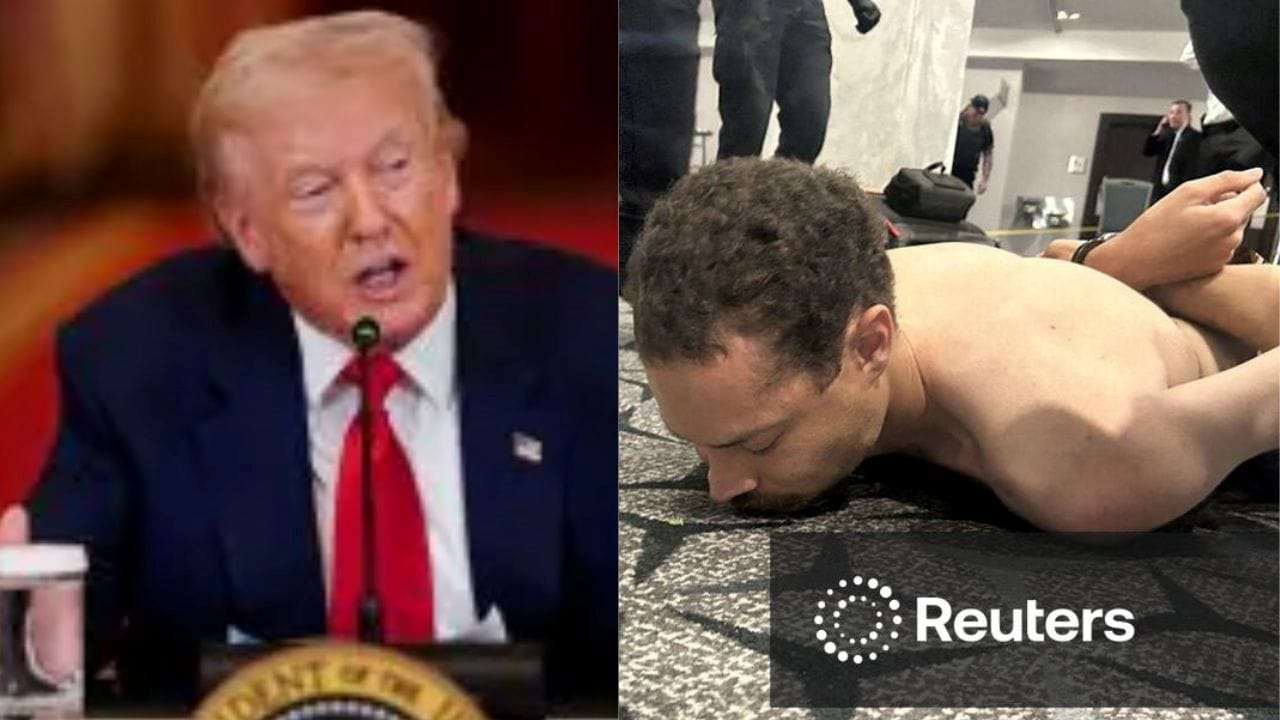
The media is obsessed with the surface-level madness of shooters and the predictable, sanitized deflections of politicians. When a gunman drops a manifesto claiming a sitting US President is part of a pedophile ring, and Donald Trump responds by calling him a "pretty sick guy," we are watching a scripted play of mutual obsession. We are looking at the wrong map.
The press treats these manifestos as psychological artifacts. They aren't. They are open-source marketing documents designed for a post-truth digital economy. Trump’s dismissal of the claims isn't just a rebuttal; it’s a masterclass in narrative containment that the mainstream media is too slow to grasp. We aren't dealing with "pretty sick guys" in a vacuum. We are dealing with the inevitable byproduct of a fractured information architecture where the line between fringe conspiracy and political leverage has dissolved entirely.
The Myth of the Lone Madman Manifesto
Every time an act of violence is accompanied by a PDF, the collective "experts" rush to analyze the shooter's mental state. They look for childhood trauma or specific radicalization points. This is a distraction.
Modern manifestos are built like SEO-optimized landing pages. They are designed to trigger specific algorithmic responses. They use "keyword stuffing"—pedophilia, deep state, replacement—to ensure that when the act occurs, the media is forced to repeat the terms. By dismissing the claims as the ramblings of a "sick guy," Trump isn't just ignoring the shooter; he is refusing to engage with the SEO. He understands what the legacy media doesn't: the moment you debate the contents of a manifesto, the manifesto wins.
The content is irrelevant. The mechanics are everything. These documents function as a Distributed Denial of Service (DDoS) attack on public discourse. They flood the zone with so much noise that the actual underlying societal rot—our inability to manage digital radicalization pipelines—remains unaddressed.
Why 'Sick' Is a Strategic Shield
Calling a political extremist "sick" is the ultimate move of power. It moves the conversation from the political to the clinical. If an attacker is "sick," their ideas don't require an intellectual response. They require a prescription.
But here is the nuance the pundits missed: Trump’s "pretty sick guy" framing isn't just an insult. It's a firewall. By labeling the gunman as mentally unstable, Trump successfully detaches the shooter's grievances from his own base. It’s a classic move in reputation management. I’ve seen Fortune 500 CEOs use this exact tactic when faced with whistleblower claims that contain 1% truth and 99% insanity. You don’t address the 1%. You burn the whole house down by highlighting the insanity.
The media’s mistake is thinking that by reporting on the "pedophile" claim, they are "fact-checking" a delusion. In reality, they are providing the reach the shooter couldn't achieve alone.
The Architecture of Radicalization
We have built a world where the fringe can force the center to speak its language. The "paedophile" claim is the perfect weapon because it is the "nuclear option" of moral high ground. It is the ultimate conversation-stopper.
The internet has flattened the hierarchy of information. In 1990, a manifesto would end up in a police evidence locker. Today, it’s on a CDN (Content Delivery Network) before the first shot is fired. We are trying to use 20th-century political rhetoric to solve 21st-century algorithmic problems.
- Information Asymmetry: The shooter only needs one headline. The President needs a million corrections.
- The Outrage Tax: Every time you click an article about the manifesto’s "claims," you are paying a tax to the attention economy that funds the next one.
- The Validation Loop: When a President acknowledges the claim—even to reject it—it gives the claim a permanent spot in the digital record.
Stop Fact-Checking Delusions
People often ask: "How do we stop the spread of these conspiracy-driven manifestos?"
The premise of the question is flawed. You don’t stop the spread by "debunking" them. Debunking is just repeating the lie with a "no" attached to it. The brain, particularly the lizard brain of a radicalized internet dweller, often forgets the "no" and remembers the "lie."
The industry standard of "transparency" is failing us. In any high-stakes crisis management scenario, the rule is simple: Do not repeat the charge. The media violates this rule every single hour. They headline the accusation, then bury the rebuttal in the third paragraph. They think they are being objective. They are actually being accomplices in a brand-awareness campaign for nihilism.
The High Cost of the 'Pretty Sick Guy' Defense
While Trump’s dismissal is effective in the short term, it creates a long-term deficit of trust. When we pathologize every political extremist as "sick," we lose the ability to analyze the genuine, non-clinical reasons people are being pushed to the edge.
It’s lazy. It’s the "consensus" move.
The truth is much more uncomfortable: many of these individuals are perfectly "sane" by clinical standards but have been fed a diet of high-octane information sewage for a decade. By calling them "sick," we absolve the platforms, the algorithms, and the political rhetoric that groomed them. We treat the symptom and ignore the chemistry of the poison.
Disruption of the News Cycle
If we want to disrupt this cycle, we have to stop treating these events as "news" and start treating them as "malware."
A manifesto is a virus. The media is the host. The public is the target.
- Starve the fire: Stop publishing the names.
- Delete the document: Stop quoting the specific grievances.
- Audit the algorithm: Move the focus from the "sick guy" to the code that put the "sick" ideas in front of him 18 hours a day.
The "pretty sick guy" comment is a symptom of a political class that has no idea how to handle the digital Frankenstein it helped create. We are watching a 1940s defense system try to intercept a hypersonic missile. It’s not just ineffective; it’s embarrassing.
The next time a document like this drops, look past the accusations. Ignore the "sick" labels. Look at the infrastructure. Look at the way the information is being packaged for your consumption. The gunman didn't just want to kill; he wanted to edit your reality. Trump's "rejection" of the claim is just the next scene in a movie where the audience is the only one who doesn't know it's a script.
The manifesto isn't a cry for help. It’s a pitch deck for a civil war. Stop reading it. Stop "rejecting" it. Start dismantling the machine that makes it profitable.
Stop playing your part in the play.