History is usually a bore. It’s dates, dusty maps, and guys in wigs. But then you listen to Matt Christman talk about the Spanish Civil War, and suddenly it’s not about the past anymore. It’s about right now. It's about that feeling in your gut that the world is breaking, and nobody has a plan to fix it.
Honestly, Christman—the co-host of Chapo Trap House—has spent the last few years turning into a sort of "Grill Stream" philosopher-king. He doesn't just recite facts. He digs for the vibes of history. His take on the Spanish Civil War, captured in his podcast series and the book ¡No Pasarán!, isn't just a military play-by-play. It’s a eulogy for a moment when the world almost went a different way.
Why Matt Christman Obsesses Over Spain
Most history buffs look at 1936 Spain and see a "prelude" to World War II. You know the drill: Hitler and Mussolini testing their planes, Stalin being paranoid, and the Western democracies acting like cowards. But for Matt Christman, the Spanish Civil War is the "horizon."
It’s the last time a real, bottom-up social revolution felt possible.
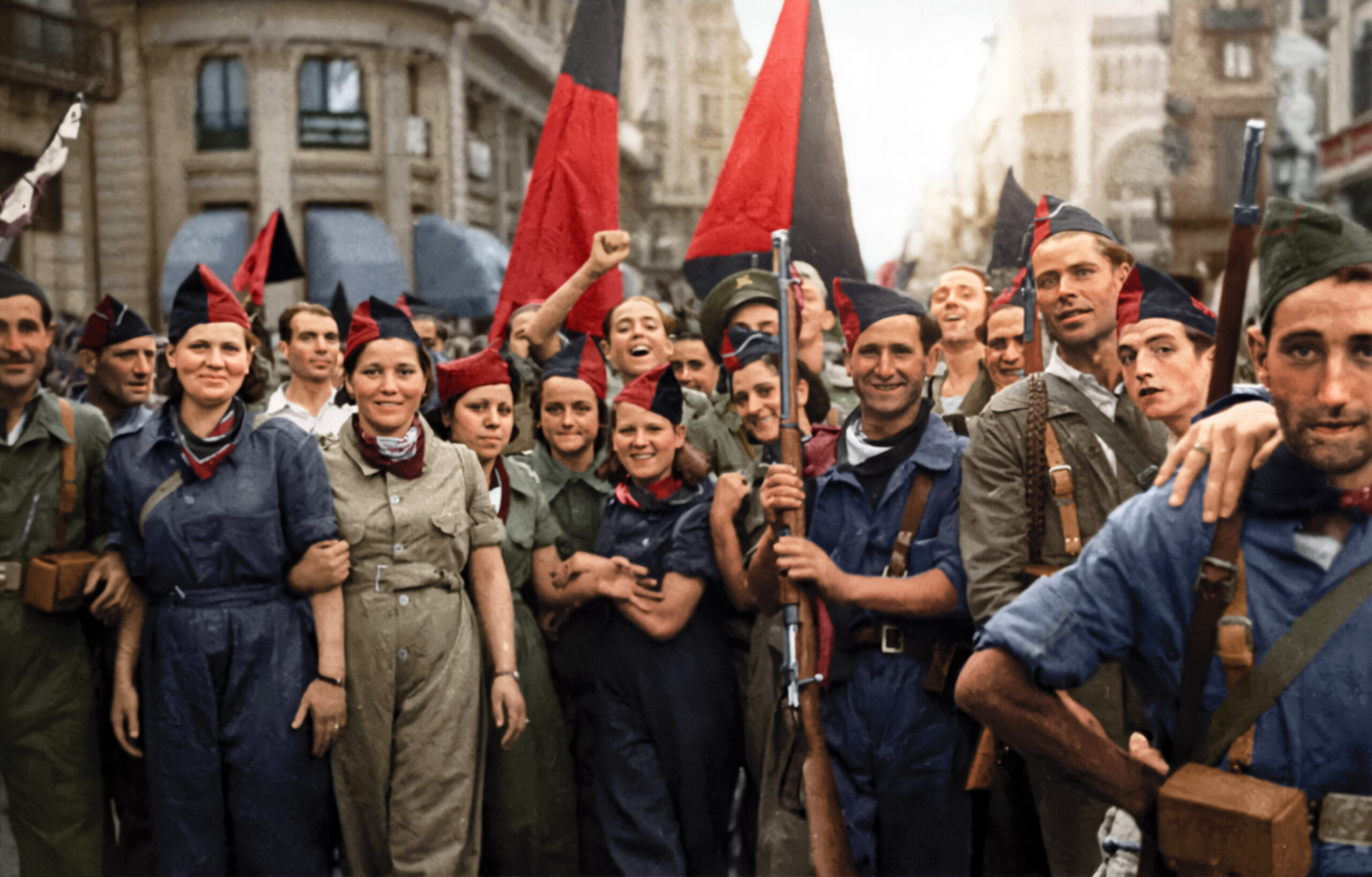
Think about it. You had peasants in Aragon literally burning money because they didn't believe in it anymore. You had factory workers in Barcelona running their own shops without bosses. Christman argues that this wasn't just a war between "left" and "right." It was a collision between a dying old world and two different versions of the future: the cold, industrial machine of Capitalism/Fascism and the messy, human dream of Social Revolution.
The Inebriated Past: A Different Way to Learn
If you’ve followed his "Inebriated Past" episodes, you know Christman’s style. It’s freewheeling. He might spend twenty minutes talking about the psychological hangups of Spanish generals before pivoting to why the Catholic Church in Spain was basically a land-holding corporation.
He breaks it down into pieces that actually make sense to a modern brain:
- The Pronunciamento: How Spanish military culture was basically addicted to launching coups.
- The Popular Front: That awkward, doomed alliance where liberals and radicals tried to share a bed while the house was on fire.
- The Anarchists (FAI/CNT): The wild cards who wanted to build a new world while fighting a war, which is about as hard as it sounds.
The tragedy he points out isn't just that the Republic lost. It's that they were forced to choose between winning the war and winning the revolution. The Soviets said, "Stop the revolution so we can win the war." The Anarchists said, "The revolution is the war." Spoilers: they got neither.
¡No Pasarán! and the Book That Almost Wasn't
There was supposed to be a massive podcast series, a spiritual successor to his Thirty Years' War epic, Hell on Earth. But then Christman suffered a serious medical emergency in late 2023. It sidelined him for a long time.
Because of that, the project morphed. ¡No Pasarán!: Matt Christman's Spanish Civil War was released as a book in late 2024 (and seen again in 2025/2026 printings). It’s concise. It doesn't waste your time with 800 pages of troop movements. Instead, it focuses on the why. Why did these people think they could win? Why does their failure still make us feel so hollow?
He writes about the "pilot light" of humanity. Even when the "T-800 Terminator skeleton of Capitalism" (as he famously calls it) seems to have won, the Spanish experience proves that people can organize themselves differently. They did it. For a few months in 1936, the money didn't matter, and the bosses were gone.
What Most People Get Wrong About the War
People love to simplify this. They think it was just "Democrats vs. Fascists."
Christman kicks that idea to the curb. He shows how the Republic was basically a "failed state" from the jump because the people in charge—the liberal elites—were more scared of their own armed workers than they were of the fascist generals. That’s a heavy lesson. If you’re more afraid of the person to your left than the monster on your right, you’ve already lost.
He also dives into the International Brigades. These weren't just "volunteers." They were guys from Brooklyn, London, and Berlin who realized that if they didn't stop fascism in the olive groves of Spain, they’d be fighting it in their own backyards soon enough. They were right.
How to Actually Use This Info
If you're looking to dive into the Matt Christman Spanish Civil War rabbit hole, don't just look for a Wikipedia summary.
- Listen to "The Inebriated Past" parts XIV and XV. These are the foundation. He covers the transition from the decaying Spanish Empire to the 1934 Asturian Uprising.
- Grab the book ¡No Pasarán!. It’s the "director’s cut" of his thoughts. It’s better than the podcast in some ways because it’s tightened up.
- Look for the "Hell on Earth" parallels. Christman often connects the 17th-century crisis to the 1930s. He sees history as a series of "hinge points" where humanity decides which path to take.
The real takeaway? Stop looking at history as a finished story. Christman treats the Spanish Civil War as a "living" warning. It tells us that trust is the only real currency and that once a society loses its "utopian horizon," it starts to eat itself.
Next time you're doomscrolling, maybe put on the Chapo episodes about Spain. It won't make you feel "better," but it might make you feel less alone in the chaos.
Actionable Insight: To get the most out of Christman's analysis, compare his view of the "Popular Front" to modern political coalitions. Notice how the tension between "incremental reform" and "total systemic change" hasn't actually changed in nearly a hundred years. Reading George Orwell’s Homage to Catalonia alongside Christman’s book provides the perfect "on-the-ground" vs. "birds-eye-view" perspective.