The current discourse regarding military intervention in Iran hinges on a fundamental misunderstanding of Escalation Dominance—the ability to increase the stakes of a conflict in a way that the opponent cannot match, thereby forcing their capitulation. When political rhetoric suggests that the United States should "finish the job" if specific yield conditions are not met, it assumes a linear progression of power. In reality, the strategic landscape in the Middle East functions as a multi-variant system where kinetic action does not guaranteed a specific geopolitical output. To analyze the validity of an "all-in" military strategy, one must deconstruct the theater into its three primary operational pillars: the Attrition of Proxy Networks, the Integrity of Global Energy Arteries, and the Nuclear Breakout Calculus.
The Asymmetric Parity Trap
The primary friction point in any "finish the job" directive is the disparity between conventional military superiority and asymmetric reach. While the United States maintains absolute supremacy in high-intensity, conventional combat—defined by air superiority, precision-guided munitions (PGMs), and carrier strike group (CSG) projection—Iran operates via a "Grey Zone" methodology. This creates an environment where the cost of a US strike is high-transparency and high-expenditure, while the Iranian response is low-cost and high-deniability.
This asymmetry is best quantified through the Cost-Exchange Ratio. A single SM-6 interceptor missile, costing approximately $4 million, is frequently utilized to down a loitering munition (drone) that costs less than $30,000 to produce. If the strategic objective is to "finish the job" through attrition, the logistical tail of the United States faces a mathematical bottleneck. Depleting PGM stockpiles against low-tier assets creates a vulnerability window in other theaters, such as the Indo-Pacific.
The Three Pillars of Iranian Deterrence
To evaluate the feasibility of Senatorial demands for definitive military action, we must map the three mechanisms Iran utilizes to prevent a full-scale invasion or regime collapse.
Proximal Encirclement (The "Ring of Fire"):
Iran has outsourced its frontline defense to a network of non-state actors across Lebanon, Syria, Iraq, and Yemen. This provides "Strategic Depth." An attack on the Iranian mainland does not merely trigger a localized response; it activates a multi-axis bombardment of regional allies and US forward-operating bases. The failure to dismantle these networks prior to a direct strike ensures that the "finish the job" phase begins with a massive, decentralized counter-offensive that the US cannot suppress simultaneously.Maritime Chokepoint Leverage:
The Strait of Hormuz remains the world’s most sensitive energy transit point. Approximately 20% of global petroleum liquids pass through this 21-mile-wide waterway daily. The Iranian Navy does not need to win a naval battle to "win" this sector; they only need to make the corridor uninsurable. By utilizing sea mines, fast-attack craft, and shore-based anti-ship cruise missiles (ASCMs), Iran can induce a global energy price shock. This creates a domestic political cost for the US administration that often outweighs the military gains of the intervention.The Nuclear Threshold:
The most volatile variable is the "Breakout Clock." Standard intelligence metrics track the "Significant Quantity" (SQ) of highly enriched uranium (HEU) required for a single nuclear device. As kinetic pressure increases on the Iranian conventional state apparatus, the incentive for a dash toward nuclear weaponization increases. This is the Survival Logic of Weak States: when a regime perceives its end is imminent via conventional means, the only remaining deterrent is the acquisition of an existential weapon.
The Kinetic Failure Mode
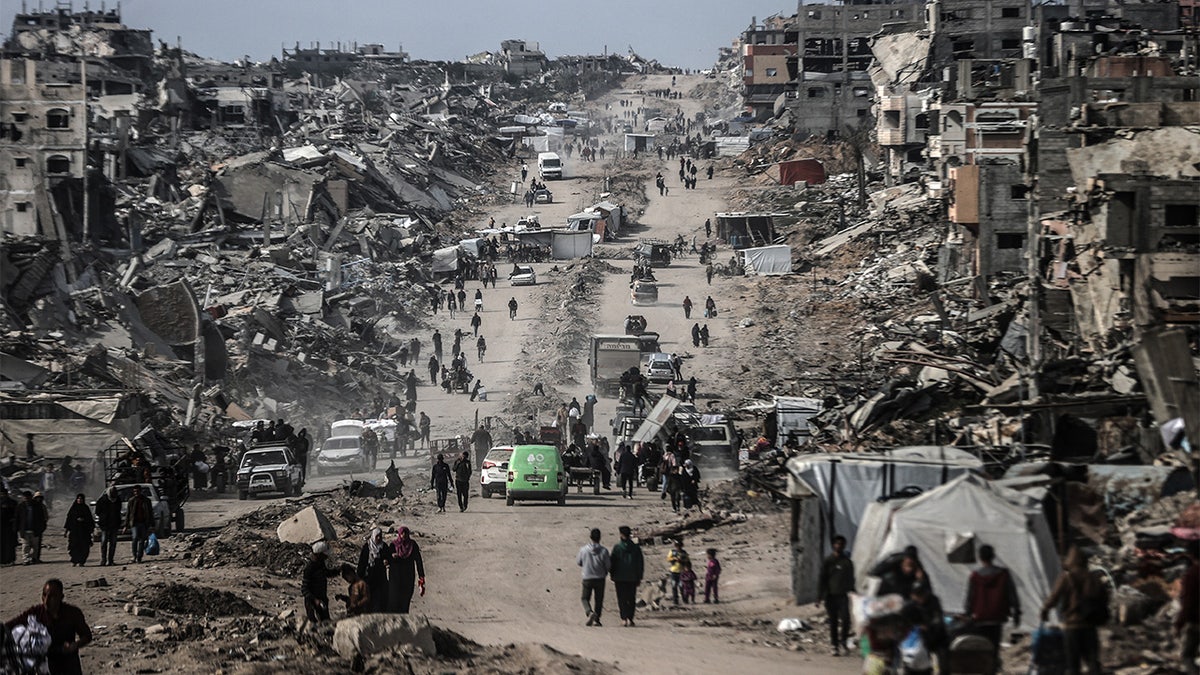
The logic of "finishing the job" suggests a finite end-state—a point where the opponent ceases to function as a coherent military or political entity. However, historical data from regional interventions (Iraq 2003, Libya 2011) demonstrates that the destruction of the central command structure often leads to a "Power Vacuum Entropy."
In the Iranian context, the IRGC (Islamic Revolutionary Guard Corps) is not a standard military; it is a parallel state with deep economic integration. Decapitation strikes do not simply remove a leadership tier; they de-regulate the internal security apparatus, likely leading to the proliferation of advanced weaponry into the hands of autonomous cells. The "job" is never finished because the target evolves from a legible state actor into an illegible insurgent network.
Quantifying the Economic Fallout Function
A full-scale conflict with Iran introduces a "Volatility Tax" on the global economy. Unlike localized conflicts, a war in the Persian Gulf impacts the Brent Crude Benchmark instantaneously.
- Stage 1: Speculative Spike. Fear of supply disruption leads to a 15-25% increase in oil prices within 72 hours of the first kinetic strike.
- Stage 2: Logistical Disruption. If the Strait of Hormuz is contested, shipping rates (Worldscale) skyrocket. Insurance premiums for tankers in the Persian Gulf become prohibitive, effectively halting exports from Kuwait, Iraq, and the UAE.
- Stage 3: Secondary Inflationary Wave. The increased cost of energy feeds into global manufacturing and transportation, stalling post-pandemic economic recoveries in Europe and Asia.
This economic feedback loop acts as a natural constraint on US military policy. The strategic "yield" Graham refers to is often sought by Iran through this exact economic leverage. They understand that the US electorate’s tolerance for high gas prices is significantly lower than the Iranian regime’s tolerance for localized military losses.
Structural Weaknesses in the "Yield or Strike" Framework
The ultimatum-based approach—yield or face destruction—fails to account for the Credibility of the Threat. For a threat to change an opponent's behavior, the opponent must believe that:
- Compliance will actually lead to the removal of pressure.
- Non-compliance will lead to a cost they cannot survive.
If the Iranian leadership believes that "yielding" results in a gradual, Western-sponsored regime change regardless of their concessions, they have zero incentive to comply. This is the Security Dilemma: every move intended to increase US security (sanctions, threats) is perceived by Tehran as a precursor to their total elimination, which justifies further aggression and nuclear hedging.
The Logistics of Containment vs. Elimination
The US military's current posture is one of "Integrated Deterrence." This involves a mix of missile defense (THAAD and Patriot batteries), intelligence sharing with the "Abraham Accords" partners, and the deployment of "Over-the-Horizon" strike capabilities.
To transition from containment to elimination—"finishing the job"—would require a force posture change of massive proportions. Analysts estimate that a comprehensive air campaign to neutralize Iran's hardened nuclear sites (such as Fordow, buried deep within a mountain) would require the sustained use of Massive Ordnance Penetrators (MOP) and thousands of sorties over several weeks. This is not a "surgical strike"; it is a major regional war.
The Misalignment of Objectives
The disconnect in the current hawkish rhetoric lies in the definition of the "Job."
- Is the objective Denuclearization? (Achievable through targeted strikes, but with high risk of acceleration).
- Is it Regime Change? (Requires ground occupation, which is currently deemed politically and logistically impossible).
- Is it Regional Containment? (This is the current status quo, which the "finish the job" rhetoric seeks to abandon).
By conflating these three goals, policymakers risk a strategic overreach where the military is tasked with a mission that has no defined exit criteria. The "job" becomes an infinite loop of suppression.
The Strategic Pivot: Precision Containment
The most effective path forward is not a binary choice between total war and total withdrawal, but a strategy of Calibrated Attrition. This involves:
- Degrading the Financial Architecture: Moving beyond simple oil sanctions to a total isolation of the "shadow banking" networks that fund the IRGC’s external operations.
- Technological Interdiction: Disrupting the supply chains for dual-use components (semiconductors and engines) used in drone and missile production.
- Asymmetric Response Parity: Using cyber operations and electronic warfare to impose costs on the Iranian leadership that match the disruption caused by their proxies, without triggering the "Rally 'round the flag" effect of a kinetic bombing campaign.
The demand to "finish the job" is a political slogan, not a military strategy. True victory in the Persian Gulf is not found in the rubble of a destroyed state, but in the maintenance of a balance of power where the cost of Iranian aggression consistently exceeds the benefits. The focus must shift from the finality of a strike to the sustainability of a containment system that prevents nuclear breakout while neutralizing the "Grey Zone" advantages Tehran currently enjoys.
The final strategic play is the reinforcement of regional alliances to create a "Defense Shield" that renders Iranian missile and drone tech obsolete. When the asymmetric tools of the IRGC no longer provide a return on investment, the regime will be forced to negotiate from a position of actual, rather than rhetorical, weakness. Military force should be the scalpel that preserves this containment, not the sledgehammer that shatters the regional order into a thousand uncontrollable pieces.