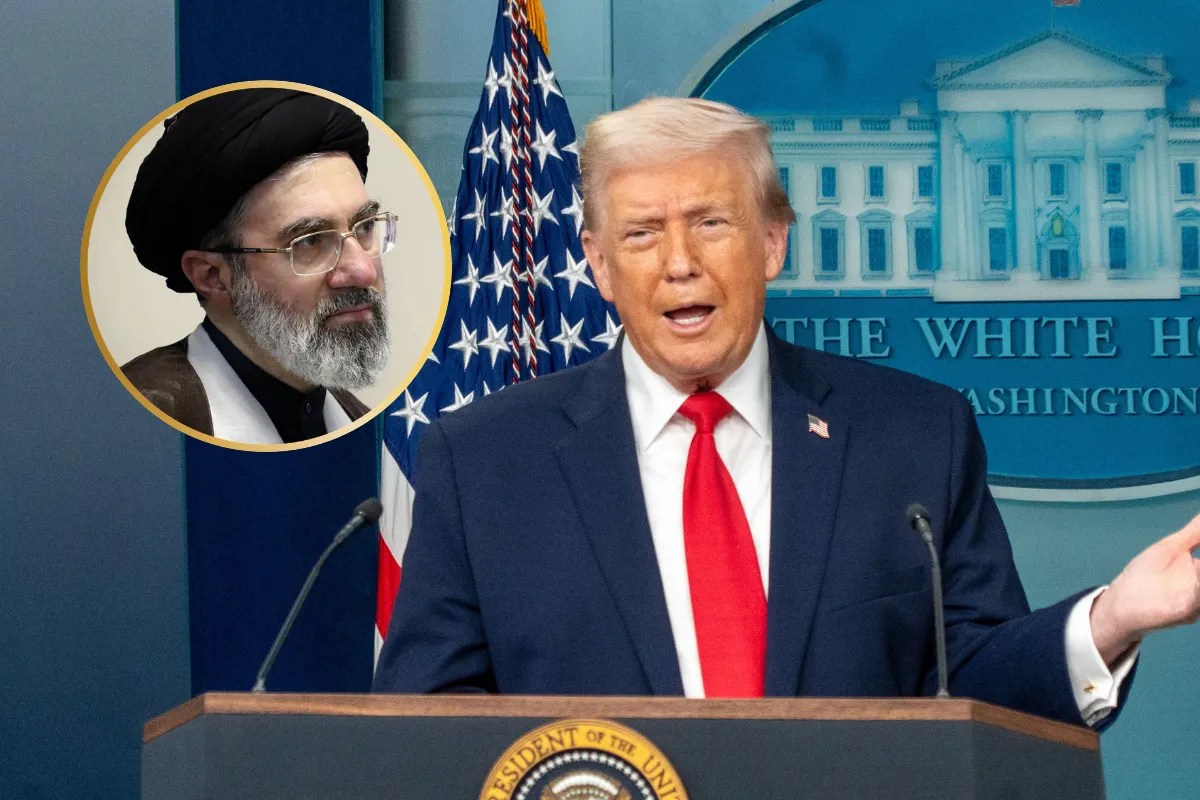
The utilization of Pakistan as a diplomatic conduit between Tehran and Washington represents a calculated shift in Iran’s communication architecture, moving away from traditional European or Omani intermediaries toward a regional security partner. This maneuver is not a gesture of sudden altruism but a tactical response to the erosion of previous negotiation frameworks. By routing a "new offer" through Islamabad, Iran seeks to exploit Pakistan’s unique position as both a neighbor to Iran and a long-standing strategic ally of the United States. This tripartite interaction functions as a high-stakes signaling mechanism designed to bypass the public-facing hostility of domestic politics in both Washington and Tehran.
The Triangulation Framework: Why Pakistan Matters
The choice of Islamabad as a messenger serves three distinct operational objectives that standard diplomatic channels currently lack.
- Security Interdependence: Unlike Switzerland or Oman, Pakistan shares a volatile 900-kilometer border with Iran. Any escalation in regional conflict directly impacts Pakistani internal security, specifically regarding the Sistan-Baluchestan province. By involving Pakistan, Iran creates a stakeholder that is inherently incentivized to ensure the message is delivered and considered, as the cost of diplomatic failure for Pakistan is regional instability.
- The Military-to-Military Channel: Pakistan’s influential military establishment maintains deep ties with the U.S. Pentagon and Central Command (CENTCOM). Iran understands that civilian diplomatic channels in the West are often sluggish or blocked by legislative oversight. A message passed through Islamabad has a higher probability of reaching U.S. security and intelligence agencies directly, providing a "track two" bypass to the State Department’s formal bottlenecks.
- Neutrality vs. Proximity: While Oman has historically been the "Quiet Room" for U.S.-Iran talks, its role has become predictable. Using Pakistan signals a broadening of the diplomatic theater, suggesting that Iran is willing to link regional border security and Afghan stability—areas where Pakistan holds significant leverage—to the broader nuclear and sanctions conversation.
The Structural Anatomy of the "New Offer"
The core of any Iranian proposal in the current climate must address the "Maximum Pressure" legacy versus the "Strategic Patience" model. The logic of the message sent via Pakistan likely rests on a phased de-escalation ladder.
Phase 1: The Sanctions-for-Slowing Swap
Iran’s primary economic constraint is the inability to access frozen assets and international oil markets. The offer likely proposes a verifiable cap on uranium enrichment levels—specifically at the 60% threshold—in exchange for specific, limited sanctions waivers. This is not a return to the Joint Comprehensive Plan of Action (JCPOA) but a "Less-for-Less" arrangement intended to prevent a total collapse into kinetic conflict.
Phase 2: Regional De-escalation Vectors
Tehran recognizes that Washington’s current priority is the prevention of a wider Middle Eastern war. The offer transmitted through Pakistan likely includes "gray zone" concessions. This involves the calibrated control of non-state actors and proxies in exchange for a U.S. commitment to refrain from further direct strikes on Iranian interests. The Pakistani channel is particularly useful here because of Islamabad's historical experience in managing non-state groups across the Durand Line, providing a shared vocabulary for these discussions.
Phase 3: The Nuclear Monitoring Baseline
The offer must address the transparency gap created by the removal of IAEA cameras and monitoring equipment. Any serious Iranian proposal through a third party must include a roadmap for restoring oversight. Without this, the message is merely a stall tactic rather than a negotiation entry point.
Friction Points: Why the Path to Agreement Remains Asymmetrical
Despite the sophistication of the delivery mechanism, several structural barriers prevent these messages from evolving into a formal treaty.
The Verification Bottleneck
U.S. policy now demands "Longer and Stronger" provisions that Iran views as an infringement on national sovereignty. The fundamental distrust means that even if a message is delivered via Pakistan, the U.S. Treasury Department’s compliance requirements act as a permanent brake on any rapid economic relief. Iran seeks immediate liquidity; the U.S. offers incremental, reversible relief. These two kinetic speeds are incompatible.
The Proxy-Nuclear Linkage
Washington no longer views the nuclear program in isolation. The integration of Iran’s ballistic missile program and its regional influence into the negotiation pool is a non-negotiable for the current U.S. administration. Iran, conversely, views its regional influence as its primary "forward defense" and is unlikely to trade it for temporary sanctions relief. Pakistan’s role as a messenger cannot bridge this fundamental gap in strategic objectives.
Domestic Political Cycles
The timing of this message is critical. With U.S. elections always on the horizon and the Iranian leadership facing internal succession dynamics, neither side has the political capital to offer the "Grand Bargain." The message sent through Pakistan is therefore a "floor-setting" exercise—an attempt to establish a minimum level of communication to prevent accidental war, rather than a ceiling-shattering breakthrough.
The Cost-Benefit Analysis for Pakistan
Pakistan’s participation in this exchange is not without risk. For Islamabad, acting as the intermediary offers a way to regain relevance in Washington’s eyes after the withdrawal from Afghanistan. However, this creates a delicate balancing act:
- Financial Implications: Pakistan is currently navigating a precarious IMF program and cannot afford to be seen as aiding Iran in circumventing sanctions.
- The Saudi Factor: Pakistan’s relationship with Riyadh is a primary economic lifeline. Any tilt toward Tehran, even as a messenger, must be carefully coordinated with Saudi interests to avoid a withdrawal of Gulf financial support.
- Border Management: If the diplomatic effort fails, the fallout will likely manifest in increased border skirmishes. For Pakistan, the message is not just about U.S.-Iran relations; it is about securing its own western flank.
Quantifying the Probability of Success
If we analyze the historical success rate of backchannel communications, the Pakistan-mediated offer has a higher probability of achieving a Tactical Pause than a Strategic Shift.
The "Tactical Pause" involves:
- A temporary halt in the expansion of enriched uranium stockpiles.
- A reduction in high-profile maritime seizures in the Strait of Hormuz.
- Limited release of humanitarian funds through third-country banks (likely in Qatar or South Korea).
The "Strategic Shift"—a comprehensive new deal—remains a statistical outlier. The current geopolitical environment is too fragmented. The U.S. is preoccupied with the Indo-Pacific and Eastern Europe, while Iran has pivoted toward the SCO (Shanghai Cooperation Organisation) and BRICS, reducing the relative weight of Western economic incentives.
The Operational Logic of Iranian Signaling
Iran's use of Pakistan is a masterclass in "Signaling Versatility." By choosing a nuclear-armed neighbor that is not a Western satellite, Tehran is telling Washington that the Middle East's security architecture is shifting eastward. This is an attempt to de-westernize the negotiation process.
The strategy is to make the U.S. feel that if it does not engage with the Pakistani-delivered offer, it loses not just a nuclear window, but also the opportunity to stabilize a region where Pakistan and Iran together hold significant disruptive power.
This is a move from the "Omani Model" of quiet mediation to the "Pakistani Model" of regional power-brokering. The message is not just the content of the offer, but the identity of the messenger itself.
Strategic Recommendation
The U.S. should treat the Pakistani channel as a mechanism for Crisis Management (CM) rather than Conflict Resolution (CR). The structural differences between the two nations’ core interests are currently irreconcilable. However, the Pakistan corridor provides a unique "vibration sensor" for Iranian internal stability and military intent.
The optimal play for the West is to utilize Islamabad to establish a permanent de-confliction hotline. This avoids the domestic political cost of formal negotiations while achieving the primary objective: the prevention of a regional conflagration. Iran, in turn, will continue to use this channel to test the limits of U.S. sanctions enforcement, using Pakistan’s own economic needs as a shield for increased regional trade.
The move is a defensive consolidation. Iran is not opening a door to the West; it is reinforcing its perimeter while checking if the occupant of the White House is willing to trade silence for survival.