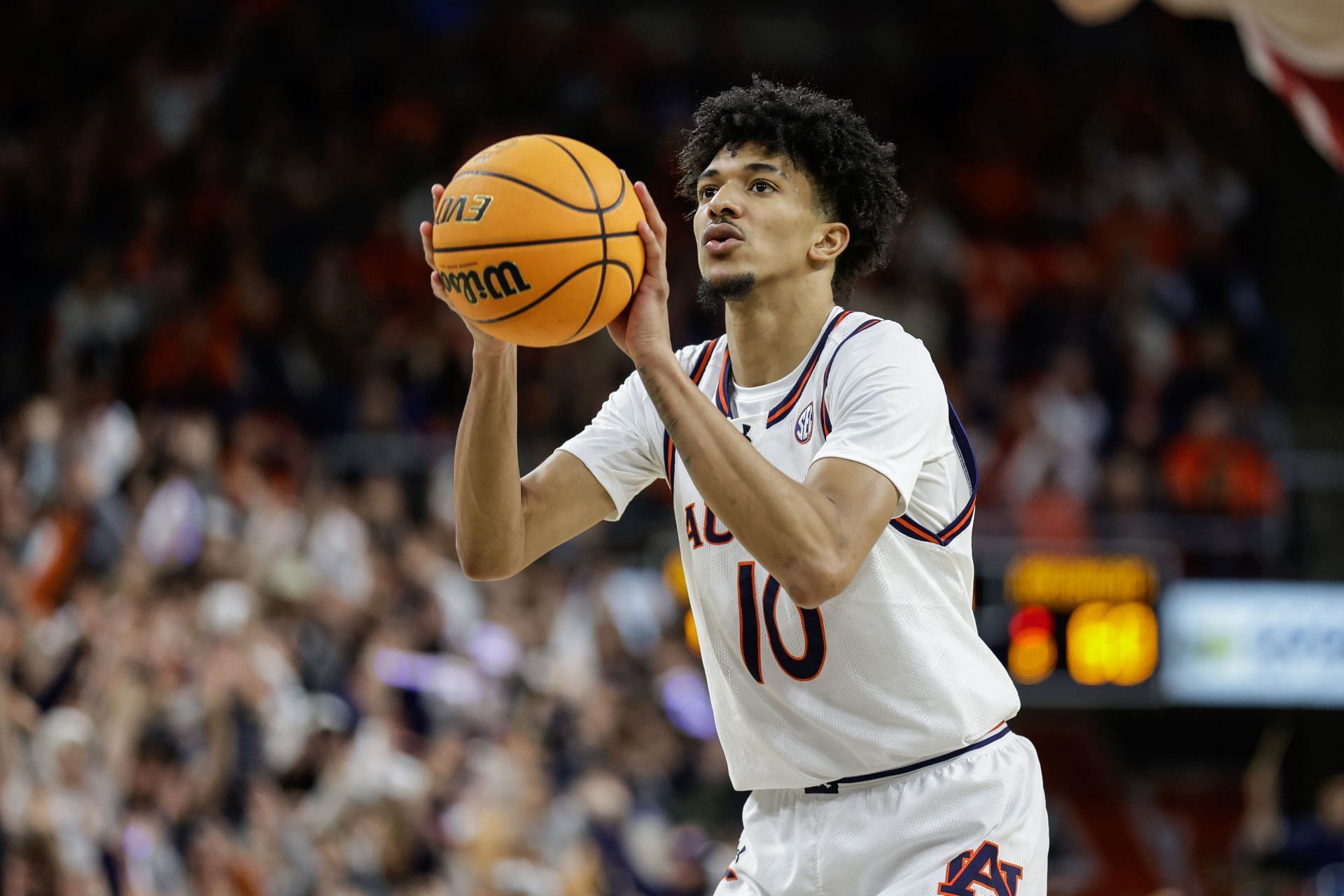
Elite athletic output is traditionally measured through physical metrics: vertical leap, wingspan, and shooting percentages. However, the performance profile of Chadrack Mpoyi at Crean Lutheran High School suggests that these metrics are lagging indicators. The primary driver of his trajectory is the successful management of a severe psychological deficit—grief—through a structured support ecosystem. When an athlete undergoes significant personal trauma, the resulting cognitive load competes for the same neural resources required for high-stakes decision-making and motor control. Mpoyi’s story is not a narrative of "heart," but a demonstration of how social integration and environmental stability act as a force multiplier for raw talent.
The Grief-Performance Bottleneck
Grief operates as a persistent tax on an athlete's executive function. For Mpoyi, the loss of his father in the Democratic Republic of the Congo while he was thousands of miles away created a physiological state of chronic stress. This is characterized by elevated cortisol levels, which, if left unmitigated, lead to muscle protein breakdown and impaired recovery. Also making headlines in this space: The Final Inning of Danny Serafini.
- Attentional Narrowing: Chronic stress forces the brain to prioritize survival-based processing over task-specific focus. On the basketball court, this manifests as a slower reaction to defensive rotations or a failure to process complex offensive schemes.
- Energy Leakage: The emotional labor of processing trauma consumes caloric and mental energy that would otherwise be directed toward skill acquisition (neuroplasticity).
- Isolation as a Variable: In the absence of a stable domestic environment, the athlete enters a "scarcity mindset," where the pressure to perform becomes an existential threat rather than a competitive challenge.
The transition from a state of deficit to a state of performance surplus required a specific structural intervention. The competitor’s narrative calls this "finding a second family," but from a strategic standpoint, this is the implementation of a Reliability Architecture.
The Three Pillars of the Reliability Architecture
The success of Mpoyi’s integration into the Crean Lutheran environment can be categorized into three distinct support vectors that stabilized his performance floor. Additional information regarding the matter are explored by ESPN.
1. Residential Stability and Nutrition Optimization
When the Gess family took Mpoyi in, they didn't just provide a room; they eliminated the "Environmental Noise" that plagues international student-athletes. This includes consistent caloric intake, regulated sleep hygiene, and the removal of housing insecurity. In high-performance sports, these are the baseline requirements for the parasympathetic nervous system to enter a "rest and digest" state, which is the only state where athletic growth occurs.
2. The Surrogate Governance Model
Athletes in Mpoyi’s position often lack a feedback loop that is decoupled from their on-court value. Coaches provide feedback based on utility; the Gess family provided feedback based on identity. This distinction is critical. By providing a "safe-to-fail" zone, they reduced the stakes of any single basketball game. Paradoxically, reducing the perceived stakes of a game often leads to higher performance because the athlete is no longer playing from a defensive, fear-based posture.
3. Cultural Synthesis and Linguistic Onboarding
Mpoyi’s journey involved moving from the Congo to Utah, then to California. Each move represents a "System Reset" where the athlete must relearn social cues and communication protocols. The stabilization of his environment allowed him to stop "translating" his surroundings and start "operating" within them.
Measuring the Return on Social Capital
We can quantify the impact of this support system by looking at the "Uptick Velocity" of Mpoyi’s recruitment and performance. Before his environment stabilized, he was a raw prospect with high physical upside but inconsistent production. Post-stabilization, he became a central pillar of a championship-caliber team.
The mechanism at work here is Social Capital Leveraging. By securing his base physiological and safety needs (per Maslow’s hierarchy), the Crean Lutheran ecosystem allowed Mpoyi to reach the level of "Self-Actualization" on the court.
- Fact: Mpoyi stands 6-foot-4 with a versatile skillset, but his "Skill Floor"—the worst he plays on his worst day—rose significantly once his domestic life was secured.
- Hypothesis: Without the intervention of the Gess family and the Crean Lutheran community, Mpoyi’s "Churn Risk" (the probability of an athlete quitting or underperforming due to mental fatigue) would have been over 70% following the death of his father.
The Logistics of the International Pipeline
The Chadrack Mpoyi case highlights a systemic flaw in how US high schools and colleges handle international talent. Most programs treat athletes as "plug-and-play" assets. They provide the jersey and the court but ignore the Cultural Integration Debt.
This debt accumulates when an athlete is forced to navigate complex legal, linguistic, and emotional landscapes alone. Mpoyi’s success is an outlier because the "debt" was paid by a volunteer support system. For a sports organization to replicate this, they must treat off-court infrastructure as being just as vital as the weight room.
The Cost of Failure in Integration:
- Decreased GPA, leading to NCAA eligibility issues.
- Increased injury rates due to stress-induced muscle tension.
- Reduced "Transferable Skill" development (the ability to apply coaching to live-game scenarios).
The Psychological Pivot: From Grief to Fuel
A critical turning point in Mpoyi’s development was the shift in how he viewed his father’s passing. Initially, the trauma was a weight (Performance Inhibitor). Through the mentorship provided by his host family and coaching staff, it was reframed as a legacy (Performance Catalyst).
This is not a "feel-good" phenomenon; it is a Cognitive Reframing Strategy. When an athlete links their performance to a higher purpose or a specific memory, they tap into a "deeper well" of motivation that is less susceptible to the fatigue of a long season. For Mpoyi, every game became a tribute. This provides a consistent dopamine floor that protects against the "slumps" common in teenage athletes.
Technical Limitations of the Model
While the Mpoyi model of "Community Integration" is highly effective, it has clear scalability limits.
- Dependence on Altruism: The model relies on families willing to take in athletes without financial compensation, which creates a bottleneck in the supply of support.
- Emotional Fragility: The bond between the athlete and the host family is a single point of failure. If that relationship becomes strained, the athlete's performance likely collapses.
- Institutional Blindness: Many schools lack the formal "Player Development" departments found in professional leagues (like the NBA’s Rookie Transition Program), leaving the heavy lifting to individuals rather than systems.
Strategic Directive for Athletic Programs
To maximize the output of high-potential athletes facing personal trauma or cultural displacement, programs must move beyond the "Hard Work" fallacy. The data suggests that work ethic is a variable of environmental safety.
The immediate play for athletic directors and scouts is to audit the "Support-to-Talent Ratio." If an athlete with a 90th-percentile physical profile is operating in a 10th-percentile support environment, the investment is at risk.
The objective is to institutionalize what the Gess family provided organically. This means hiring mental performance coaches who specialize in "Transition Management" and creating formal mentorship programs that pair international players with local families. The goal is to minimize the "Cognitive Tax" so the athlete can spend their entire mental budget on the court.
In the case of Chadrack Mpoyi, his transformation into a Division I-level prospect wasn't just about his jump shot; it was about the successful de-risking of his personal life. The basketball was simply the result of a stabilized system.