The standard news cycle wants you to believe that every phone call between New Delhi and Doha is a high-stakes chess move for regional stability. They frame it as "strategic dialogue" or "humanitarian concern" amid the West Asia crisis. It is a comforting narrative. It is also fundamentally wrong.
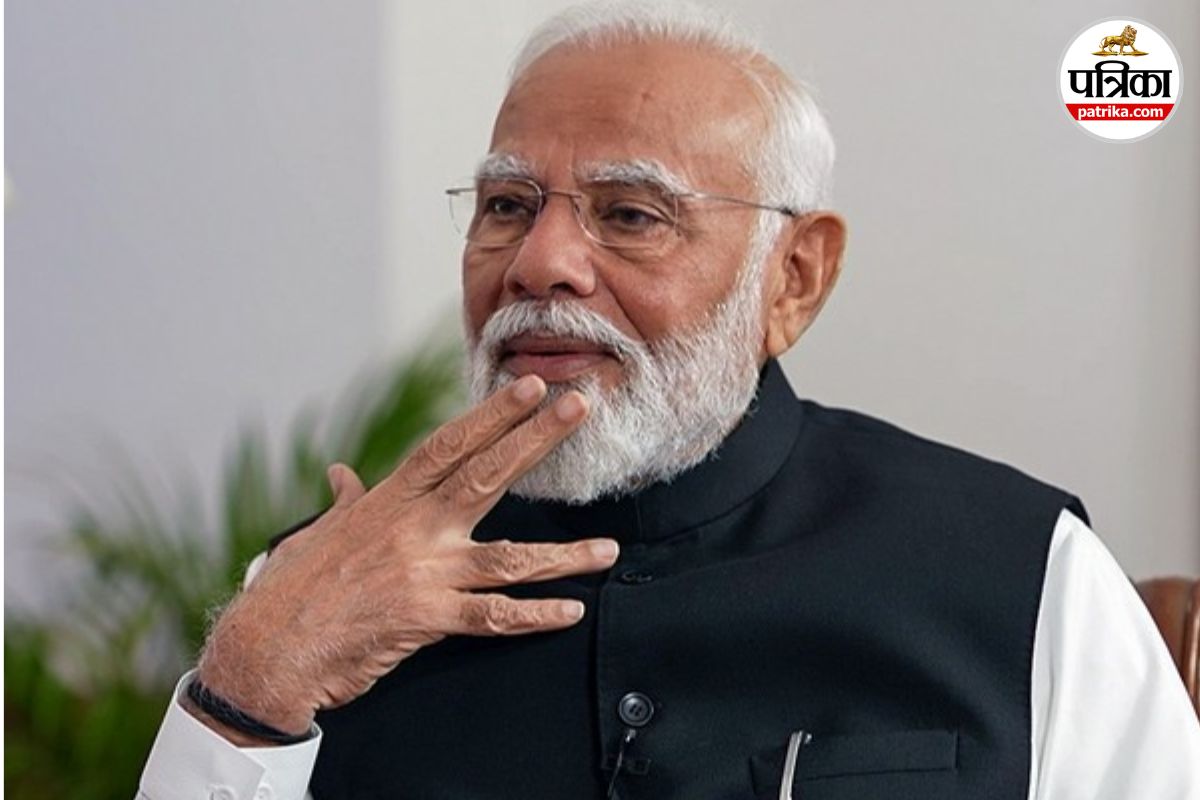
When Prime Minister Narendra Modi speaks with Qatar’s Emir Sheikh Tamim bin Hamad Al Thani, they aren't trying to solve a thousand-year-old sectarian conflict. They aren't trying to broker a ceasefire that seasoned diplomats have failed to secure for decades. To suggest otherwise ignores the cold, hard mechanics of energy security and capital flow.
This isn't a peace talk. It’s a supply chain audit.
The Liquefied Natural Gas Mirage
The mainstream press obsesses over the "diplomatic tightrope" India walks. They miss the pipes under the ground. India imports nearly 40% of its LNG from Qatar. While the world watches missiles, New Delhi is watching the price of $MMBtu$ (Million British Thermal Units).
If you think this conversation is about ideology, you haven't looked at the balance sheets. India recently extended a massive 20-year LNG deal with Qatar’s Petronet, worth roughly $78 billion. You don't jeopardize a $78 billion energy lifeline to play world policeman.
The "tension" in West Asia is, for these two leaders, a logistical nightmare to be managed, not a moral crusade to be won. The goal isn't "peace" in the abstract; it’s the preservation of the maritime corridors in the Persian Gulf. If the Strait of Hormuz gets choked, India’s "fastest-growing economy" tag evaporates in a week of rolling blackouts.
The Diaspora as a Ransom Note
Analysts love to talk about the 800,000 Indians in Qatar as a "bridge of friendship." Let’s call it what it actually is: a massive, vulnerable liability that dictates Indian foreign policy.
I have seen desks at the Ministry of External Affairs hit the panic button every time a minor regional flare-up occurs. This isn't because of "cultural ties." It’s because the remittance flow from the Gulf—upwards of $80 billion annually across the region—is a structural pillar of India’s foreign exchange reserves.
When Modi picks up the phone, he isn't just talking to a head of state. He is talking to the landlord of nearly a million Indian citizens. Qatar knows this. India knows this. The public "updates" about discussing "regional developments" are just the polite veneer on a conversation about protecting a massive, expatriate labor force that Qatar needs for its infrastructure and India needs for its bank accounts.
Stop Asking About "Mediation"
The most common question in the "People Also Ask" section of search engines is: Can India mediate the West Asia crisis?
The answer is a brutal "No," and frankly, India doesn't want to.
True mediation requires taking a side or burning a bridge. India’s entire "Link West" policy is built on the premise of being friends with everyone and responsible for no one. They want Israeli tech, Saudi investment, Iranian oil (when the US allows it), and Qatari gas.
By pretending India is a "mediator," the media ignores the far more impressive reality: India is the only major power capable of being a "non-aligned customer."
- The Saudi-Iran Rivalry? India buys from both.
- The Qatar-UAE Friction? India hosts both.
- The Israel-Palestine Conflict? India signs defense deals with one and sends aid to the other.
This isn't "shuttle diplomacy." It is a masterclass in transactional survival. If India actually "mediated," it would lose its status as the neutral buyer. Modi’s call to Al Thani is about ensuring that despite the chaos, the ships keep sailing and the wires keep transferring.
The Illusion of the "Balanced" Statement
Every official readout from these calls looks the same: “Both leaders expressed concern over the situation and emphasized the need for early restoration of peace and stability.”
This is the diplomatic equivalent of "thoughts and prayers." It is designed to say absolutely nothing while appearing to say everything.
The real conversation is about the India-Middle East-Europe Economic Corridor (IMEC). This project is the actual counter-weight to China’s Belt and Road. But here is the contrarian truth: IMEC is currently a ghost project. With the region in flames, the rail and shipping links are fantasies.
The dialogue between Modi and Al Thani is likely an autopsy of these trade ambitions. They are trying to figure out if the billions of dollars pledged to regional connectivity are now sunk costs.
The Investment Trap
Qatar’s Sovereign Wealth Fund (QIA) sits on over $450 billion. They have been pumping money into India’s retail and energy sectors (Reliance Retail, Adani Electricity).
When you hear about "regional tensions," don't think about borders. Think about ROI. Qatar is diversifying its economy away from gas; India is the biggest market for that diversification. The "dialogue" is a reassurance to the Qatari royals that their investments in India are safe, and a plea from India that the gas prices stay predictable.
Why You Are Reading the Wrong News
The competitor articles will tell you that India is "emerging as a global voice." They will tell you that Qatar is a "vital partner for peace."
They are selling you a Hallmark card.
The reality is a grit-and-geopolitics struggle where India is trying to prevent an energy-induced recession and Qatar is trying to ensure its tiny peninsula remains relevant in a neighborhood of giants.
- Energy over Ethics: No matter how bad the regional conflict gets, the gas will flow.
- Labor over Leadership: India’s primary concern is the safety (and continued employment) of its migrants.
- Silence over Stance: India will never take a definitive side because neutrality is its most profitable product.
Forget the "peace" narrative. This is about keeping the lights on in Delhi and the skyscrapers rising in Doha. Everything else is just noise for the evening news.
Stop looking for a peace treaty in a business meeting.