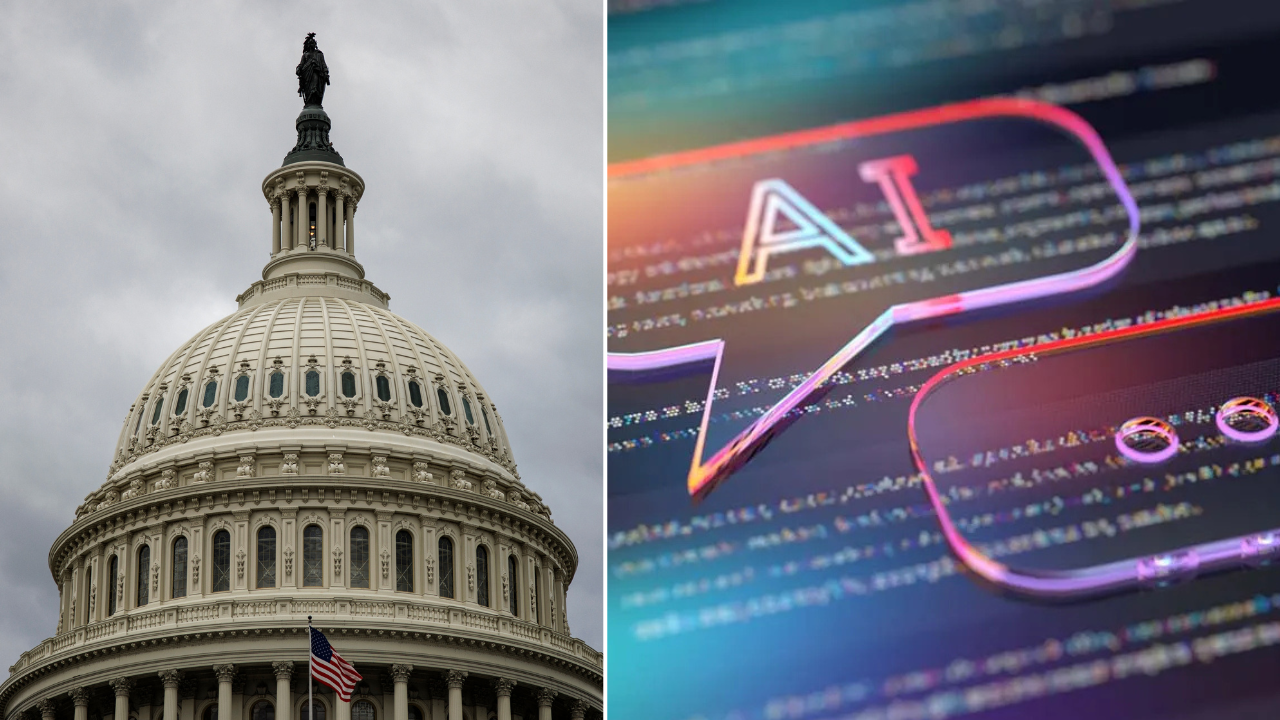
Anthropic is playing a dangerous game of pretend. By positioning itself as the "safety-first" alternative that shuns military involvement, it isn't actually protecting humanity. It is simply outsourcing the dirty work to less scrupulous actors while reaping the PR benefits of a pacifist stance.
The "lazy consensus" in Silicon Valley suggests that keeping AI out of the hands of the Department of Defense is a moral win. It’s not. It is a strategic abdication. When the most "ethical" builders exit the room, they don't leave a vacuum. They leave a seat for someone who doesn’t care about alignment, bias, or civilian oversight.
If you think a Constitutional AI will save us by staying in a lab, you haven't been paying attention to how power works.
The Neutrality Myth
There is no such thing as "dual-use" software that remains untainted by conflict. If your Large Language Model (LLM) can optimize a supply chain for a grocery store, it can optimize a kill chain for a drone swarm. If it can write code for a fintech startup, it can find vulnerabilities in power grid firmware.
Anthropic’s publicized skepticism toward military contracts is a masterclass in signaling, but it falls apart under the slightest technical scrutiny. Silicon Valley likes to pretend that "defense" is a separate category of math. It isn't. The same transformer architecture that summarizes your meeting notes is the one that will eventually process signals intelligence at the edge.
By refusing to engage deeply with defense integration, these companies lose the ability to bake safety protocols into the very systems that need them most. You cannot influence the trajectory of a missile from the sidelines. You cannot ensure "human-in-the-loop" constraints are respected if you refuse to help build the interface.
The Cost of the "Safety" Brand
I have sat in rooms where millions were spent on "alignment research" that never touched a real-world edge case. It’s easy to be ethical when your biggest risk is a chatbot saying something rude on Twitter. It is significantly harder when the stakes are kinetic.
The current trend of AI skepticism—championed by voices who fear a "Skynet" scenario—is actually accelerating the risk of a "Wild West" scenario. When we stigmatize military AI collaboration, we create a brain drain. The engineers who care about international law and proportionality stay at the shiny startups in San Francisco. The engineers who just want to see things go fast move to the defense contractors who have zero interest in "Constitutional" guardrails.
We are bifurcating the industry into "Polite AI" and "Weaponized AI." This is the worst possible outcome. We need the "Polite AI" experts to be the ones building the "Weaponized AI" to ensure it remains predictable, auditable, and constrained by international norms.
Dismantling the "People Also Ask" Delusions
Does AI in the military make war more likely?
This is the wrong question. The question is: Does unreliable AI make war more likely? History shows that friction and miscalculation lead to escalation. An AI that hallucinated a threat because its training data was sanitized of "offensive" military context is a far greater danger than an AI trained specifically to recognize the difference between a school bus and a mobile launcher.
Can we ban autonomous weapons?
No. You can't ban a math equation. A ban only ensures that the actors who ignore the ban—think non-state groups or authoritarian regimes—gain a decisive advantage. The only defense against a rogue autonomous system is a more sophisticated, more aligned autonomous defense system.
Is Anthropic more "trustworthy" because of its stance?
Trust is a function of transparency, not avoidance. By avoiding the military sector, Anthropic avoids the rigorous stress-testing that only defense environments provide. If you want to know if an AI is truly "safe," don't ask it to write a poem. Ask it to maintain its logic under a sophisticated electronic warfare attack.
The Engineering Reality of the Kill Chain
Let’s talk about the OODA loop (Observe, Orient, Decide, Act). In modern warfare, the "Decide" phase is becoming too fast for human cognition alone.
When a competitor like Anthropic steps back, they aren't stopping the automation of the OODA loop. They are just ensuring that the "Orient" phase—the part where the AI interprets what it sees—is built by companies that might prioritize "lethality" over "accuracy."
If you are an expert in reducing hallucinations, your moral obligation is to apply that expertise where a hallucination results in a war crime, not just a factual error in a blog post. Staying "pure" by avoiding defense contracts is a form of moral narcissism. You are keeping your hands clean while the world gets messier.
The Vulnerability of Pacifist Models
There is a technical downside to the "clean" approach that nobody admits: these models are brittle.
By fine-tuning models to be hyper-agreeable and avoid any mention of violence or conflict, you are effectively lobotomizing their understanding of the real world. A model that doesn't understand the mechanics of a kinetic threat cannot help a commander mitigate that threat. It cannot provide "red team" scenarios that are realistic enough to prevent a disaster.
We are building "ivory tower" AIs that are brilliant at passing the Bar Exam but would be useless—and potentially catastrophic—in a crisis.
I’ve seen how "safe" models fail when exposed to adversarial prompts that mimic tactical deception. They fold because they’ve never been allowed to "think" about the dark side of human intent. If we don't train our most advanced systems to understand and counter aggression, we are essentially building a glass fortress.
The Real Existential Risk
The real risk isn't that AI will become sentient and decide to kill us. The risk is that we will have two tiers of AI:
- Consumer AI: Hyper-sanitized, biased toward "niceness," and controlled by a handful of companies obsessed with ESG scores.
- State AI: Built in the shadows, optimized for power, and completely divorced from the safety research happening in the private sector.
By creating a wall between these two, we ensure that the most powerful systems on earth are the ones we understand the least. We are creating a "black box" military-industrial complex that operates without the benefit of the latest alignment breakthroughs.
Stop praising companies for "standing against" military use. It’s a cheap way to avoid the hardest engineering and ethical problems of our time.
If you want to save the world, you have to be willing to engage with the parts of it that are broken. You have to build the systems that prevent the next war, not just the systems that help you schedule a brunch.
The high ground is irrelevant if you're the only one standing on it while the battle is won elsewhere.
Pick up the contract. Fix the system from the inside. Anything else is just theater.