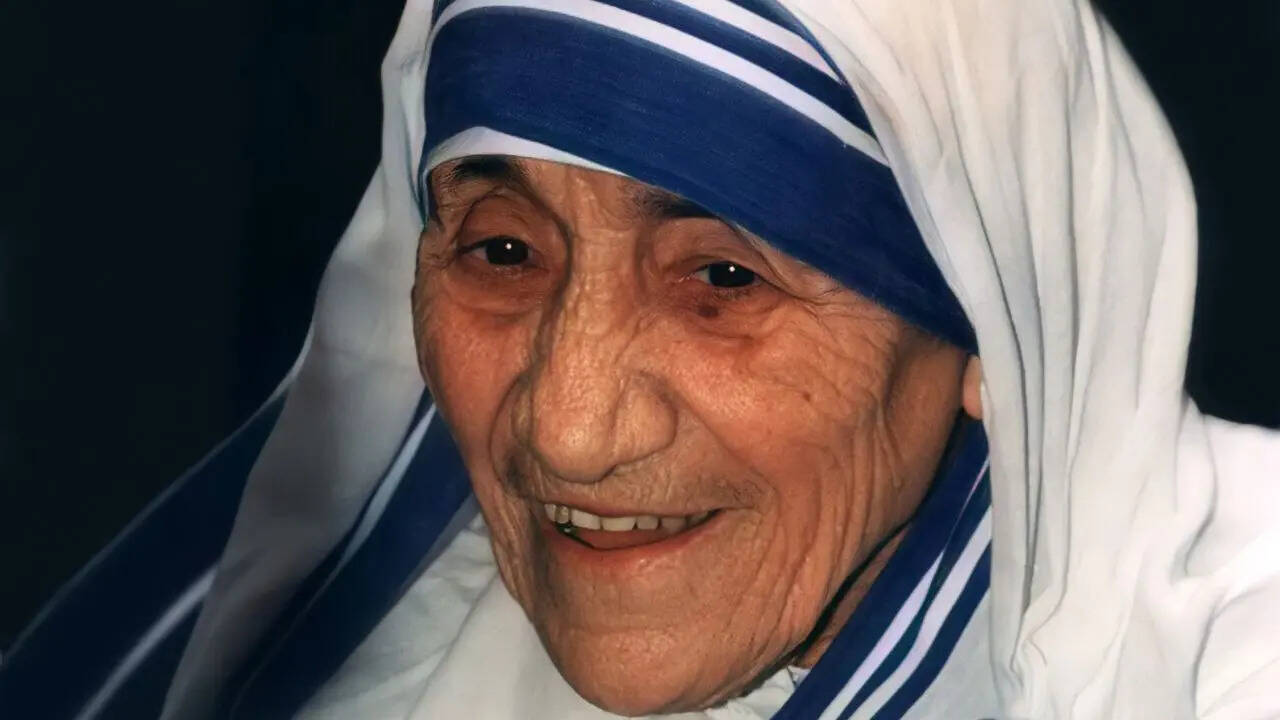
Mother Teresa didn't care about politics or military strategy. She cared about the person standing right in front of her. When she said, "We do not need guns and bombs to bring peace, we need love and compassion," she wasn't just being poetic. She was being practical. Most people look at the news and feel helpless because they can't stop a war. They think peace is something signed by men in suits at a mahogany table. They're wrong.
Peace starts with how you treat your neighbor, your spouse, and the person who just cut you off in traffic. It’s a ground-up movement, not a top-down order. This specific Mother Teresa quote on peace hits hard because it strips away the excuses. You don't need a budget or a battalion to change the world. You just need to stop being a jerk to the people in your life.
The logic behind love and compassion
It’s easy to dismiss words like "love" and "compassion" as soft or naive. In reality, they're the hardest tools to use. It takes zero effort to hold a grudge. It takes a massive amount of strength to show kindness to someone who doesn't deserve it. Mother Teresa spent her life in the slums of Calcutta, dealing with the kind of poverty and suffering that most of us can't even imagine. She saw the aftermath of violence and neglect every single day.
When she spoke about guns and bombs, she was addressing the root cause of why they exist in the first place. Violence is just the final symptom of a heart that's lost its connection to others. If you want to fix the symptom, you have to heal the heart. Compassion isn't just "feeling sorry" for someone. It's an active choice to see another person’s humanity, regardless of their background or choices.
Think about the last time you had a blowout argument. Was it about the dishes? Probably not. It was likely about a lack of feeling seen or respected. That’s a micro-level version of what happens on the world stage. We scale up our personal frustrations until they become national conflicts. Mother Teresa’s strategy was simple: break the cycle at the smallest level possible.
Why guns and bombs fail every time
History is a long, bloody list of people trying to force peace through power. It never sticks. You can't kill your way to a peaceful society because the very act of using violence creates a legacy of resentment. It's a "whack-a-mole" approach to global stability.
Guns and bombs provide a temporary silence, not a lasting peace. True peace is the presence of justice and care, not just the absence of noise. When Mother Teresa talked about the need for love, she was advocating for a foundation that doesn't rely on fear. Fear is brittle. Love is resilient.
I’ve noticed that people who are the quickest to suggest "tough" solutions are often the ones furthest away from the front lines. Mother Teresa was in the thick of it. She wasn't theorizing from a university office. She was cleaning wounds and holding the hands of the dying. Her authority comes from her proximity to pain. If she believed love was the answer after seeing the worst of humanity, then maybe we should listen.
The trap of the grand gesture
One big mistake people make when reading Mother Teresa is thinking they have to move to India to make a difference. That’s a cop-out. It’s a way of saying, "Since I can’t do something huge, I won't do anything at all."
She famously said, "If you want to bring peace to the whole world, go home and love your family." That's actually much harder than volunteering for a weekend. Loving your family means being patient when you’re tired. It means listening when you’d rather talk. It means putting down your phone and actually looking your kids in the eye.
Small acts of service are the building blocks of a non-violent world. If you can’t create a peaceful home, you have no business lecturing the world about global harmony. It’s about local accountability.
How to actually apply this today
We live in an era where outrage is a currency. Social media algorithms are literally designed to make you angry because anger drives engagement. We’re being trained to view "the other side" as an enemy to be defeated rather than a group of humans to be understood.
Choosing compassion in 2026 feels like a radical act of rebellion. It means refusing to take the bait. It means responding to a hateful comment with a calm question instead of a clever insult. It’s not about being a doormat. It’s about being the adult in the room.
- Audit your inputs. If your news feed is making you hate people you’ve never met, turn it off. You can't be an instrument of peace if you're constantly fueled by digital adrenaline.
- Practice radical listening. Next time you disagree with someone, try to summarize their point of view so well that they say, "Exactly." You don't have to agree with them to understand them.
- Look for the immediate need. There is someone in your immediate circle—a coworker, a lonely neighbor, a stressed-out friend—who needs a hand. Help them. Don't post about it. Just do it.
- Forgive something small. Holding onto a petty grievance is like drinking poison and waiting for the other person to die. Let it go. Not for them, but for your own internal peace.
The myth of the perfect person
People love to find flaws in Mother Teresa. Critics point to the medical standards in her clinics or her theological stances. But focusing on those details often misses the point of her message. You don’t have to be a saint to use her "peace kit." You don't even have to be religious.
The "guns and bombs" quote is a universal principle of human psychology. People respond to how they are treated. If you treat someone like a threat, they will become one. If you treat them with genuine compassion, you open a door that violence would have slammed shut.
It’s easy to be cynical. It’s easy to say the world is too far gone for "love and compassion" to work. But what’s the alternative? We’ve tried the other way for thousands of years. It hasn't worked yet. Maybe it’s time to stop waiting for a hero to fix the world and start being a slightly better person to the people we actually know.
Start by checking your ego at the door. Most conflicts survive because someone is too proud to back down or apologize. Be the person who breaks the tension first. It’s a small move, but it’s the only one that actually moves the needle toward a world that isn't constantly on the brink of a breakdown.


