Stop Blaming Human Error for Systemic Infrastructure Failure
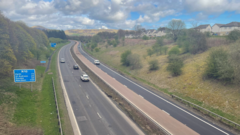
Two men are dead on a motorway because we continue to treat high-speed transit like a video game where the only thing that matters is the player's skill. The media loves the "wrong-way driver" narrative. It’s a perfect villain. It implies a singular moment of madness, a drunk behind the wheel, or a confused pensioner. It allows the public to wag their fingers while ignoring the cold, hard reality: our road systems are designed to permit catastrophe.
The common consensus is that "accidents happen." That is a lie. An accident is an unavoidable act of God. Driving the wrong way down a three-lane arterial road is a design flaw. If a user can bypass every safety cue and enter a high-speed flow in the wrong direction, the interface has failed. We don't blame the pilot when the cockpit controls are wired backward; we blame the engineers.
The Myth of the Attentive Driver
Traffic safety experts spend billions on "awareness campaigns." They tell you to stay alert, look twice, and keep your eyes on the road. This is a waste of capital. Humans are biologically incapable of maintaining peak physiological arousal for the duration of a four-hour motorway haul. We drift. We zone out. We rely on muscle memory.
The industry calls this "Highway Hypnosis." I’ve sat in rooms with urban planners who admit that the more "predictable" we make roads, the more we invite the brain to switch off. When a driver enters an off-ramp the wrong way, they aren't usually making a conscious choice to defy the law. They are experiencing a failure of "Self-Explaining Roads."
If a road requires a sign to tell you it’s a one-way street, the geometry of the road is already failing you. A truly safe system makes it physically intuitive—or physically impossible—to go the wrong way.
Why We Refuse to Fix the Entry Points
Why don't we have directional tire spikes on every motorway exit? Why aren't there high-intensity LED thermal sensors that trigger a strobe light or a physical barrier the moment a car's heat signature moves against the flow?
The answer is always "cost-benefit analysis." It is cheaper for the state to pay for the cleanup of a fatal wreck and the subsequent inquest than it is to retroactively fit every junction with "Wrong Way" mitigation technology. We have accepted a certain number of corpses as the "tax" for our mobility.
The Data Gap in Modern Reporting
Mainstream reporting focuses on the tragedy—the names, the ages, the flowers at the scene. They miss the data. In the UK and the US, wrong-way driving (WWD) crashes are significantly more likely to be fatal than any other type of collision. While they account for only about 3% of accidents on high-speed roads, the fatality rate is horrific because the relative closing speeds often exceed 140 mph.
$$v_{relative} = v_1 + v_2$$
When two vehicles hitting 70 mph collide, no amount of five-star Euro NCAP safety rating is going to save the occupants. The physics of kinetic energy ($E_k = \frac{1}{2}mv^2$) dictates that the energy dissipation required is simply beyond the capacity of modern crumple zones.
The Autonomous Delusion
The tech bros will tell you that Level 5 autonomy solves this. They’re wrong. Even if we had a fully autonomous fleet today, the legacy infrastructure remains. An AI car might not drive the wrong way, but it can’t always dodge a 20-year-old hatchback driven by a human who just missed a turn and panicked.
We are obsessed with "smart cars" when we should be obsessed with "smart asphalt."
Imagine a scenario where the road itself communicates with the vehicle. Not via a fancy 5G cloud network that drops out in a tunnel, but through simple, localized electromagnetic induction. If a vehicle's sensor detects it has crossed a threshold in the wrong orientation, the car’s ECU should be hard-coded to cut the throttle and apply the brakes. We have the technology to do this. We choose not to mandate it because it interferes with the "freedom" of the driver.
The Psychology of the "Wrong" Turn
We need to stop talking about "drunk drivers" as if that solves the puzzle. Yes, impairment is a factor in many WWD incidents. But sobriety doesn't fix poor signage placement.
Research from the Texas A&M Transportation Institute shows that most wrong-way entries happen at night when visual cues are diminished. If your safety system relies on a person seeing a piece of reflective metal in the rain while they are tired or intoxicated, your system is broken.
- Sign Height: Standard signs are often too high. Impaired drivers tend to look at the ground directly in front of their bumper.
- Pavement Markings: Arrows wear off. They aren't maintained with the same urgency as speed cameras because they don't generate revenue.
- Junction Complexity: We build "Dumbbell" and "Diamond" interchanges that look like a bowl of spaghetti from the driver's seat.
The Professional Price of Silence
I have worked with logistics firms that lose drivers to these "unavoidable" incidents. The corporate response is always "driver training." It’s a legal shield. By shifting the burden of safety onto the individual, the organization and the state absolve themselves of the need to innovate.
If we actually cared about those two men killed on the motorway, the conversation wouldn't be about the "tragedy." It would be about the criminal negligence of maintaining road entries that allow a vehicle to hit 70 mph in the wrong direction without a single physical intervention.
Stop Asking "Who" and Start Asking "How"
The "People Also Ask" sections of the web are filled with queries like: "How do I survive a wrong-way driver?"
The honest, brutal answer? You probably don't. At those speeds, your reaction time is irrelevant. The real question should be: "Why does my local highway authority allow a 1.5-ton projectile to enter a high-speed zone unimpeded?"
We treat the motorway like a sacred space where the flow of traffic is more important than the architecture of the entry points. We prioritize the "seamless" experience of the 99% over the survival of the 1% who make a mistake.
Until we demand that "smart infrastructure" means more than just variable speed limit signs and revenue-generating cameras, these headlines will keep repeating. We don't need more "awareness." We need physical barriers, automated ignition kills, and a total redesign of how a human interacts with an off-ramp.
The blood isn't just on the driver's hands. It's on the blueprints.
Don't look at the driver. Look at the ramp.