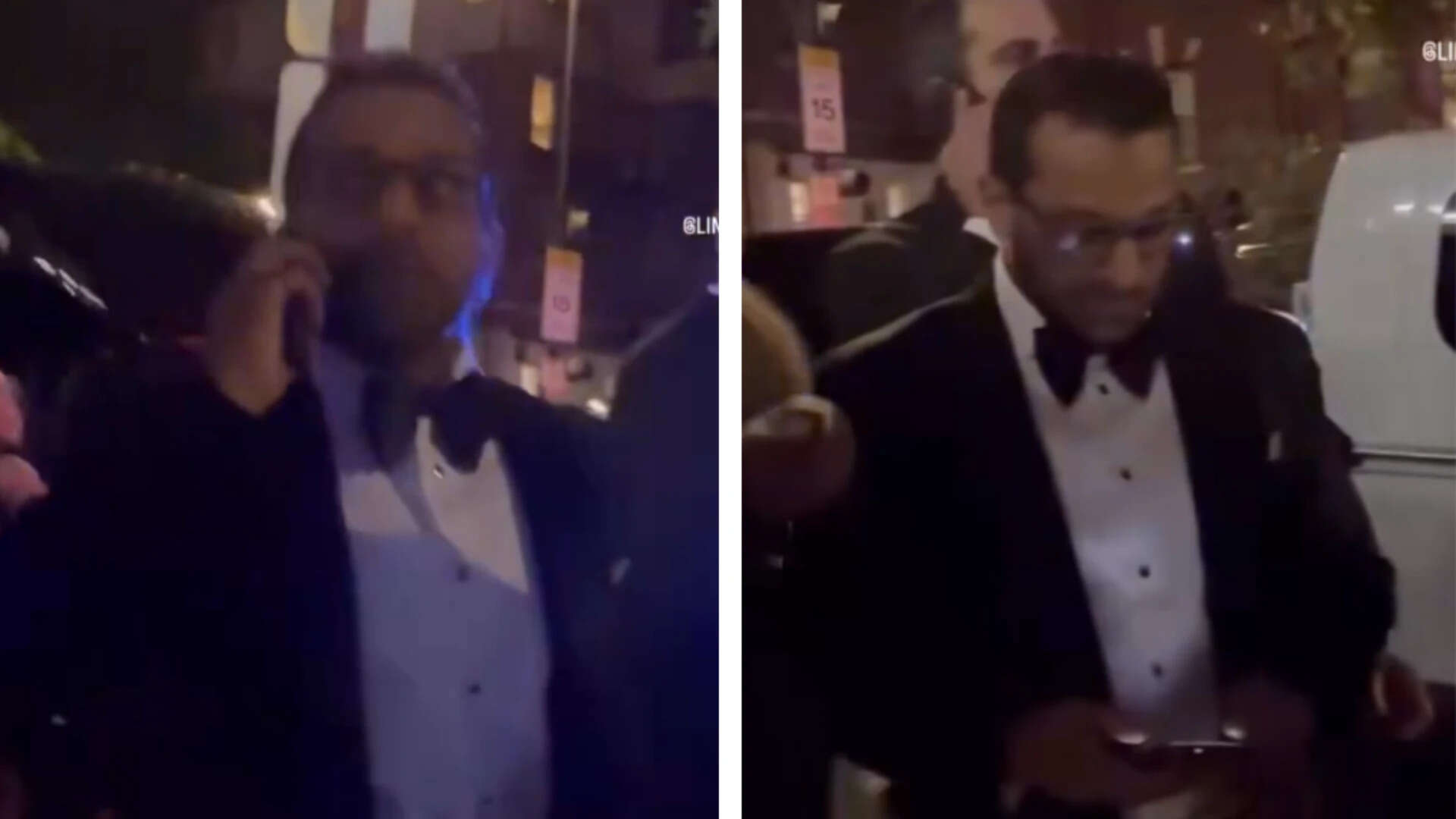
The media loves a good optics execution. When a D.C. ballroom turns into a chaotic scramble of Secret Service agents and sprinting attendees, the cameras aren't looking for the exit signs; they are looking for the one person not playing the part of the victim. In the case of the recent security scare involving Kash Patel, the tabloid consensus was swift: he was "caught" scrolling his phone while others fled. The subtext? He’s detached, arrogant, or perhaps just unaware.
They are dead wrong.
What we witnessed wasn't a failure of awareness. It was a failure of the audience to understand how high-stakes operators actually function. In the security and intelligence world, "scrolling your phone" isn't an act of negligence. It is often the only logical response to a situation where your physical presence is an asset, but your movement is a liability.
The Performance of Panic vs. The Logic of Calm
The average person treats an emergency like a movie scene. They expect a frantic adrenaline surge. They want to see people "taking action," which usually results in clogged hallways and accidental trampling.
I have spent years observing how people respond under extreme pressure in corporate boardrooms and crisis zones. The "lazy consensus" dictates that if you aren't running, you aren't paying attention. But in a room full of elite security details, the absolute worst thing an influential figure can do is add to the kinetic energy of a crowd.
If Patel is indeed a high-level target or a person of interest in national security, his job in a crisis isn't to play hero or to scramble for the door like a startled deer. It is to stay put until his specific detail tells him to move. The phone isn't a distraction; it is a communication hub. In 2026, information doesn't come from the shouting guy in the tuxedo; it comes from encrypted feeds and real-time sitreps.
Situational Awareness Is Not Constant Motion
Most people confuse "situational awareness" with "looking worried."
True situational awareness is the ability to filter out the noise. When a fire alarm goes off or a security scare breaks out, 95% of what happens in the first sixty seconds is useless noise. It’s screams, dropped glasses, and frantic speculation.
A professional—whether they are a trader during a flash crash or a security official during a lockdown—operates on a different OODA loop (Observe, Orient, Decide, Act).
- Observe: The room is moving. Agents are reacting.
- Orient: I am in a secure perimeter. The threat is external or localized elsewhere.
- Decide: Moving now increases the risk of being caught in a choke point or separated from security.
- Act: Stay stationary. Gather intelligence. Wait for the signal.
Scrolling a phone in that moment is a high-utility act. It suggests a person who is waiting for data before making a move. It’s the difference between a captain who stays on the bridge during a storm and a passenger who jumps overboard because they saw a wave.
The Optics Trap
The media frames this as "disrespectful" to the agents rushing past. This is a fundamental misunderstanding of the client-agent relationship. A Secret Service or private security agent doesn't want their principal "helping." They want their principal to be a predictable, stationary object until they are ready to move them.
The moment a VIP starts trying to "react" to the scene, they become a variable. Variables get people killed.
We see this same phenomenon in the business world. When a company is hit by a massive data breach or a PR nightmare, the junior executives start running around the office, calling meetings, and "looking busy." The CEO who sits quietly and reads the legal brief is often accused of being out of touch. In reality, the quiet CEO is the only one actually working.
Dismantling the "Distraction" Narrative
Let’s look at the "People Also Ask" logic that usually follows these events.
"Why wasn't he scared?"
Fear is a biological response, but panic is a choice. Those who have been in the vicinity of high-threat environments long enough develop a callousness to the "security theater" of a room clear. If you’ve been through a dozen drills and three real scares, your heart rate doesn't spike anymore. You wait for the confirmation.
"Isn't it dangerous to stay in the room?"
Sometimes. But it is often more dangerous to enter an unverified hallway where the crowd is bottlenecked. In the DC security scare, the "scrolling" happened while agents were managing the immediate perimeter. Staying in your seat is often the safest "lane" in a multi-lane traffic jam of human bodies.
The Cost of the "Do Something" Bias
The broader issue here is the "Do Something" bias that plagues our culture. We reward the appearance of activity over the efficacy of results.
In politics, as in business, we demand that our leaders look as stressed as we feel. If a market crashes, we want the Federal Reserve Chair to look haggard. If there’s a security breach, we want the officials to look terrified.
But I’ve seen projects collapse because managers felt the need to "act" before they had the full picture. I’ve seen millions of dollars wasted because a leader wanted to satisfy the optics of a crisis rather than actually solving the underlying problem.
If you are the person in the room who isn't running, you are the person who is actually in control of their faculties.
Trusting the Boredom
There is a downside to this approach: it looks terrible on Twitter.
If you choose the path of the "Bored Professional," you will be mocked by people whose only experience with danger comes from a Netflix subscription. You will be called cold. You will be called arrogant.
But you will also be the one who makes the right decision.
The next time you see a high-level official "scrolling" while the world around them is on fire, don't assume they are distracted. Assume they are the only person in the room who knows that running is a waste of breath.
Stop looking at the feet of the people who are running. Start looking at the eyes of the people who are sitting still. They are the ones who actually know what is happening.
The agents are doing their job. The guests are doing their panic. The professional is waiting for the only thing that matters: the signal.
Everything else is just a show for the cameras.