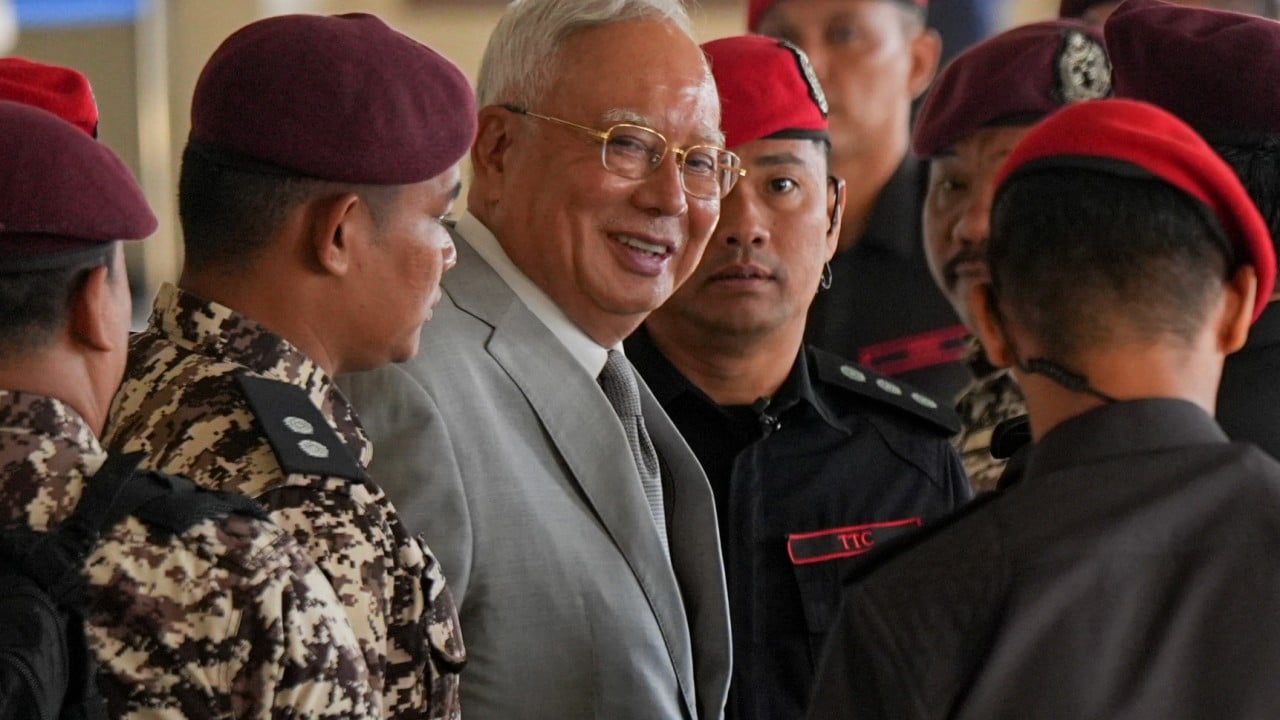
The mainstream media is busy painting Najib Razak’s recent legal withdrawal as a white flag. They see a former Prime Minister giving up on his bid for house arrest and assume it’s a victory for the rule of law or a sign of his fading influence. They couldn't be more wrong.
Najib Razak isn't retreating. He’s repositioning.
In the high-stakes theater of Malaysian politics, every "loss" is often a calculated trade for a much larger, future gain. While the press focuses on the surface-level drama of High Court filings and the legendary "addendum order" supposedly signed by the former King, they miss the structural reality of how power functions in Southeast Asia. This isn't about a prison cell versus a living room. This is about the long-term viability of a political brand that refuses to die.
The Myth of the Level Playing Field
The common narrative suggests that the judicial system is a vacuum where facts dictate outcomes. If you’ve spent five minutes in the corridors of power in Kuala Lumpur, you know that’s a fairy tale for the taxpayers.
Najib’s decision to drop his appeal for house arrest isn't a confession of guilt or an admission of legal defeat. It is a tactical pivot. By stepping back now, he removes a massive lightning rod that was forcing the current administration into a corner. Anwar Ibrahim’s government is currently walking a tightrope between its reformist base and the necessity of keeping UMNO—Najib’s party—inside the tent.
By pulling the plug on the house arrest drama, Najib relieves the immediate pressure on the coalition. In exchange? He buys the one currency that matters more than freedom: political capital.
The Addendum Order Smoke and Mirrors
Everyone is obsessed with whether the "supplementary decree" from the former King actually exists. The "lazy consensus" says that if it existed, Najib would have fought to the death to prove it.
Think deeper.
If Najib forces the government to produce a royal decree they’ve been hiding, he creates a constitutional crisis. A constitutional crisis leads to instability. Instability leads to an early election or a shift in the balance of power that might not favor his allies.
By dropping the appeal, Najib keeps the mystery alive without forcing a confrontation that could burn the whole house down. It’s a "Schrödinger’s Decree"—it both exists and doesn't exist, serving as a permanent shadow over the government's legitimacy without requiring a single day in court. This is high-level leverage. He is letting the government know that he knows, and that is often more powerful than actually winning the motion.
1MDB and the Global Financial Delusion
Let’s talk about the money, because that’s where the "experts" usually lose the plot. The global financial community likes to view 1MDB as a simple case of embezzlement. I’ve seen analysts track the billions through Goldman Sachs and various shell companies as if it’s a static accounting problem.
It wasn't. 1MDB was an exercise in sovereign financial engineering that went off the rails.
The mainstream insists that Najib is a pariah because of the sheer scale of the 1MDB scandal. But look at the ground reality in Malaysia. "Bossku" remains a potent brand. Why? Because the average voter doesn't care about the intricacies of an offshore trust in the Cayman Islands. They care about the tangible infrastructure and the perceived strength of the nation under his tenure.
By staying in the fight—even from a cell—Najib proves he is the ultimate survivor. Most politicians would have been erased by a fraction of this scandal. Najib has turned his incarceration into a period of martyrdom, a "waiting game" that his opponents are losing because they have no vision beyond "not being Najib."
The House Arrest Distraction
The obsession with house arrest is a distraction from the real objective: a full pardon.
House arrest is a half-measure. It’s "prison lite." For a man of Najib’s ambitions, sitting in a luxury villa in Langkawi is still a cage. The goal has always been, and remains, the total erasure of the conviction and a return to the political frontline.
By dropping the house arrest bid, he clears the deck for a more aggressive push for a pardon. He is effectively saying to the current administration: "I’ve stopped making things difficult for you on the house arrest front. Now, what are you going to do for me?"
It’s a classic negotiation tactic. You ask for something big, you "concede" on it to show you're a team player, and then you move in for the real prize.
The Failure of the Reformist Narrative
The "Reformasi" movement promised a clean break from the past. Yet, here we are, years later, and the entire political discourse still orbits around one man. This is the ultimate failure of Najib’s critics. They have failed to provide an alternative narrative that captures the public imagination quite like his brand of populist development.
The current government is terrified of Najib. Not because of what he did, but because of what he represents: a time when the economy felt more certain, even if that certainty was built on a foundation of debt and complex deals.
When you see headlines saying he "dropped his bid," don't pity him. Pity the politicians who now have to figure out how to keep him quiet without the convenient shield of a pending court case. Najib has just handed them a hot potato and stepped back to watch them burn their hands.
Operational Reality: The Long Game
For those looking for "actionable advice" in the world of geopolitical risk or high-finance speculation in the region, here it is: Do not bet against the return of the old guard.
The structures of power in Malaysia are deep, familial, and incredibly resilient. The "new" politics is often just the old politics with a better social media team. Najib’s withdrawal is a signal to his base that he is playing the long game. He is not desperate. Desperate people don't drop appeals.
He is comfortable. He is patient. He knows that in the volatile world of coalition politics, today’s jailer is tomorrow’s junior partner.
The Price of Admission
Is there a downside to this contrarian view? Certainly. If the current government manages to actually fix the economy and stabilize the cost of living, Najib’s "martyr" status will eventually expire. If the youth vote shifts decisively toward a third pole—like a more hardline religious or nationalist front—the UMNO brand he relies on could become obsolete.
But as of today, those are big "ifs."
The reality is that Najib Razak just won by losing. He removed himself from the news cycle of "legal failure" and moved himself into the realm of "political mystery." He stopped being a defendant for a moment and started being a kingmaker in waiting.
Stop reading the legal transcripts. Start reading the room. The appeal is dead. Long live the comeback.
Quit looking for a "final chapter" in the Najib saga. In this part of the world, there are no final chapters, only new seasons with higher production budgets.