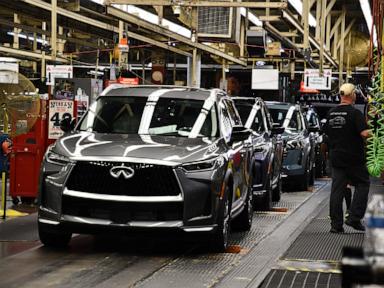
Nissan is breathing a sigh of relief. The spreadsheets look marginally better. Losses are narrowing. The "return to profitability" narrative is being spoon-fed to analysts who are hungry for any sign of life from the Yokohama headquarters. They see a company stabilizing. I see a company perfecting the art of the slow-motion crash.
The consensus view is that Nissan’s restructuring—slashing production capacity, cutting overhead, and refreshing a stale lineup—is the bitter medicine required for a healthy recovery. This is a fundamental misunderstanding of the automotive shift. You cannot cut your way to relevance in a market where the fundamental architecture of the product is changing. Nissan is fixing a gas-powered house while the neighborhood is transitioning to a different grid entirely.
The Profitability Trap
Mainstream financial reporting loves a "turnaround story." It’s easy to track. You look at the operating margin, see it move from negative to positive, and declare victory. But profitability is a lagging indicator of health, not a leading one.
When Nissan "reduces losses," they are often doing so by cannibalizing their future. They are squeezing suppliers, delaying capital-intensive R&D, and relying on aging platforms that have already been depreciated. This creates a short-term bump in the balance sheet that masks a long-term erosion of competitiveness.
I’ve seen this script play out in the legacy tech sector. A titan realizes they are losing ground, so they "trim the fat." But in a period of rapid technological upheaval, what looks like fat is often the muscle required to pivot. By the time the books look "clean," the company has lost the talent and the momentum to compete with the new entrants.
Why the "Ariya" Strategy is Failing
Nissan’s great hope is electrification, spearheaded by the Ariya. The logic: leverage the early success of the Leaf and move upmarket.
Here is the brutal truth: The Leaf succeeded because it was first and cheap, not because it was a Nissan. The Ariya enters a crowded arena against companies that treat software as the core and the car as a peripheral. Nissan still treats software as a feature—like a sunroof or heated seats.
The competitive gap isn't in the leather stitching or the suspension tuning. It’s in the Power Electronics and the Software-Defined Vehicle (SDV) architecture. While Nissan touts its "return to profit," companies like Tesla and BYD are iterating on their thermal management systems and battery chemistry at a pace that legacy manufacturing cycles cannot match.
The Myth of the "Rationalized" Portfolio
The competitor’s praise for Nissan’s "streamlined" lineup is misplaced. "Rationalizing" is often just executive-speak for "giving up on segments we can't figure out."
The industry is currently obsessed with SUVs and Crossovers because that’s where the margins are today. By abandoning sedans and smaller vehicles in several markets, Nissan is narrowing its surface area. They are betting everything on a high-margin, high-competition segment where brand loyalty is fickle and price wars are becoming the norm.
This isn't a strategy; it's a retreat to a defensible bunker. But bunkers become tombs when the enemy has air superiority.
The Hidden Cost of the Renault-Nissan-Mitsubishi Alliance
The "Alliance" was supposed to be a force multiplier. In reality, it has become an anchor. For years, the internal politics and the fallout from the Carlos Ghosn era have sucked the oxygen out of the room.
- Duplicate Engineering: Despite claims of shared platforms, the three companies still struggle with redundant engineering teams.
- Cultural Friction: The tension between French state interests and Japanese corporate pride prevents the kind of agile decision-making required in 2026.
- Supply Chain Fractures: While competitors are vertically integrating—buying lithium mines and building their own chipsets—the Alliance is still bogged down in legacy procurement models.
If you want to know if a company is actually turning around, don't look at their net loss reduction. Look at their Engineer-to-Accountant ratio. At Nissan, the accountants are currently winning the war. That’s great for the next two quarters. It’s a death sentence for the next decade.
Dismantling the "People Also Ask" Delusions
When people ask, "Is Nissan a good buy now?" they are looking for a bargain. They see a low P/E ratio and think they’ve found an undervalued gem.
They are wrong. Nissan is a "Value Trap."
A value trap occurs when a stock appears cheap because its price has dropped, but it’s actually expensive because its underlying business is shrinking faster than the price. Nissan’s "profitability" is built on the back of an internal combustion engine (ICE) legacy that is being legislated out of existence.
Every dollar they spend improving an ICE powertrain is a dollar they aren't spending on autonomous driving algorithms or solid-state battery integration. They are fighting for a larger slice of a shrinking pie.
The Manufacturing Fallacy
"But Nissan has world-class manufacturing plants!"
Yes, they do. And those plants are specialized for a world that is disappearing. The transition to EVs requires a total rethink of the factory floor—fewer moving parts, different assembly logic, and massive investment in "Giga-casting" or similar high-pressure die-casting techniques to reduce costs.
Converting an old plant is often more expensive than building a new one from scratch. Nissan’s massive global footprint, once its greatest strength, is now a multi-billion dollar liability in the form of stranded assets.
The Counter-Intuitive Path Not Taken
If Nissan really wanted to disrupt the market and ensure long-term survival, they would stop trying to be a "full-line" automaker.
Imagine a scenario where Nissan stopped trying to compete with Toyota on volume and Tesla on tech. What if they pivoted to become the world’s leading provider of Mobility-as-a-Service (MaaS) platforms? They have the footprint. They have the fleet management experience.
Instead, they are trying to stay in the "metal-bending" business, where the margins are being squeezed to zero by Chinese manufacturers who have a $10,000-per-vehicle cost advantage.
The Real Threat: The "Good Enough" Chinese EV
While Nissan celebrates "narrowing losses" in North America, they are being decimated in China—the world’s largest car market.
Local Chinese brands aren't just cheaper; they are better integrated. Their infotainment systems work like smartphones. Their over-the-air (OTA) updates actually add features rather than just fixing bugs. Nissan’s "return to profit" doesn't account for the fact that they are losing the "mindshare" of the youngest, most tech-savvy demographic on the planet.
Stop Celebrating Mediocrity
The media loves a comeback story, but "not dying yet" isn't a comeback.
Nissan is currently in a state of controlled descent. They have optimized their glide path, and the pilots are congratulating themselves on how smooth the ride is. But they are still heading for the ground, and they haven't restarted the engines.
For an insider, the signs are clear:
- Talent Brain Drain: The top-tier software engineers aren't heading to Yokohama; they’re heading to startups or tech giants.
- Incrementalism: Their "new" models are 80% carryover from previous generations.
- Debt Servicing: A significant portion of that "profit" will go toward servicing the debt of their past mistakes rather than funding future breakthroughs.
You don't win in the modern industrial age by being "less bad" than you were last year. You win by being fundamentally different. Nissan is still trying to be the best car company of 2012.
The market doesn't care about your restructuring plan. The market doesn't care that you reduced your fixed costs by 20%. The market only cares if you are building the indispensable platform of the future.
Nissan isn't. They are just making the spreadsheets look pretty while the lights go out.
Stop looking at the operating margin. Start looking at the software repository. If the code isn't world-class, the car doesn't matter. Nissan is a hardware company in a software world, celebrating the fact that they’ve found a cheaper way to make the hardware.
That isn't a recovery. It's a wake.


