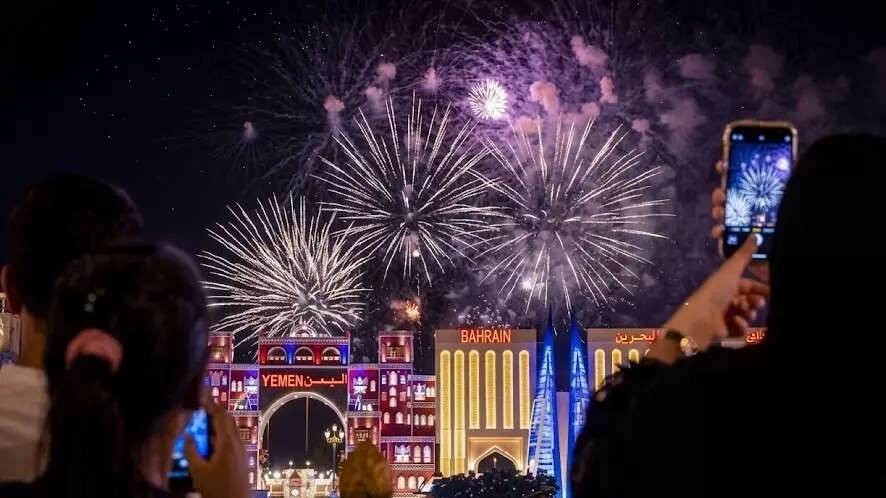
The suspension of operations and cancellation of Eid Al Fitr festivities at Dubai Global Village represents a high-stakes trade-off between seasonal revenue maximization and the mitigation of catastrophic operational risk. While a multi-cultural festival of this scale relies on the density of footfall to justify its overhead, the decision to remain closed until further notice reflects a prioritization of structural integrity and public safety over short-term fiscal gain. This closure is not merely a pause in programming; it is a defensive maneuver triggered by environmental variables that exceed the design parameters of temporary outdoor infrastructure.
The Infrastructure Vulnerability Matrix
Global Village operates as a massive, open-air assembly of temporary and semi-permanent structures. Unlike the climate-controlled skyscrapers of Downtown Dubai, the pavilions and retail clusters at Global Village are susceptible to atmospheric pressure shifts, high-velocity winds, and precipitation levels that the region’s drainage systems are rarely equipped to handle.
The decision-making process for such a closure is governed by three specific risk vectors:
- Structural Load Limits: The pavilions, often built with lightweight materials for aesthetic versatility, have specific "wind-load" ratings. When forecasted gusts exceed these ratings, the risk of debris shedding or structural collapse becomes non-linear.
- Electrical Grid Stability: Global Village utilizes an extensive network of outdoor electrical conduits to power thousands of stalls, stages, and lighting rigs. Moisture ingress from heavy rain creates a high probability of short circuits, which, in a high-density environment, poses an immediate fire and electrocution risk.
- Logistical Bottlenecks: Global Village is situated on the E311, a primary arterial road. Severe weather creates a compounding effect where localized flooding on access ramps leads to gridlock, preventing emergency services from entering the site if a secondary incident occurs.
The Revenue Erosion of Eid Al Fitr Cancellations
Eid Al Fitr represents the "Golden Quarter" for Global Village vendors. It is the peak period of consumer discretionary spending, where daily visitor counts typically hit their annual ceiling. Canceling the fireworks display and closing the gates during this window creates a massive disruption in the cash flow cycle for small and medium-sized enterprises (SMEs) operating within the park.
The economic impact is distributed across a specific hierarchy of stakeholders:
- Anchor Pavilions: Large-scale cultural representations lose the ability to amortize their seasonal construction costs over the final weeks of the season.
- Retail Micro-SMEs: These vendors often operate on thin margins and rely on the Eid surge to achieve profitability for the entire year.
- Service Contractors: Security, cleaning, and technical staff face a sudden cessation of billable hours, impacting the broader gig economy surrounding the park.
This closure forces a "Sunk Cost" realization. Because Global Village is seasonal, there is no opportunity to "make up" these lost days in the summer months when temperatures make outdoor operations physically impossible for the general public.
Meteorological Force Majeure and Liability
From a legal and strategic perspective, the "until further notice" status serves as a protective buffer against liability. In event management, "Force Majeure" clauses are triggered by unpredictable environmental events. By preemptively closing the site, the management team transitions from a reactive posture to a proactive risk-mitigation stance.
If the park remained open and an injury occurred due to weather-related structural failure, the legal liability would be categorized as "negligent operation in known hazardous conditions." By closing, the entity preserves its long-term brand equity, even at the cost of immediate revenue. The lack of a specific reopening date suggests that the damage assessment phase is ongoing. Management must verify the integrity of the soil under the temporary structures—which can be compromised by water saturation (liquefaction or erosion)—before allowing heavy foot traffic to return.
The Logistics of Crowd Management and Communication
The cancellation of a major public event like the Eid fireworks is a logistical nightmare for crowd control. Global Village utilizes a digital-first communication strategy to prevent thousands of vehicles from converging on a closed site.
The bottleneck here is the "Inertia of Travel." Many visitors, particularly those traveling from other Emirates or international tourists, may not check digital updates in real-time. This necessitates a physical security presence at every entry point of the site, redirecting traffic and managing the frustration of thousands of disappointed consumers. This operational overhead continues even while the park is "closed," meaning the park is incurring labor costs without the offsetting revenue of ticket sales and parking fees.
Tactical Assessment of Reopening Requirements
A resumption of operations is not as simple as "opening the gates." It requires a multi-stage clearance protocol:
- Civil Engineering Sign-off: Every pavilion and the "Carnival" ride area must undergo a visual and mechanical inspection to ensure no structural shifting occurred during the weather event.
- Sanitization and Drainage: Standing water must be extracted to prevent health hazards and to ensure that the walking surfaces meet the "Coefficient of Friction" standards required for public safety.
- Vendor Resupply: Many food and beverage vendors will have experienced spoilage during the power outages or extended closures. A mandatory restock window must be provided before the public is readmitted.
The "further notice" suggests that the atmospheric conditions are either expected to persist or that the damage to the site’s sub-surface infrastructure (sewers and electrical pits) is more extensive than a surface-level inspection would reveal.
Strategically, the move to cancel the fireworks specifically targets the highest-risk activity: the gathering of massive crowds in a stationary position for an extended period. By removing the "draw," the park reduces the pressure on its perimeter, even if it were to attempt a soft reopening for retail later.
The path forward requires an immediate shift into Asset Recovery Mode. Management must prioritize the drainage of the "lower tier" zones and conduct a "Stress Test" on all temporary structures. If the structural integrity of the main stage or the primary pavilions is compromised, the season may be terminated early to begin the transition into the off-season maintenance cycle. For vendors, the strategic imperative is to pivot to digital fulfillment or temporary pop-up locations to liquidate the inventory originally intended for the Eid Al Fitr rush. Loss of the Eid window is a permanent deficit in the 2024-2025 fiscal year that cannot be recovered through extended hours later in the season.