Diplomacy is often just a high-stakes performance of rhythmic stalling. The headlines shouting about Donald Trump’s latest push for Lebanon and Israel to meet for "further talks" this Thursday are missing the point so spectacularly it borders on professional malpractice. The media loves a summit. It loves a handshake. It loves the optic of a "breakthrough." But if you’ve spent any time analyzing the structural mechanics of Levantine geopolitics, you know that these meetings aren't about peace. They are about managing the optics of inevitable friction.
The consensus view is lazy. It suggests that if you just get the right mediators in a room—whether it’s a returning Trump administration or UN envoys—the technical disputes over the Blue Line or maritime borders will evaporate. This is a fundamental misunderstanding of the incentives involved. For the players on the ground, a permanent solution is often more dangerous than a managed conflict. If you liked this piece, you might want to check out: this related article.
The Myth of the Rational Negotiator
Most analysts treat Lebanon and Israel like two corporate entities haggling over a merger. They assume both parties want "stability" to "unlock economic potential." This is the first mistake. Stability is a Western projection, not a local priority.
In Lebanon, the state is a shell. The real power doesn't sit at the negotiating table in a suit; it sits in the bunkers of South Lebanon and the offices of Tehran. Any deal Lebanon signs is only as good as the internal permission it receives from actors whose entire brand is built on "resistance." If there is no enemy, there is no reason for a militia to hold the keys to the country. Peace, in its purest form, would be an existential threat to the Lebanese status quo. For another look on this story, check out the latest coverage from NPR.
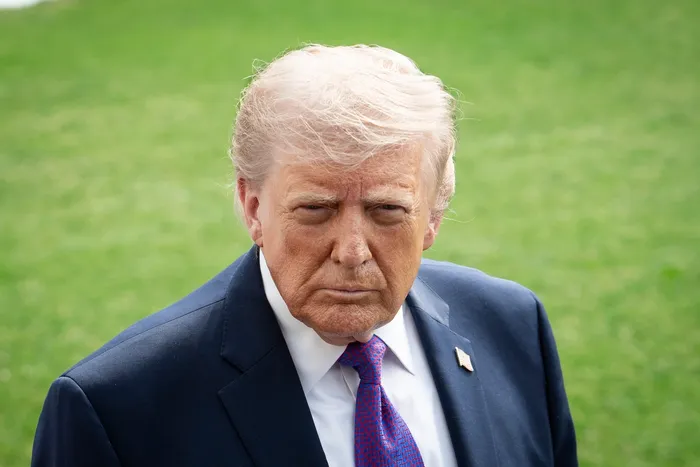
When Trump announces a meeting, he isn't announcing a shift in reality. He is announcing a shift in the marketing of that reality. The parties show up because being the one to walk away from a "peace initiative" carries a diplomatic tax they aren't ready to pay yet. They aren't negotiating for a result; they are negotiating for time.
The Energy Trap and the Maritime Fallacy
You will hear a lot about gas. The "TotalEnergies" factor. The idea that Lebanon’s economic collapse can be solved by drilling in the Mediterranean, provided they can agree on where their backyard ends and Israel's begins.
This is a pipe dream. I have watched energy markets react to these "breakthroughs" for a decade. The technical challenges of extracting gas in a contested zone are nothing compared to the political risk. No major institutional investor is going to sink billions into infrastructure that can be erased by a single drone strike because a domestic political faction felt sidelined.
The "peace for prosperity" narrative fails because it assumes the people making the decisions care about the GDP. They don't. They care about power retention. A bankrupt Lebanon is easier to control than a wealthy, sovereign one. Therefore, any "talks" centered on shared economic interests are built on a foundation of sand.
Why the "Trump Factor" is a Double-Edged Sword
The return of Trump’s brand of transactional diplomacy changes the theater, but not the script. His approach is built on the "Art of the Deal"—a belief that everyone has a price. In business, that’s true. In ideological warfare, it’s a liability.
- The Incentive Problem: Trump uses carrots and sticks. But what happens when the "stick" (sanctions) has already been maxed out, and the "carrot" (aid) is filtered through a corrupt bureaucracy?
- The Timeframe Mismatch: High-level diplomacy operates on election cycles. The conflict in the Middle East operates on centuries.
- The "Strongman" Fallacy: There is a belief that a strong US president can force a signature. A signature on a piece of paper in a 5-star hotel doesn't stop a Katyusha rocket.
Imagine a scenario where a maritime border is finalized this Thursday. The markets might rally for twenty minutes. Then, a non-state actor—unaccountable to the Lebanese government—decides to test the "sovereignty" of that new line. The deal doesn't just fail; it becomes a catalyst for the next escalation.
The People Also Ask (And They’re Asking the Wrong Things)
"Will these talks lead to a permanent ceasefire?"
No. A ceasefire requires a monopoly on force. The Lebanese government does not have a monopoly on force within its own borders. Asking for a ceasefire from the Lebanese delegation is like asking a passenger to stop the bus while the driver is in the back seat having a nap.
"Does Israel want a deal?"
Israel wants a buffer. If a deal provides a cheaper, quieter buffer than a military campaign, they’ll take it. But the Israeli security establishment is not naive. They know that any agreement with the current Lebanese state is a temporary memo of understanding, not a covenant.
"Is this about the Abraham Accords?"
Stop trying to make the Abraham Accords happen in the Levant. The UAE and Bahrain are maritime distances away and have no shared borders or historical blood feuds with Israel. Lebanon is a frontline state. The physics of the relationship are entirely different.
The Brutal Reality of Thursday’s Meeting
Thursday’s meeting is a pressure valve. It allows the US to claim it is "working the problem." It allows Israel to signal to its public that it is exhausted all diplomatic avenues. It allows the Lebanese political class to pretend they are still relevant on the world stage.
If you want to understand what’s actually happening, stop looking at the joint statements. Look at the troop movements 50 miles away from the meeting room. Look at the flight paths of reconnaissance drones. Look at the credit default swaps for the region's debt.
The "lazy consensus" says that dialogue is always better than silence. I disagree. Dialogue without the power to enforce the outcome is just a sophisticated way of lying to the public. It creates a false sense of security that makes the eventual explosion even more devastating because no one was prepared for it.
The Insider’s Playbook: How to Actually Read the News
When you read that "talks are progressing," translate that to "neither side is ready for the cost of a full-scale war today."
When you read that "a framework is being established," translate that to "we have agreed on what we disagree on, but we’ve run out of coffee."
The real movement in this region happens in the dark, through backchannels and kinetic demonstrations of force. The bright lights of a Trump-mediated Thursday meeting are a distraction. It’s a vanity project for a world that refuses to acknowledge that some problems cannot be "solved"—they can only be survived.
We are witnessing the management of a decline, not the birth of a peace. The negotiators are rearranged chairs on the deck of a ship that hit the iceberg years ago. They are talking because the alternative is admitting they are powerless.
Stop waiting for a white smoke moment. It’s not coming. The only thing Thursday will produce is a fresh set of talking points and a slightly more expensive bill for the hotel's catering.
The conflict isn't stuck because people aren't talking. The conflict is stuck because the talking is the only thing keeping the current leaders in power.
Go home. The show is a rerun.