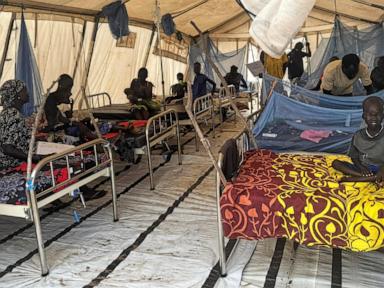
South Sudan isn't just dealing with a hunger crisis. It’s dealing with a hostage situation where the captors are the very people meant to lead. While you read headlines about "logistical delays" or "resource scarcity," the reality on the ground is far more sinister. In places like the Greater Pibor Administrative Area and parts of Jonglei, food isn't just missing. It's being blocked.
The government in Juba and the opposition forces have perfected a deadly rhythm of finger-pointing. When a convoy of life-saving grain gets stuck or turned back, the official story usually involves "security concerns" or "unclear paperwork." But talk to anyone who’s actually tried to move supplies through these corridors and they’ll tell you the truth. Aid is a currency. If you can’t control the people through loyalty, you control them through their stomachs. Read more on a connected topic: this related article.
Why Aid Never Reaches the People Who Need It Most
It’s easy to blame the geography. South Sudan's infrastructure is a nightmare of flooded dirt roads and broken bridges. But physical barriers aren't the primary reason children are eating boiled leaves to survive. The real blockage is a series of checkpoints manned by armed groups who demand "taxes" that international NGOs simply can't pay without violating their own ethical mandates.
Government officials will look you in the eye and say they’re doing everything possible to facilitate delivery. Then, five miles down the road, a local commander under their payroll refuses to let a truck pass because of a perceived slight from a rival clan. The opposition isn't any better. They claim the government uses aid to buy the favor of neutral communities, so they intercept it to "redistribute" it—which usually means feeding their own soldiers while civilians watch from the sidelines. Additional analysis by NPR explores similar views on the subject.
This isn't a glitch in the system. It's the system itself. By keeping communities on the brink of starvation, both sides ensure that the population remains too weak to revolt and too dependent to demand real change. It's a calculated strategy of deprivation.
The Blame Game as a Diplomatic Shield
Watch any press conference in Juba and you’ll see a masterclass in deflection. The Ministry of Humanitarian Affairs often blames "rebel activity" for the lack of reach in certain sectors. Meanwhile, opposition spokespeople release statements from safe havens in neighboring countries, claiming the government is "weaponizing hunger" to ethnically cleanse specific regions.
They’re both right. And they’re both lying.
The UN and organizations like the World Food Programme find themselves in an impossible position. If they speak too loudly about the government's role in blocking aid, their visas get revoked and their operations are shut down. If they stay silent, they become silent partners in a famine. We’ve seen this play out in the Panyijiar County and the outskirts of Malakal. When the bureaucratic stalemate lasts for months, the mortality rate doesn't just tick up. It explodes.
Real People Are Not Political Chips
I’ve seen how this looks away from the polished offices of international diplomats. It looks like a mother walking forty miles because she heard a rumor that a specific clinic still had high-calorie peanut paste. It looks like elders deciding which children get the largest portion of a meager meal because they know they can't save everyone.
The international community keeps throwing money at the problem, but money doesn't break a political blockade. In 2024 and 2025, billions were pledged, yet the IPC (Integrated Food Security Phase Classification) reports consistently show that over half the country faces acute food insecurity. You can't fix a political will problem with a logistics budget.
The disconnect is staggering. While elites in the capital drive luxury SUVs and stay in hotels with 24-hour electricity, people in the periphery are literally digging for lily bulbs in swamps to stay alive. The government claims it lacks the funds to repair roads or secure convoys, yet the country’s oil revenue remains shrouded in secrecy, rarely trickling down to the social services that would prevent these disasters.
Breaking the Cycle of Weaponized Hunger
We have to stop treating this as a series of unfortunate events. It’s a series of choices. Every time a commander denies passage to a barge on the White Nile, that’s a choice. Every time a minister signs a decree adding new "administrative fees" to humanitarian shipments, that’s a choice.
If we want to see aid actually reach these communities, the "neutrality" of aid needs a serious rethink. Pressure shouldn't just be about more funding. It needs to be about targeted accountability for the specific individuals who hold the keys to the warehouses. We know who they are. The local governors, the bridge commanders, and the logistics directors know exactly why the trucks aren't moving.
What Actually Works on the Ground
History shows that high-level diplomatic "concerns" don't move the needle. What works is local-level negotiation that bypasses the central drama. When community leaders are empowered to negotiate their own corridors, the success rate for aid delivery climbs. But even this is a temporary fix for a bleeding wound.
The long-term solution requires a total overhaul of how the world interacts with South Sudan's leadership. If aid is being used as a weapon, then the people wielding that weapon need to face consequences that actually hurt—like freezing the personal assets they hold abroad or restricting their travel to the very countries that fund the aid they’re currently blocking.
Stop falling for the "opposition vs. government" narrative. In the context of the starving villager, there is no difference between the two. They are two hands on the same throat.
Support organizations that have deep, long-standing ties to local South Sudanese networks rather than just the "big-box" agencies that stick to the main roads. Groups that use small-scale river transport or local grain purchases often bypass the massive, easily-blocked convoys that the politicians love to hold hostage. Pay attention to the reporting from the South Sudan Human Rights Commission and independent local journalists who risk everything to name the people standing in the way of the food. Don't let the "blame game" hide the faces of the people actually doing the blocking. It's time to call it what it is: a man-made disaster with plenty of authors but no one willing to take the pen.