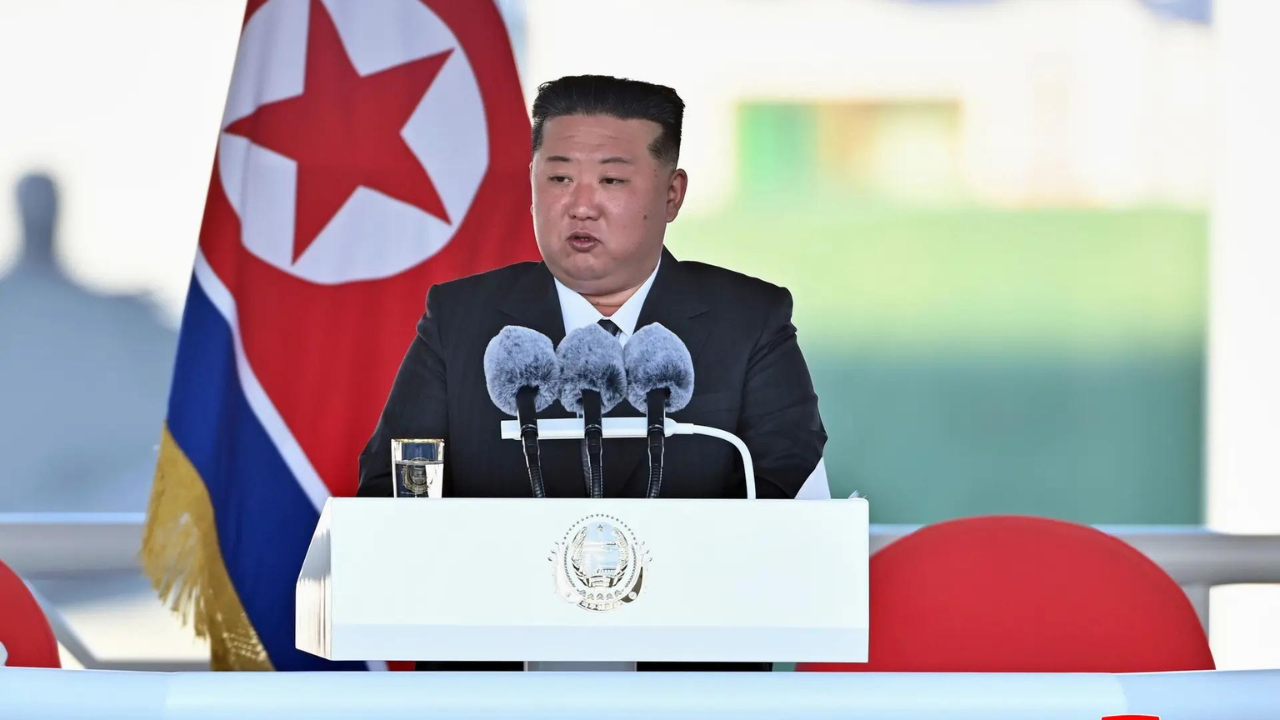
Pyongyang has signaled a fundamental shift in its nuclear posture by codifying a decentralized command-and-control system. This is not merely a technical update. It is a strategic move designed to ensure that even if the top leadership is neutralized in a surgical strike, the country’s nuclear arsenal will fire automatically. By automating the path to Armageddon, Kim Jong Un has effectively removed his own survival from the equation of deterrence.
The logic behind a "dead man’s switch" is as cold as it is simple. In traditional nuclear theory, the "second-strike capability" relies on the survival of enough infrastructure and leadership to order a retaliation. However, for a smaller nuclear power facing a superpower, the risk of a "decapitation strike"—a precision attack aimed at the head of state—is a constant existential threat. North Korea’s new law explicitly states that if the "command and control system" is endangered, nuclear strikes are launched "automatically and immediately."
The Mechanics of Automated Retaliation
A nuclear dead man’s switch functions as a fail-lethal system. Most safety protocols in high-risk industries are fail-safe, meaning if a component breaks, the system shuts down. A fail-lethal system does the opposite. If the heartbeat of the central command is no longer detected, the weapons are released. This removes the "human in the loop" during the most critical moments of a crisis.
For North Korea, this likely involves a combination of hardened seismic sensors, radiation detectors, and "keep-alive" communication signals sent from Pyongyang to missile silos and mobile launchers. If those signals stop, the local commanders—or the systems themselves—are pre-authorized to launch. It is a brutal solution to a technical problem. It tells an adversary that killing the leader will not stop the war; it will only guarantee that the war begins.
The Decapitation Paradox
Washington and Seoul have spent years refining "Kill Chain" strategies. These plans focus on detecting an imminent North Korean launch and destroying the leadership before they can give the order. By activating an automated trigger, Pyongyang has rendered the Kill Chain obsolete.
You cannot deter a machine that has already been programmed to fire.
This creates a terrifying new reality for intelligence agencies. In the past, monitoring the physical movements of the Kim family provided clues about the state's readiness. Now, the danger lies in the silence. If communications are accidentally severed by a natural disaster, a technical glitch, or a localized cyberattack, the system could misinterpret the lack of signal as a decapitation strike. The margin for error has shrunk to zero.
Russian Precedent and the Perimeter System
The concept is not new, but its application in a volatile regional theater is. During the Cold War, the Soviet Union developed "Perimeter," often referred to as the Dead Hand. This was a backup system designed to launch a mass retaliatory strike if the Kremlin and the General Staff were wiped out.
Unlike the Soviet system, which was a secret kept for years, North Korea is shouting about its capability from the rooftops. This transparency is the point. Deterrence only works if the other side knows the trap is set. By making the "Dead Man" switch public, North Korea is attempting to force the United States to abandon any hope of a quick, clean regime change.
The Risks of Brittle Command Structures
There is a significant difference between a superpower like Russia and a cash-strapped state like North Korea implementing such a system. Automated nuclear triggers require immense technical reliability.
- Signal Integrity: How does the system distinguish between a targeted strike and a blackout?
- Cyber Vulnerability: If the switch is digital, it can be spoofed or hacked.
- Command Delegation: At some point, the authority must move from a central computer to a field officer.
In a state where loyalty is enforced through fear, delegating the power to start a nuclear war to lower-level commanders is a massive gamble for the Kim regime. It suggests that the fear of an American strike now outweighs the fear of an internal coup or an accidental launch.
Hardened Silos and Mobile Shadows
The hardware supporting this switch is becoming more sophisticated. We are seeing a move away from liquid-fueled missiles that require hours of visible preparation. The shift to solid-fuel technology allows missiles to be moved and fired with almost no warning. When combined with an automated trigger, the timeline for a diplomatic or military intervention disappears.
Mobile Transporter Erector Launchers (TELs) now hide in North Korea’s extensive tunnel networks. These units likely operate on a "silent" protocol. If they do not receive a specific "all-is-well" code within a set timeframe, they move to pre-determined coordinates and prepare for launch. The burden of preventing a nuclear exchange has shifted from the actor who starts the war to the actor who is trying to prevent it.
The End of Rational Actor Theory
Western diplomacy often operates on the assumption that every leader is a rational actor who values their own survival above all else. This dead man’s switch is a direct challenge to that assumption. It is an "irrational" move that creates a "rational" deterrent. By proving he is willing to let the country fire its nukes even after he is dead, Kim Jong Un is attempting to lock the world into a stalemate.
The danger of this posture is the accidental escalation. If a localized skirmish along the DMZ leads to a temporary communications failure, the "Dead Hand" could begin its countdown. There is no "undo" button once the sensors decide the leadership is gone.
This development fundamentally changes the cost-benefit analysis for any military intervention in the region. The world is no longer dealing with a leader who holds the keys to the kingdom; we are dealing with a system where the keys have already been turned, and the only thing holding back the door is a ticking clock.
The strategic ambiguity that once allowed for "limited" strikes is gone. In its place is a rigid, automated finality. The international community must now grapple with the fact that the most dangerous moment in North Korean history won't be a declaration of war, but a simple loss of signal.
Check the hardening of regional communication nodes. If the "keep-alive" signal is the only thing standing between peace and a launch, the reliability of North Korea’s internal internet and radio frequency infrastructure becomes a matter of global security. We must stop looking for the man and start looking for the pulse.