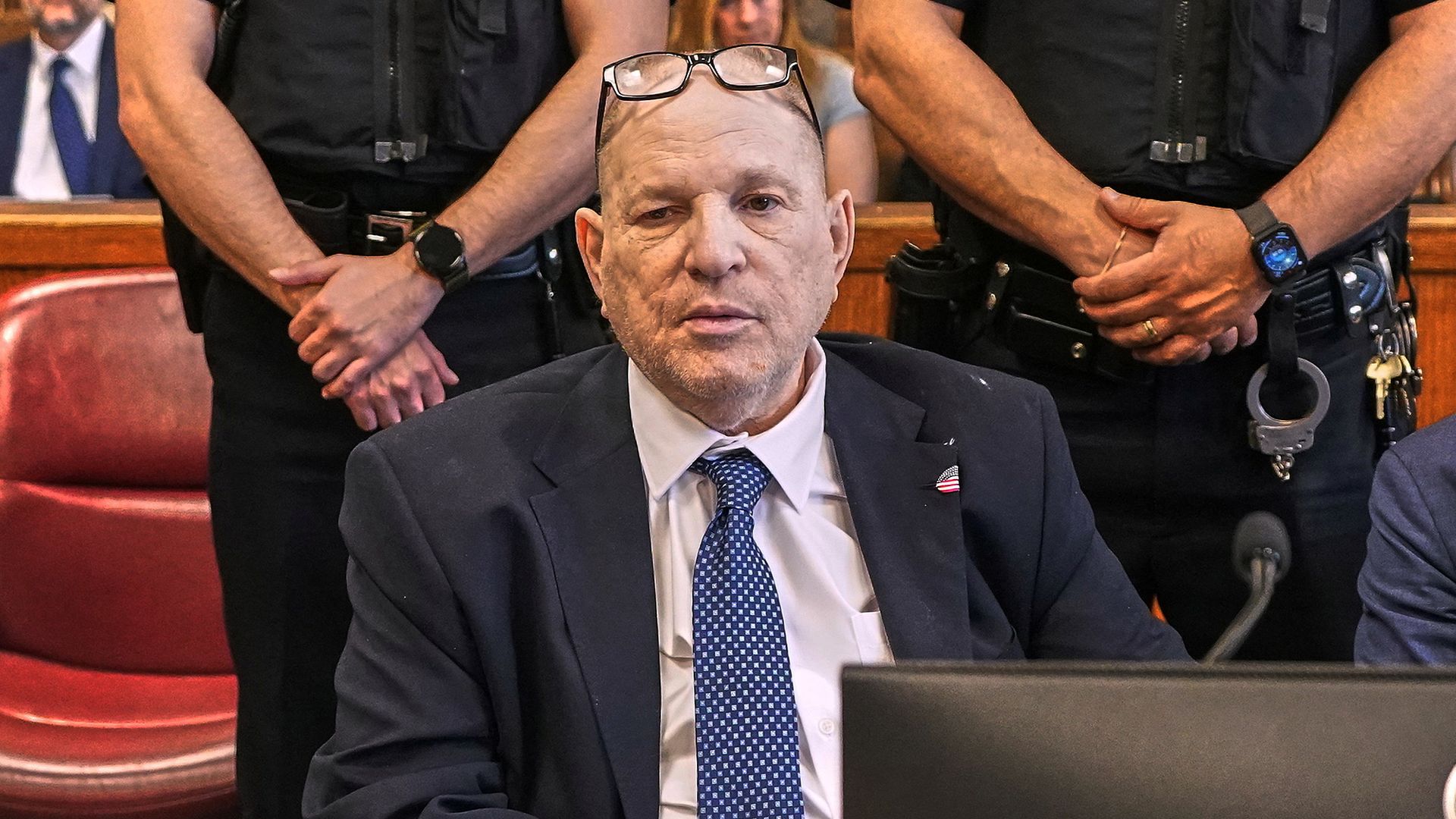
The American legal system is currently addicted to the "do-over." We are watching the slow-motion collision of high-stakes celebrity litigation and the complete erosion of judicial finality. When headlines scream about a former Hollywood mogul facing a rape retrial, the public consumes it as a moral victory or a necessary reckoning. They are wrong. What we are actually witnessing is a systemic failure that prioritizes optics over the foundational mechanics of the law.
The "lazy consensus" suggests that every retrial is a win for justice. In reality, every retrial is a confession of incompetence by the lower courts and a brutal tax on the very concept of due process. I’ve watched high-profile cases crumble because prosecutors overreach and judges get "starstruck" by the political climate of the day. They trade a clean trial for a "statement" trial, and when the appellate court inevitably strikes it down, we act surprised.
The Molineux Error and the Death of Due Process
The core of the recent reversal in the New York case against Harvey Weinstein wasn't a technicality. It was a fundamental breach of the Molineux rule. For the uninitiated, this rule—named after People v. Molineux (1901)—strictly limits the prosecution’s ability to introduce evidence of uncharged crimes.
Prosecutors and the media love to scream "prior bad acts" because it’s an easy way to poison a jury’s mind. If you can’t prove the specific crime on the docket, just tell the jury the defendant is a generally bad guy and let their biases do the heavy lifting. This is lazy lawyering. When the New York Court of Appeals overturned the conviction, they weren't saying Weinstein was innocent; they were saying the trial was a rigged circus.
- The Trap: Prosecutors use "propensity evidence" to bypass the burden of proof.
- The Reality: If a defendant can be convicted based on who they are rather than what they did in a specific instance, the law is dead.
- The Cost: A retrial means victims have to testify again, millions in taxpayer money are incinerated, and the legal precedent becomes a moving target.
The Myth of the "Clean" Retrial
People ask: "If he’s guilty, what’s the harm in trying him again?"
The harm is the Trial Memory Distortion. In a standard criminal case, witness testimony is most reliable when it’s fresh. By the time a retrial rolls around—years after the events and after a first trial has been dissected by every tabloid on the planet—memory isn't memory anymore. It's a script.
I’ve seen witnesses in corporate and criminal litigation subconsciously align their testimony with the "successful" parts of the previous trial. They fill the gaps. They fix the contradictions that the defense highlighted the first time. A retrial isn't a fresh look at the facts; it’s a rehearsal where the prosecution has already seen the defense's entire playbook. It is inherently biased against the defendant, regardless of their guilt.
Why Prosecutors Love the Retrial Loop
District Attorneys are politicians with law degrees. A high-profile retrial is a gift that keeps on giving for a re-election campaign. It provides years of "tough on crime" headlines without the pesky requirement of actually securing a final, unshakeable conviction.
- The Announcement: Press conference gold.
- The Jury Selection: Weeks of media saturation.
- The Verdict: A coin flip that doesn't matter, because even a loss can be blamed on "technicalities" or "an unfair judge."
The "People Also Ask" sections of the internet are obsessed with whether a retrial means the defendant is "getting away with it." They are asking the wrong question. The question is: why was the first trial so poorly handled that a retrial was necessary? We should be firing prosecutors who trigger reversals, not celebrating their second chances.
The Uncomfortable Truth About Hollywood Power Dynamics
The media wants to frame these retrials as a dismantling of "casting couch" culture. It’s a convenient narrative that ignores the fact that the industry hasn't actually changed; it just updated its HR manual.
The power imbalance that allowed these crimes to happen for decades was supported by the very agencies, unions, and studios that now distance themselves from the fallout. A retrial focuses the lens on one man's actions to avoid looking at the institutional complicity that kept the lights on. It’s a sacrificial offering. By focusing on the "mogul," we ignore the "machinery."
The Thought Experiment: The Invisible Defendant
Imagine a scenario where the defendant wasn't a famous producer, but an unknown accountant with the same evidence profile. The Molineux errors that occurred in the Weinstein case would have been called out in real-time. But because the defendant was a monster in the public eye, the judge allowed the prosecution to color outside the lines.
When we allow the law to bend for "monsters," we give it permission to bend for everyone. If you’re okay with the prosecution cheating to get a "bad guy," don't complain when they use those same tactics on someone you actually like.
The Strategy of Exhaustion
In high-stakes litigation, the goal is often not "truth," but exhaustion. The state has infinite resources. The defendant, even one with a "war chest," does not. A retrial is a war of attrition.
- Legal Fees: Top-tier defense teams cost $1,500+ per hour. A retrial can easily add $5 million to the bill.
- Witness Fatigue: Key witnesses often drop out or refuse to cooperate during a second round, leading to "unavailable witness" hearsay exceptions that further degrade the quality of the evidence.
- Public Apathy: By the third year of a case, the public stops caring about the nuances and just wants a "guilty" or "not guilty" stamp so they can move on to the next scandal.
Stop Demanding Justice and Start Demanding Competence
The obsession with retrials as a tool for social justice is a distraction. If the legal system worked as intended, we wouldn't need them. Every time a conviction is vacated due to "judicial error," it’s a signal that the system is prioritizing the emotional satisfaction of a conviction over the structural integrity of the law.
We are currently building a legal "landscape" (to use a word I hate, but let’s call it a "minefield") where finality is a relic. If we keep moving the goalposts, we don't end up with more justice; we end up with a perpetual motion machine of litigation that serves no one but the lawyers.
The retrial of a fallen mogul isn't a sign that the system is working. It’s the final gasp of a system that forgot how to try a case correctly the first time. Stop cheering for the do-over and start questioning why the "pros" keep failing the most basic tests of constitutional law.
The gavel doesn't just represent power; it represents the end of the conversation. When we keep picking the gavel back up, we admit that the law has no teeth, only an appetite for theater.
The mogul isn't just on trial. The credibility of the courtroom is on trial, and it’s losing.