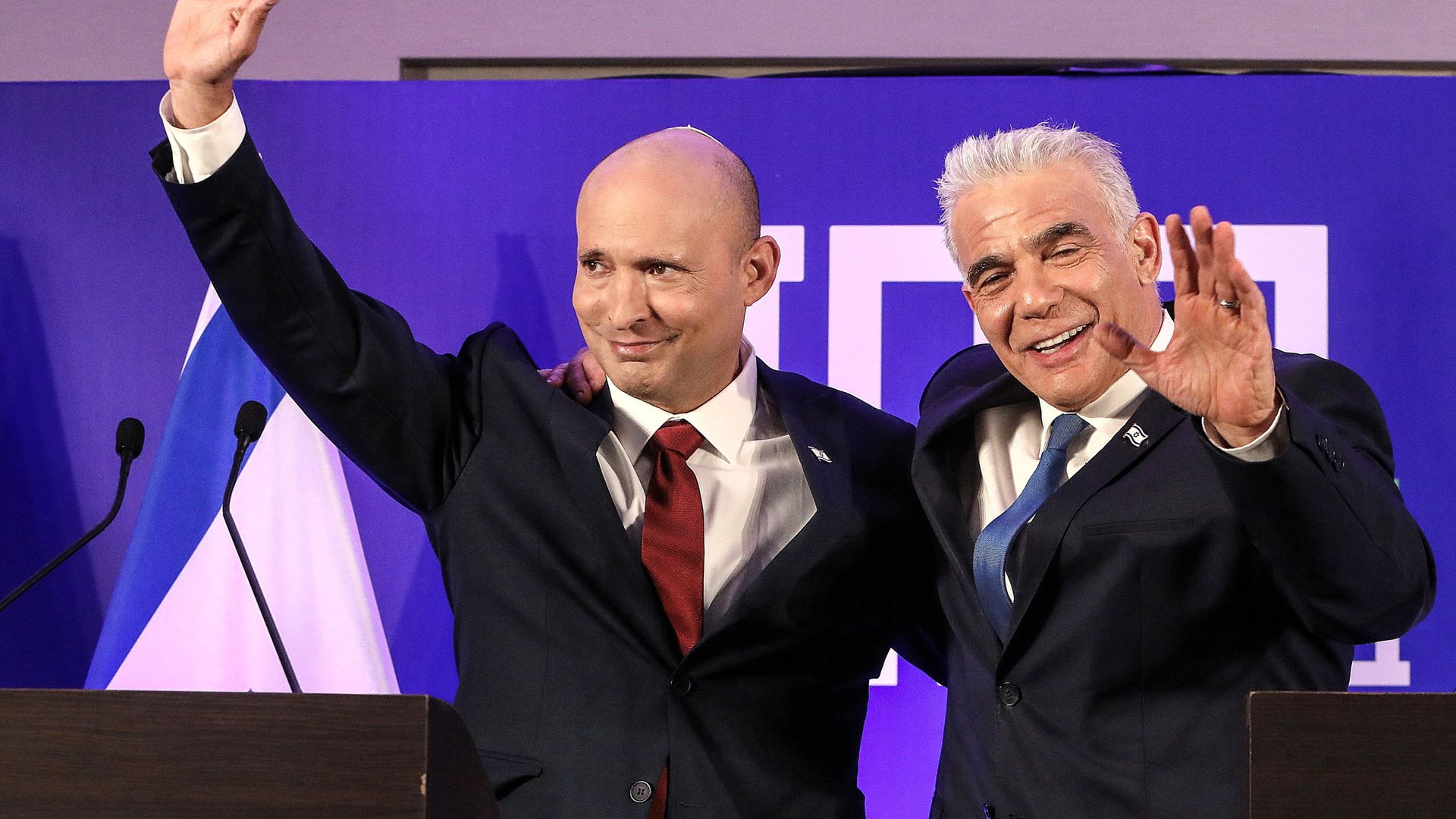
Naftali Bennett and Yair Lapid have finally stopped pretending they can win alone. By merging their parties into a single entity called "Together" (BeYachad) on April 26, 2026, the two former prime ministers have admitted what the Israeli public has known for years: Benjamin Netanyahu is too entrenched to be defeated by a fractured center-left and a wavering right. This is not just another tactical alliance. It is a desperate, calculated move to consolidate the anti-Netanyahu vote before the October elections, focusing on a "Repair Bloc" that aims to dismantle the Prime Minister's decades-long grip on power.
While the competitor’s narrative frames this as a simple rival merger, the reality is far more clinical. This is an attempt to create a "Big Tent" for a nation suffering from collective exhaustion. By placing Bennett—a right-wing tech millionaire and former commando—at the top of the ticket, the alliance is making a direct play for the "soft right" voters who are tired of Netanyahu but terrified of a purely centrist or left-wing government.
The October 7 Ghost and the Commission of Inquiry
Netanyahu’s survival has always relied on his image as "Mr. Security." That image was shattered in 2023, and the new Together party is using the shards to build its platform. Bennett has made a state commission of inquiry into the October 7 failures his primary campaign promise. This is a strategic dagger. By refusing to establish such a commission himself, Netanyahu has left a vacuum that Bennett is now filling with a narrative of accountability.
The investigative reality is that Netanyahu cannot afford a commission of inquiry while he is still in office. Such a probe would likely expose systemic failures at the highest levels of his administration. Bennett and Lapid aren’t just asking for the truth; they are weaponizing the public's need for closure. They are betting that the desire for an honest accounting of the greatest tragedy in the state’s history will outweigh the traditional tribal loyalties of the Israeli voter.
The Conscription Crisis
The alliance is also leaning heavily into the "internal contract" of Israeli society. For decades, the exemption of ultra-Orthodox (Haredi) men from military service has been a simmering resentment. Now, it is a boiling point. Netanyahu’s reliance on Haredi parties to maintain his coalition has forced him to defend these exemptions even as the country remains on a multi-front war footing.
Bennett’s pledge to initiate a universal conscription law and stop funding "draft evasion" is a direct shot at Netanyahu’s coalition stability. If Together can successfully frame the election as a choice between "those who serve" and "those who are exempt," they can peel away secular and traditional voters who have historically voted for Netanyahu’s Likud party.
Tactical Hawkishness and the Illusion of Change
Do not mistake this merger for a shift toward a more dovish Israel. On the contrary, the Bennett-Lapid ticket is positioning itself to be just as hawkish as Netanyahu, if not more so. They have criticized the Prime Minister not for being too aggressive, but for being ineffective. Lapid recently labeled the April 8 ceasefire with Iran a "political disaster," arguing that Netanyahu failed to leverage military gains into a decisive victory.
This is the "how" of their strategy:
- The Iranian Front: Both leaders support the current posture against Tehran but argue for a more "pragmatic" use of force that leads to strategic outcomes rather than perpetual conflict.
- Territorial Integrity: Bennett has been explicit that he will not cede a single centimeter of land, effectively killing any lingering hopes for a Palestinian state within this political cycle.
- Regional Diplomacy: They seek to repair the relationship with Washington, which has soured significantly. Recent data shows 60% of U.S. adults now hold an unfavorable view of Israel, a statistic the opposition blames squarely on Netanyahu’s personal friction with the Biden administration.
By mirroring Netanyahu’s security hardline while promising better management and cleaner hands, Bennett and Lapid hope to make the transition of power feel like an upgrade rather than a revolution.
The Gantz Factor and the Mathematics of Power
The merger leaves Benny Gantz in a precarious position. The leader of the Blue and White party has long played the role of the "adult in the room," but his support has eroded as he remains open to sitting in a government with Netanyahu. The Bennett-Lapid union effectively sidelines Gantz, forcing him to either join the "Together" ticket as a junior partner or risk political irrelevance.
Current polling suggests the math is finally shifting. While Netanyahu’s Likud remains the largest single party, the combined "Together" list, along with potential partners like Gadi Eisenkot, could command 60 seats in the 120-seat Knesset. This is a razor-thin margin, but in the volatile world of Israeli politics, it is a viable path to the Prime Minister's Office.
Breaking the 30 Year Cycle
Naftali Bennett’s campaign slogan—that it is time to part with Netanyahu after 30 years—is more than a catchphrase. it is an acknowledgment of the "Bibi-ism" that has defined the country's political life since the 1990s. The challenge for the Together party is to prove they aren't just a "Not-Bibi" party. They must convince a skeptical public that a former settler leader and a former TV anchor can actually govern together without the coalition collapsing under the weight of its own internal contradictions, as their previous 2021 experiment did.
Netanyahu is already counter-attacking, labeling the union a "brotherhood of the left" and accusing them of selling out to Islamist interests. It is a familiar playbook, but its effectiveness is waning. The public is no longer looking for a "strongman" to protect them; they are looking for a functional government that can pass a budget and manage a war without falling into a spiral of personal legal battles.
The success of the Bennett-Lapid merger won't be measured by the size of their rallies, but by their ability to maintain discipline until October. If they can suppress their own egos long enough to present a unified front on the draft and the economy, they might actually manage to close the book on the Netanyahu era. The era of repair, as they call it, is a high-stakes gamble on the idea that Israelis are finally more afraid of the status quo than they are of change.