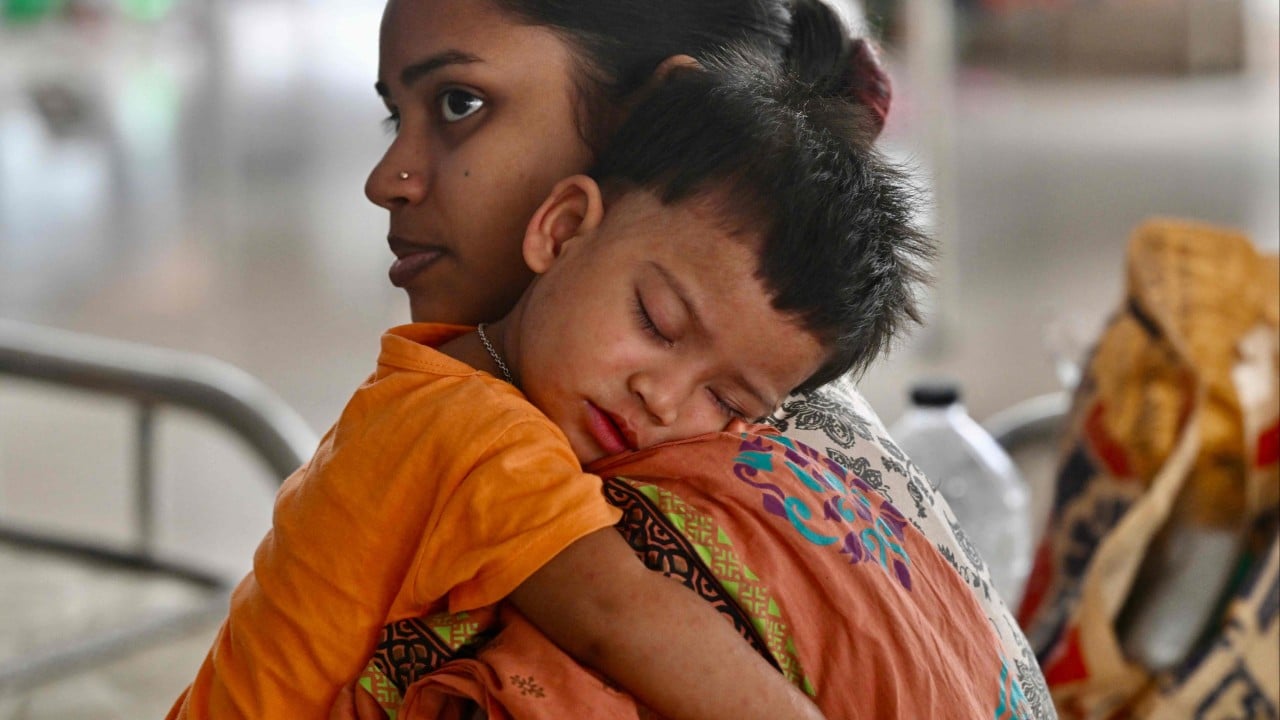
In the hill tracts of southeastern Bangladesh, the air usually smells of damp earth and woodsmoke. But lately, in the cramped settlements of Chittagong and the sprawling camps of Cox’s Bazar, a different scent lingers. It is the metallic tang of fever. It is the smell of a body fighting itself.
Ten-year-old Rohima does not know that her country achieved a monumental feat in the last decade, driving immunization rates to heights that once seemed impossible. She only knows that her skin feels like it is on fire. Tiny, flat red spots have begun to bloom across her forehead, spreading downward like a slow-motion spill of ink. This is the "red dust" of measles. It is a disease that the world promised to bury, yet here it is, waking up in the shadows of vaccine gaps. If you enjoyed this post, you should read: this related article.
Measles is not a polite visitor. It is one of the most contagious biological forces on the planet. To understand its power, consider this: if one person has it, up to 90% of the people close to them who are not immune will also become infected. It lingers in the air for two hours after an infected person has left the room. It waits.
The Math of Mercy
Public health is often discussed in spreadsheets, but it is lived in heartbeats. For a community to be safe from measles, we need a "firewall" of immunity. Scientists call this herd immunity, and for measles, the threshold is unforgiving. You need 95% of the population to be vaccinated with two doses of the MMR (measles, mumps, and rubella) vaccine. For another perspective on this development, check out the recent update from National Institutes of Health.
If the coverage drops to 90%, the fire finds a crack. If it drops to 80%, the fire becomes an inferno.
In Bangladesh, the cracks have begun to widen. While the national average looks impressive on a global stage, averages are dangerous. They hide the "pockets of zeroes"—neighborhoods, remote hill tribes, and floating populations where not a single needle has touched a shoulder in years. The 2023 and 2024 data suggests that while the city centers might be protected, the fringes are fraying. When the coverage in specific districts dips below that 95% line, the virus doesn't just trickle in. It explodes.
Why the Wall is Crumbling
You might wonder how a country that was once a poster child for immunization success finds itself back in the crosshairs of a preventable plague. The answer isn't a single failure. It is a slow, quiet erosion.
First, there is the ghost of the pandemic. For two years, the world’s eyes were fixed on a different spike protein. Routine immunization schedules were sidelined. Parents were afraid to visit clinics. Healthcare workers were reassigned to the front lines of the global emergency. In that silence, the measles virus found a generation of children whose immune systems were blank slates.
Then, there is the logistical nightmare of the terrain. Bangladesh is a land of water and shifting silt. Delivering vaccines to the "chars"—temporary islands formed by river erosion—requires a level of dedication that borders on the heroic. A health worker must carry a cold-box, keeping the vials at exactly $2°C$ to $8°C$, while trekking through mud or crossing volatile rivers in small wooden boats. If the ice melts, the medicine dies.
But the most stubborn barrier isn't the river. It's the rumor. In the tea gardens and the hill tracts, whispers travel faster than the virus. Some hear that the vaccine causes infertility; others believe it is a foreign plot to alter their children’s blood. When fear meets a lack of education, the needle stays in the tray.
The Invisible Toll
We often talk about measles as a childhood rite of passage, a memory of itchy spots and a week off school. This is a lethal misunderstanding. Measles is a systemic assault. It suppresses the immune system so effectively that it creates a "state of immunological amnesia." It wipes out the antibodies the body has spent years building up against other diseases.
A child who survives measles today might die of a simple cold six months from now because their immune system "forgot" how to fight.
For Rohima, the stakes are even more immediate. The virus attacks the lungs, leading to pneumonia—the leading cause of measles deaths. It attacks the brain, causing encephalitis that can leave a child permanently disabled. It attacks the eyes. In malnourished populations, measles is a common cause of childhood blindness.
Imagine a mother watching her child recover from a fever, only to realize the light has gone out of the girl's eyes forever. That is the human cost of a 5% gap in a spreadsheet.
The Refugee Factor
The crisis is amplified by the humanitarian situation in Cox’s Bazar. Over a million Rohingya refugees live in some of the most densely populated conditions on earth. Here, social distancing is a physical impossibility. The camps are a perfect laboratory for an airborne virus.
The Bangladeshi government and international partners have launched massive "catch-up" campaigns, but the sheer movement of people makes tracking every child a Herculean task. New arrivals, cross-border movement, and the sheer density of the shelters mean that the virus always has a fresh bridge to cross.
A Strategy of Rebuilding
Fixing this isn't just about buying more vials. It's about rebuilding a broken bond of trust. It means hiring local grandmothers in the hill tracts to explain the vaccine to their neighbors. It means using SMS alerts to remind a busy father in a Dhaka slum that his son’s second dose is due.
It also means realizing that health is not a local issue. In a globalized world, an outbreak in a small village in Bangladesh is a threat to a city in London or a suburb in New York. The air we breathe is shared.
The red dust is settling on too many doorsteps this year. The tragedy isn't that we don't have the cure. The tragedy is that we have it, we know it works, and we are still letting the fire burn.
Rohima’s fever will eventually break, or it won't. Her mother sits beside her, fanning her with a piece of cardboard, waiting for the heat to leave her daughter's skin. Outside, the sun sets over the hills, beautiful and indifferent to the microscopic war being waged in the dark. The vaccine is a miracle of modern science, but a miracle that stays in a glass vial is just a drop of wasted liquid. It only becomes life when it meets the skin.
The spots on Rohima's arm are a map of where we have failed to go.