Helping a baby fox or a grounded swift feels like the ultimate act of kindness. You see a shivering creature in your garden near the Seine, your instincts scream "save it," and you want to wrap it in a blanket. Stop right there. If you treat a wild animal like a pet, you’re not saving its life—you’re likely ending its chance of ever being free.
In the shadows of the Alfort National Veterinary School (EnvA) just outside Paris, the Centre d'Accueil de la Faune Sauvage (CEDAF) operates on a philosophy that sounds harsh but is actually the peak of compassion: total emotional detachment. This isn't about being cold. It's about survival. Every year, thousands of European mammals and birds pass through this facility, and the staff works tirelessly to make sure these animals never consider a human their friend. For another view, read: this related article.
The Brutal Reality of Urban Wildlife Rescue
Paris isn't just for tourists; it’s a dense ecosystem of foxes, hedgehogs, and birds of prey. When these animals clash with urban life—cars, windows, or territorial disputes—they end up at CEDAF. The hospital, supported by the Faune Alfort Association, handles everything from broken wings to poisoned raptors.
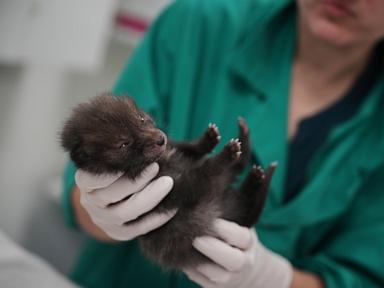
The biggest threat isn't always the physical injury. It’s imprinting. This is a biological "hardwiring" where a young animal identifies its caregiver as its parent or species. If a fox cub thinks a human is its source of food and comfort, it loses its natural fear. A fox that walks up to people in a Parisian park isn't "tame"; it’s a nuisance animal that will eventually be trapped or killed because it doesn't know how to stay away from the most dangerous predator on the planet. Similar coverage on the subject has been provided by Vogue.
How CEDAF Blocks the Human Bond
The team at the Alfort wildlife hospital uses specific, tactical methods to prevent habituation. They don't name the animals. They don't talk to them. They certainly don't pet them.
- Visual Isolation: Screens and covers are used so animals don't see the humans providing food.
- The Power of Peers: As soon as a young animal is stable, it’s grouped with its own species. A lone fox cub is a tragedy; a group of four fox cubs is a pack. They teach each other how to be foxes.
- Natural Cues: Food isn't served in a bowl like a dog's dinner. It’s hidden, scattered, or presented in ways that force the animal to scavenge or "hunt" within its enclosure.
- Aversive Conditioning: Sometimes, a little bit of "scary" human interaction is necessary. It’s better for an animal to be terrified of the vet than to think every person carries treats.
The Mistakes You're Probably Making
Most people who bring animals to the Paris-area hospital have their hearts in the right place, but their actions often complicate the recovery. I've seen it a hundred times: someone finds a "displaced" fledgling and assumes it's abandoned.
Honestly, it probably isn't.
Many bird species spend a few days on the ground before they can fly. Their parents are usually watching from a nearby tree, waiting for you to leave. By "rescuing" that bird, you’ve actually kidnapped it. CEDAF experts urge you to observe from a distance for at least an hour before interfering. If you must move it, move it to a high branch nearby—don't drive it across the city immediately.
[Image showing the difference between a fledgling bird that should be left alone and a nestling that needs help]
If you do find an animal that is clearly injured—bleeding, dragging a limb, or shivering—don't try to be a hero with a medicine cabinet. Don't give it milk (most wild animals are lactose intolerant and will get sick). Don't force-feed it water; you might accidentally drown it if the water goes into its lungs.
The Path to Release
The end goal for every patient at the Alfort clinic is the "soft release." For a fox cub, this means moving from the intensive care of the hospital to a larger outdoor enclosure. This is the transition phase. They spend weeks acclimating to the weather, the sounds of the outdoors, and the lack of constant human presence.
Eventually, the door is just... left open.
The animal chooses when to leave. They don't look back. They don't say thank you. And that’s exactly how the staff wants it. A successful release is one where the animal disappears into the brush and never interacts with a human again.
What You Can Do Right Now
If you live in or around Paris and find a wild animal in distress, follow these steps to give it a fighting chance:
- Assess with distance: Is it actually injured, or just young? Check for blood or obvious bone breaks.
- Call first: Contact CEDAF or Faune Alfort through their website or phone. They can tell you if the animal even needs help.
- The Cardboard Box Method: If it needs transport, use a cardboard box with air holes. Put a towel on the bottom. No cages—wire can damage feathers and fur.
- Keep it dark and quiet: Turn off the radio in your car. Don't let your kids peek at it. Stress kills wild animals faster than many injuries do.
- Drop-off protocol: The hospital at 7 Avenue du Général de Gaulle in Maisons-Alfort accepts drop-offs between 10 a.m. and 6 p.m. daily.
Support these centers with donations rather than "volunteering" to cuddle the animals. They need specialized medical equipment and high-quality food, not more humans for the animals to get used to. True wildlife conservation is about preserving the "wild"—and that means keeping our hands off.