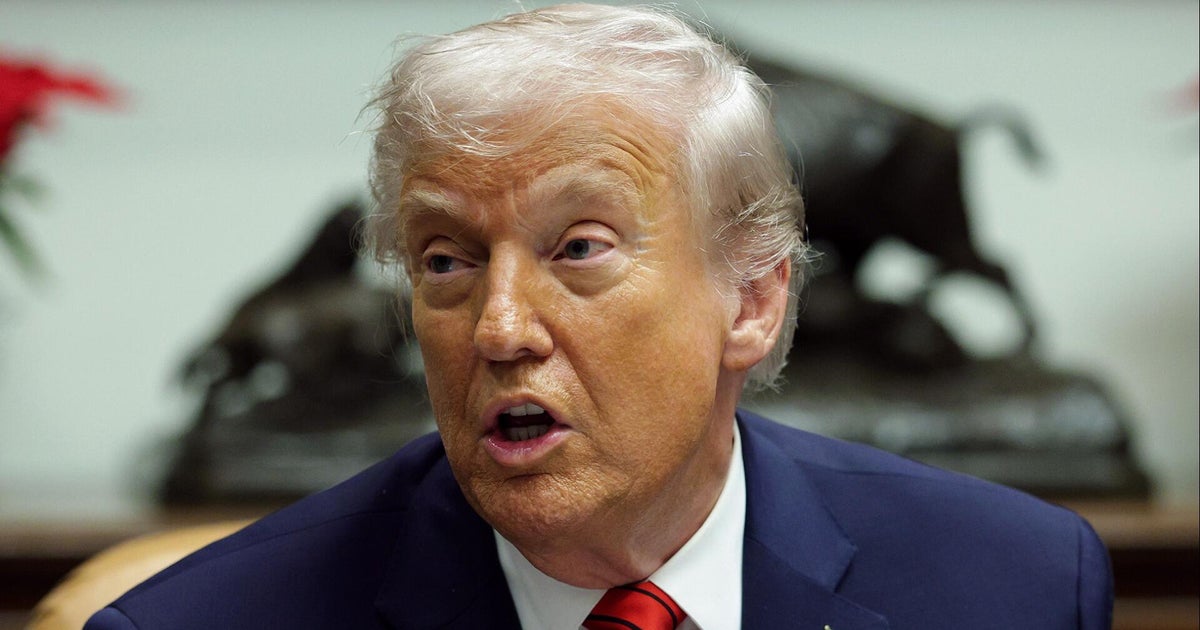
The resignation of a political figure under the pressure of an ethics investigation is rarely a simple admission of guilt; it is a calculated exit strategy designed to preserve what remains of their political capital. When a Democratic representative adopts the "witch hunt" lexicon—a rhetorical device popularized by Donald Trump—it signals a shift in the standard operating procedure for political crisis management. This convergence suggests that the traditional "shame-based" resignation model has been replaced by a "grievance-based" defensive posture. To understand this transition, one must analyze the structural mechanics of congressional ethics probes, the utility of partisan framing, and the specific incentives that drive a legislator to vacate their seat while simultaneously attacking the institution they served.
The Structural Mechanics of the House Ethics Committee
The House Committee on Ethics operates under a unique set of institutional constraints that differentiate it from criminal or civil courts. Its primary function is to enforce the Code of Official Conduct, which governs the behavior of members. The process is defined by two distinct phases:
- The Preliminary Investigative Subcommittee (PISC): This phase determines if there is "substantial reason to believe" a violation occurred. The evidentiary threshold here is lower than "beyond a reasonable doubt," making it a high-risk environment for members whose conduct occupies legal or ethical gray areas.
- The Adjudicatory Phase: If the PISC finds evidence of misconduct, the committee may issue a Statement of Alleged Violations. This is effectively an indictment within the House.
For a representative, the moment of resignation usually occurs when the PISC findings are imminent or have been shared privately with counsel. Resignation serves as a definitive circuit breaker. Because the House Ethics Committee loses jurisdiction over an individual the moment they are no longer a Member of Congress, resigning effectively terminates the investigation. This prevents the public release of a formal report, which would otherwise provide a detailed roadmap for Department of Justice (DOJ) prosecutors or state attorneys general.
The Utility of the Witch Hunt Narrative
The adoption of "witch hunt" rhetoric by a Democrat is a tactical pivot. In contemporary American politics, this phrase functions as a heuristic for "systemic institutional bias." By framing an ethics probe as a partisan hit job, the departing member attempts to achieve three specific objectives:
Tribal Realignment
The representative rebrands themselves not as a violator of House rules, but as a victim of a "deep state" or a "corrupt establishment." This forces their constituency to choose between believing the institution or believing the individual. In highly polarized districts, attacking the institution is often a more viable survival strategy than attempting to defend the specific facts of the case.
Mitigation of Legal Discovery
By resigning and discrediting the probe, the member creates a political buffer against subsequent criminal investigations. If the DOJ later pursues the same leads, the member has already established a narrative of "persecution," which can be used to influence jury pools or to characterize any future trial as a continuation of the initial "partisan" attack.
Signaling to Donors and Supporters
Political careers rarely end with resignation; they evolve into lobbying, consulting, or media roles. Maintaining a defiant posture ensures that the member remains a "hero" to their specific faction rather than a disgraced pariah. This preserves their ability to fundraise for a legal defense fund or a future political comeback.
The Cost Function of Institutional Defiance
While the "witch hunt" defense offers short-term protection, it imposes long-term costs on the political system. This creates a negative externality where the legitimacy of the House as a self-regulating body is eroded.
- The Erosion of Bipartisan Standards: The House Ethics Committee is one of the few bodies where membership is split evenly between parties. Attacking it as a "partisan tool" ignores its structural design, which requires a bipartisan majority to move forward with any significant action.
- The Precedent of Non-Cooperation: When members successfully avoid accountability through resignation and rhetorical defiance, it sets a template for future subjects of investigation. This reduces the deterrent effect of the ethics code.
- The Inflation of Rhetoric: As more figures use extreme language to describe standard administrative oversight, the impact of such language diminishes. This "rhetorical inflation" requires each subsequent actor to use even more vitriolic attacks to achieve the same defensive effect.
Comparative Analysis of Defense Strategies
The transition from the "Apology and Atonement" model to the "Counter-Attack and Resign" model can be quantified by looking at the lifecycle of congressional scandals over the last four decades.
In the 1980s and 1990s, the dominant strategy was to minimize the findings and express regret, often citing personal failings or "technical" oversights. The goal was to secure a reprimand or censure while remaining in office. However, the modern media environment—characterized by 24-hour outrage cycles and social media amplification—has rendered the "apology" ineffective. Apologies are now treated as blood in the water, inviting further scrutiny.
The "Counter-Attack" model, pioneered by the populist right and now adopted by the populist left, leverages the fact that the public trust in Congress is at historic lows. When a member calls their own committee a "sham," they are speaking to an audience that already views the institution with suspicion.
The Intersection of Ethics and the Department of Justice
It is vital to distinguish between an Ethics Committee probe and a DOJ investigation. The former deals with "conduct unbecoming of a member," which can include actions that are legal but unethical (e.g., certain types of nepotism or the use of non-public information for personal gain). The DOJ deals with criminal statutes (e.g., bribery, wire fraud, or campaign finance violations).
The resignation of a member does not stop a DOJ investigation. However, the loss of congressional subpoenas and the shuttering of the Ethics Committee’s work can slow the gathering of evidence. The "witch hunt" rhetoric is particularly useful here; it creates a political cost for the DOJ to pursue the case. If a prosecutor knows that half of the district believes the investigation is a politically motivated sham, the bar for "winning" the case in the court of public opinion—and eventually at trial—becomes much higher.
Strategic Recommendation for Institutional Response
The House of Representatives currently lacks a mechanism to finalize an ethics report once a member resigns. This loophole is what allows the "witch hunt" narrative to persist without a factual rebuttal.
To restore institutional integrity, the House should consider an amendment to its rules that allows the Ethics Committee to release its final findings even after a member’s resignation, provided the investigation had reached a specific threshold of discovery (e.g., the issuance of a Statement of Alleged Violations). This would ensure that the public record is completed, regardless of the member’s employment status.
The current trend of borrowing rhetoric across the aisle demonstrates that political survival tactics are becoming decoupled from ideology. The "witch hunt" is no longer a partisan phrase; it is a functional tool used by any incumbent who finds the walls of institutional oversight closing in. The only effective counter-measure is a transparency mandate that outlasts the member’s tenure.
Legislators and strategists must recognize that the "witch hunt" defense is a logical response to a system that allows an "exit-and-erase" strategy. Until the House closes the jurisdictional loophole that allows members to outrun their own ethics reports, we will continue to see high-profile exits characterized by defiance rather than accountability. The focus must shift from the rhetoric of the individual to the structural flaws of the committee’s reach.