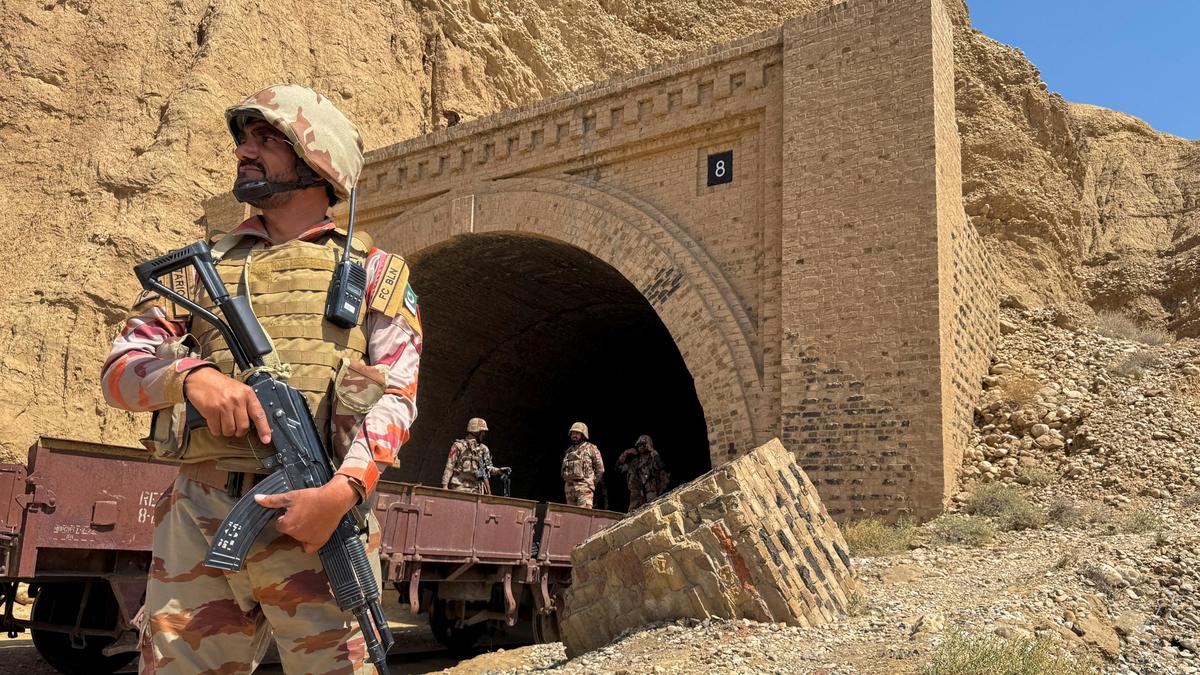
Five Pakistani soldiers lost their lives during a high-stakes counter-terrorism operation in Balochistan. It's a headline we see too often. But behind the brief news alerts lies a complex, grinding conflict that's claiming the lives of young men and destabilizing an entire region. If you're looking for the simple version, here it is. Security forces moved against a group of militants, a firefight broke out, and five families now face an empty chair at the dinner table.
This latest incident happened in the Sambaza area of Zhob district. It wasn't a random hit. It was part of an intelligence-based operation. Security forces didn't just stumble into this. They went in with a plan to neutralize a threat, and the threat fought back with lethal force.
Why Balochistan stays a flashpoint for violence
Balochistan isn't just another province. It's the biggest in terms of land but the least populated. It's also where the money is, or at least where the resources are. You've got gold, copper, and gas. You've also got the CPEC (China-Pakistan Economic Corridor) projects. All this makes it a prime target for groups that want to hurt the Pakistani state.
The militants involved in these clashes often belong to the TTP (Tehrik-i-Taliban Pakistan) or various separatist groups. They've found safe havens across the border in Afghanistan. Since the Taliban took over Kabul in 2021, the violence has spiked. It's a mess. The border is porous, the terrain is brutal, and the militants know every cave and ridge.
I've watched this cycle for years. The military goes in, clears an area, and then the militants melt away into the mountains only to return a few months later. It's a game of cat and mouse where the stakes are human lives.
The human cost of the Zhob operation
The ISPR (Inter-Services Public Relations) confirmed the deaths of these five soldiers. They were doing their jobs. They were trying to stop a group from launching attacks on civilians or infrastructure. During the intense exchange of fire, they took the hit.
Three terrorists were also killed in the shootout. That's the part the official statements always highlight. But let's be real. Losing five trained soldiers to take out three militants is a heavy price. It shows how dug-in these groups are. They aren't just guys with old rifles anymore. They have night-vision gear, modern sniper rifles, and sophisticated IEDs.
This isn't just about the five who died. It's about the hundreds who are out there right now, sleeping in tents or armored vehicles, wondering if the next rock they step on is rigged to blow. The mental strain on these troops is immense. You're fighting an enemy that doesn't wear a uniform. They look like the locals. Sometimes they are the locals.
Breaking down the tactical failures and wins
Why do these operations often result in high casualties for the army?
- Intelligence gaps. Even "intelligence-based" ops can go sideways if the info is twenty minutes old.
- Terrain advantage. The mountains in Zhob are a nightmare for conventional troops.
- External support. Weaponry is flowing across the border.
When the military says they're "clearing" an area, it means a house-to-house, ridge-to-ridge search. It’s slow. It’s dangerous. One guy with a PKM machine gun in a well-placed hole can hold off a whole platoon. That's likely what happened here. The soldiers were probably moving up a slope or entering a compound when the militants opened up.
The geopolitical mess fueling the fire
You can't talk about Balochistan without talking about the neighbors. Pakistan has repeatedly told the Afghan government to stop letting the TTP use their soil. The Afghan Taliban says they aren't doing it. Nobody believes them.
Then you have the internal politics. Some people in Balochistan feel ignored by Islamabad. They feel like their resources are being stolen while they live in poverty. This creates a recruiting ground for insurgent groups. It's easier to pick up a gun when you feel like you have no future.
The state needs more than just bullets to fix this. You can kill every militant in a district, but if the people there still don't have water, schools, or jobs, a new group of angry young men will just take their place.
What happens next in the region
Expect more operations. The military isn't going to back down, especially not after losing five men in one go. They'll likely increase the tempo of drone strikes and ground sweeps in the coming weeks.
But watch the borders. If the flow of militants from Afghanistan doesn't stop, these news stories will keep coming. The government needs to decide if it's going to keep fighting this as a purely military problem or if it's finally going to address the political rot underneath.
If you're following this, look past the "martyr" rhetoric. Look at the maps. Look at the border tensions. That's where the real story is. The families of those five soldiers deserve more than just a patriotic social media post. They deserve a strategy that actually works to end the bleeding.
For now, stay updated on the official ISPR releases but verify them against independent journalists on the ground. The fog of war is thick in Balochistan, and the first casualty is usually the truth. Keep an eye on the Zhob and Kalat districts specifically. They're becoming the new ground zero for this phase of the conflict.