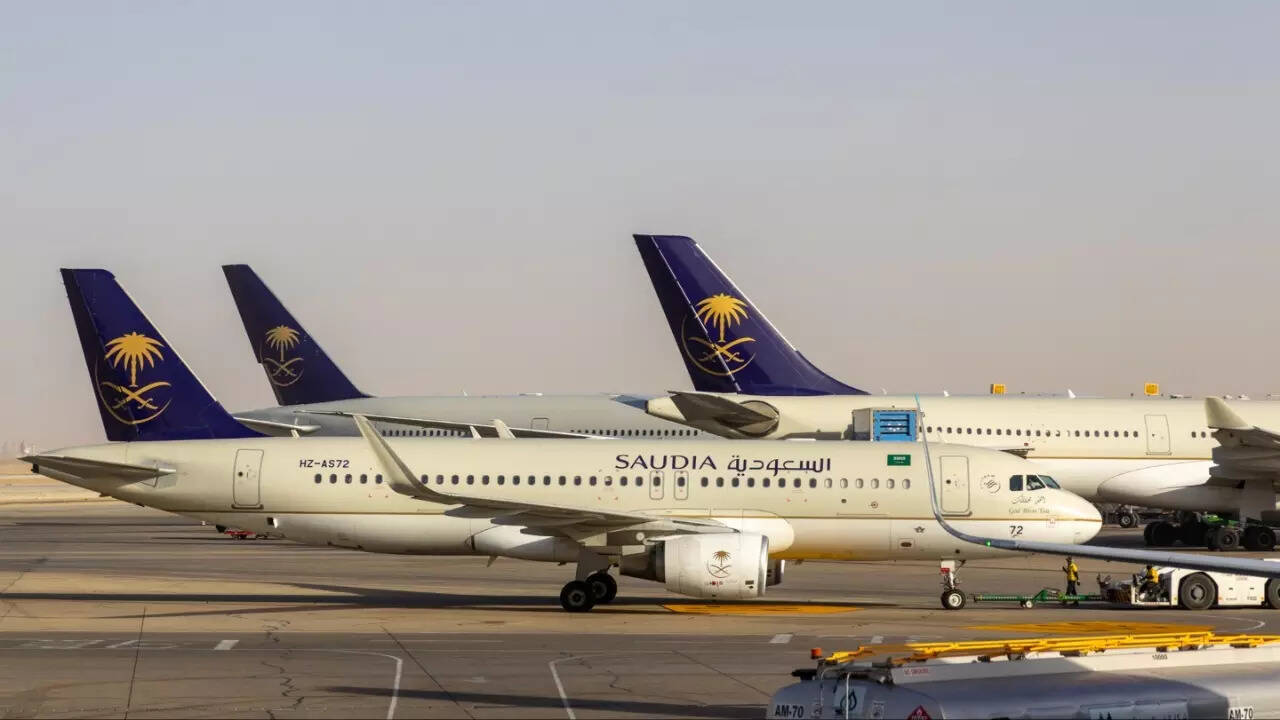
Don't bother heading to the airport if you're booked on a Saudia flight to the Gulf’s major hubs right now. The reality on the ground—and in the air—is messier than the official statements suggest. Saudi Arabia’s national carrier just pushed its flight suspensions until March 6 at 23:59 GMT. This isn't just a minor delay. It's a full-scale operational freeze for eight specific routes that usually serve as the lifeblood of regional travel.
If you're trying to get to Dubai, Abu Dhabi, or Doha, you're stuck. The airline isn't taking chances as the conflict between Iran, the US, and Israel turns the Middle Eastern sky into a no-go zone. While some hubs like King Khalid International in Riyadh are technically "open," the corridors leading out of them are basically blocked by military necessity.
The Eight Cities You Can't Reach Right Now
Saudia has been very specific about where it won't fly. These aren't random choices. They're cities sitting directly under or adjacent to contested airspace. The full list of suspended destinations includes:
- Dubai and Abu Dhabi (UAE): The UAE has seen some of the heaviest retaliatory activity, making these routes some of the most dangerous to operate.
- Amman (Jordan): Despite Jordan trying to keep its night skies open, the proximity to the conflict makes commercial transit a massive risk.
- Kuwait City (Kuwait): Total airspace closures here have effectively cut off the northern Gulf.
- Doha (Qatar) and Bahrain: These regional neighbors are currently under total airspace shutdowns.
- Moscow (Russia): Long-haul security concerns and rerouting difficulties have grounded these flights.
- Peshawar (Pakistan): Operational hurdles and regional instability have forced this route onto the list.
Why Airspace Closures Are Changing Everything
You might wonder why a flight from Riyadh to Dubai—a short hop—is impossible. It’s because "closed" doesn't just mean "don't land." It means the skies are filled with hardware that doesn't show up on flight trackers. With over 12,000 flights canceled across the globe in early March alone, the industry is reeling.
The US and Israel launched Operation Epic Fury on February 28, and the ripple effects have been violent. Iran’s response involved hundreds of drones and missiles. Many of these were aimed at or intercepted over the very countries Saudia usually services. When you have Patriot missile batteries active in the GCC, a Boeing 787 is the last thing you want in the air.
Airports aren't just fearing direct hits. They're worried about the "Emergency Security Control of Air Traffic" or ESCAT. These zones give the military total control over the sky with zero notice. If you're a pilot, you don't want to be halfway to Bahrain when the military decides to shut down the sector for an incoming intercept.
What This Means for Your Travel Plans
If your flight is on that list, Saudia says they’ll contact you. Don't wait for the phone to ring. Check your booking status online immediately. The airline’s Emergency Coordination Center is working 24/7, but they’re overwhelmed.
Other airlines are following suit. Emirates has basically paused Dubai operations, and Etihad is in the same boat. If you're currently in Saudi Arabia, you're in one of the more "stable" spots compared to your neighbors, but your options for leaving are shrinking by the hour.
Rerouting isn't a simple fix. Most of the usual "safe" paths are congested or also restricted. You’re looking at significant delays, and if you do find a way out, expect to pay a "war-risk" premium. Cargo rates are already skyrocketing, and passenger tickets won't be far behind.
Practical Steps to Take Today
Stop checking the news and start checking your logistics. If you're booked through March 6, assume your flight isn't happening.
- Verify your contact info: Log into the "Manage Booking" section on the Saudia website. If your phone number or email is old, you’ll never get the cancellation notice.
- Contact your agency: If you didn't book directly with the airline, Saudia won't help you rebook. You have to go through the travel agent who sold you the ticket.
- Monitor Flightradar24: Official airline sites can be slow. Real-time tracking shows you exactly what’s moving. If you see zero civilian traffic over your destination, start looking for a hotel.
- Stay away from the airport: This sounds obvious, but people still show up hoping for a miracle. There are no "standby" seats for flights that don't exist. You’ll just end up stranded in a terminal with limited services.
The situation is fluid. March 6 is the current target, but given the intensity of the drone and missile exchanges over the last 48 hours, don't be surprised if that date moves again. Travel in the Middle East has changed for the foreseeable future, and safety is the only priority that matters.