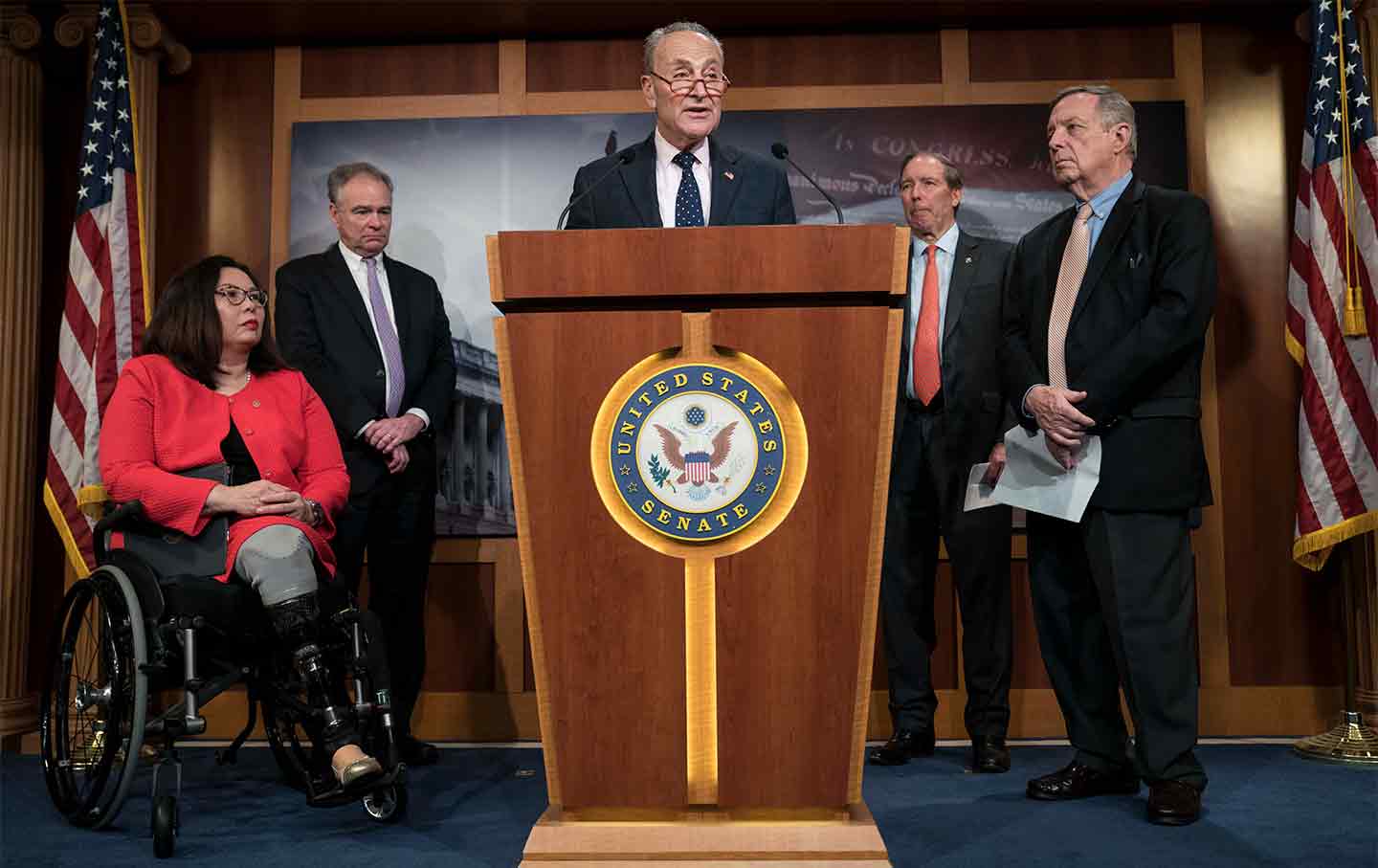
The media is currently obsessing over the "failure" of the US Senate to pass measures limiting executive war powers regarding Iran. This is the fourth time such a push has stalled, and the pundits are crying foul about a "broken system" or a "cowardly legislature."
They are wrong. Dead wrong. For a different perspective, see: this related article.
The Senate didn't fail. It performed exactly as intended. The "status quo" that activists want to dismantle isn't a glitch; it is the most sophisticated form of geopolitical hedging ever devised. While the headlines scream about Congressional impotence, the reality is that the US government has mastered the art of "Strategic Paralysis." By refusing to codify limits on the Commander-in-Chief, the Senate ensures that no adversary, including Tehran, can ever truly know where the red line sits.
The Myth of the War Powers Act
Everyone loves to cite the War Powers Resolution of 1973 as some holy grail of democratic oversight. It’s actually a toothless relic that has been ignored by every administration from both parties since its inception. Further analysis regarding this has been shared by The Washington Post.
The "lazy consensus" suggests that if we just passed a few more amendments or "closed the loopholes," the President would suddenly check with a committee before responding to a drone strike. This ignores the brutal reality of modern kinetic warfare. Decisions happen in seconds, not during a three-day floor debate in a chamber where half the members can’t agree on a lunch menu.
I’ve sat in rooms where policy is hammered out. The goal isn't "clarity." Clarity is a liability in international relations. If you tell an opponent exactly what you won't do, you’ve just handed them a roadmap for how to provoke you without consequence.
Congressional Cowardice is Actually Calculated Cover
Critics claim the Senate is "abdication its constitutional duty." Let’s look at the incentives.
Members of Congress do not actually want the responsibility of authorizing—or blocking—military action. Why? Because responsibility requires accountability. If they vote "Yes" and the war turns into a quagmire, they lose their seats. If they vote "No" and an American asset gets hit, they are labeled "soft on terror."
By "failing" to pass these measures for the fourth time, the Senate preserves its ability to complain from the sidelines regardless of the outcome.
- If the President strikes Iran: Senators can tweet about "executive overreach" to satisfy their base.
- If the President does nothing: They can lambaste him for "weakness."
This isn't a failure of democracy. It’s a high-stakes game of political survival where the prize is never having to say you were wrong.
The Iran Calculus: Uncertainty as Deterrence
Imagine a scenario where the Senate actually succeeded. Suppose they passed a ironclad law stating that the President cannot engage Iranian forces without a formal Declaration of War unless US soil is directly attacked.
Within forty-eight hours, the IRGC would be harassing tankers in the Strait of Hormuz with absolute impunity. They would know precisely how far they could push because the US legislative branch just drew a giant "Safety Zone" around Iranian provocations.
The current "failure" to limit war powers creates what I call the Volatility Premium.
Tehran has to calculate for the "Madman Theory." They don't know if the President will respond with a strongly worded letter or a Hellfire missile. That ambiguity is more effective at preventing a full-scale war than any piece of paper signed in DC. The Senate knows this. They won't admit it to their constituents, but they know that keeping the President’s leash loose is the only thing keeping the regional tension from boiling over into a catastrophic ground war.
The False Dichotomy of "War" vs "Peace"
The competitor's article treats "limiting war powers" as a step toward peace. This is a fundamental misunderstanding of the 21st-century conflict. We are no longer in an era of "War" or "Peace." We are in a state of Permanent Competition.
In this environment, the lines between cyber attacks, proxy skirmishes, and economic sanctions are blurred. Applying a 20th-century legislative framework to 21st-century "Gray Zone" warfare is like trying to play high-speed chess with the rules of checkers.
The Senate's repeated rejection of these measures is an admission that the old rules are dead. They are signaling that the Executive needs the flexibility to move in the shadows because the Senate is too slow, too partisan, and too leaked-prone to manage the nuance of the Middle East.
Why the "People Also Ask" Crowd is Wrong
If you look at what people are asking—"Why can't the Senate stop a war with Iran?"—you realize they are asking the wrong question.
The real question is: "Does the Senate actually want to stop it?"
The answer is a resounding no. They want the option to stop it when it’s politically convenient and the option to ignore it when it’s not.
The Industry Reality Check
- Expertise Check: Article II of the Constitution gives the President broad powers as Commander-in-Chief. Article I gives Congress the power to declare war. The tension between the two is intentional.
- Trustworthiness Check: The downside to this "Strategic Paralysis" is that it actually increases the risk of a miscalculation. When the rules are fuzzy, someone eventually crosses a line they didn't know existed.
- Authoritative Stance: Every major military engagement since WWII—Korea, Vietnam, Gulf War, Iraq, Afghanistan—has happened without a formal Declaration of War. The Senate "rejecting measures" is just theater for an audience that doesn't understand the script.
The Professional Grift of "Limiting Power"
There is a massive industry of NGOs and think tanks that thrive on the "Limit War Powers" narrative. They raise millions of dollars every time a vote like this comes up. They need the Senate to "fail" because if the Senate actually won, their fundraising model would collapse.
The senators themselves are in on the joke. They take the meetings, they sponsor the bills, and then they quietly ensure the bills die in committee or fail on the floor. It’s a performative cycle that keeps the donors happy and the status quo intact.
Dismantling the "Fourth Time's a Charm" Narrative
The media frames this fourth rejection as a sign of growing dysfunction. It's actually a sign of growing stability. The more the Senate rejects these measures, the more they codify the "New Normal."
This is the evolution of the American state. We are moving toward a model where the legislature handles the domestic purse strings and the Executive handles the global sword, with almost zero overlap. It’s a divorce of powers, not a balance of powers.
Stop waiting for the Senate to "reclaim its authority." They gave it away decades ago and they don't want it back. The responsibility is too heavy, the risks are too high, and the political rewards for actually governing are non-existent.
The Senate didn't lose a vote on Iran. They won a reprieve from accountability.
Stop looking for a legislative solution to a geopolitical reality. The "war powers" debate is a ghost. It’s a distraction designed to keep you looking at a voting scoreboard while the real decisions are made in windowless rooms at the Pentagon and the NSC. The system isn't broken. It’s working perfectly. You just don't like the output.
If you want to understand US-Iran policy, stop reading the Congressional Record. Start reading the deployments. The Senate has already left the building.