The sound is not a bang. It is a hum. It is the low, persistent vibration of a drone that hangs over the Litani River like a mechanical dragonfly, watching the movement of shadows. In Beirut, the hum is replaced by the frantic tapping of thumbs on glass screens as a nation waits for a notification that might mean they can finally unpack their suitcases. In Jerusalem, the hum is the white noise of a cabinet meeting where maps are spread across mahogany, and the ink of red arrows points toward a border that has been a scar for seventy-five years.
We talk about ceasefires as if they are pieces of paper. We treat them like legal filings or diplomatic chores. But a ceasefire is not a document. It is a breath. It is the moment when a mother in Kiryat Shmona stops checking the sky before she lets her child go to the playground. It is the moment a farmer in South Lebanon decides to plant a seed, betting his life that he will be there to harvest the fruit. Learn more on a connected issue: this related article.
Right now, that breath is being held.
The geography of this conflict is written in blood and topography. To the north, the jagged hills of Lebanon; to the south, the Galilee. In between sits the Blue Line, a border that isn't really a border, but a "line of withdrawal" established by the United Nations. It is a fragile thread holding back two of the most sophisticated and scarred military forces in the Middle East. More journalism by Associated Press highlights similar perspectives on this issue.
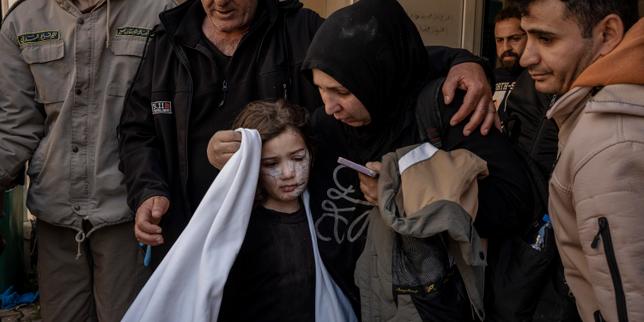
Consider the math of the misery. Thousands of rockets have crossed that line. Tens of thousands of people—on both sides—have become ghosts in their own countries, displaced, living in hotels or with relatives, watching their lives gather dust through the lens of a doorbell camera. This is the human cost that dry news reports omit. When we ask "Will they talk?", we are really asking if the math of war has finally become more expensive than the price of peace.
The obstacle to a handshake is not just history; it is a fundamental disagreement about the meaning of safety. For Israel, safety is the enforcement of UN Resolution 1701. They want Hezbollah pushed back, far beyond the Litani River, so that the threat of a cross-border raid—the nightmare of October 7th repeated in the north—is physically impossible. For Hezbollah, and by extension the Lebanese state, safety is the cessation of Israeli overflights and the return of disputed slivers of land like the Shebaa Farms.
It is a deadlock of "afters." Israel says: After you move back, we stop. Hezbollah says: After you stop, we consider moving.
Imagine two men standing in a narrow hallway, each holding a door shut against the other. Each man’s muscles are screaming. Each man is sweating. Neither wants to be the first to let go because he is certain the other will immediately charge through. To let go is an act of terrifying vulnerability.
Yet, the back-channel whispers are getting louder. Why? Because both sides are reaching the limits of their internal gravity.
In Israel, the pressure is domestic. A country cannot function indefinitely with its northern frontier turned into a ghost town. The economy feels the drag. The reservists, who have been called away from their tech jobs and their cafes for months on end, are weary. There is a limit to how long a society can remain on a total war footing before the gears begin to grind and spark.
In Lebanon, the situation is even more precarious. The country is not just at war; it is a country that has been hollowed out by economic collapse, a port explosion that shattered its heart, and a political system that is more of a suggestion than a reality. For Lebanon, a full-scale war with Israel is not just a strategic risk. It is an existential threat to the very idea of a functioning state.
The diplomats are the ones trying to grease the hinges of those doors in the hallway. They come from Washington and Paris, carrying briefcases full of "frameworks" and "guarantees." They talk about international monitoring forces. They talk about Lebanese Army deployments. They use words like "de-escalation" and "buffer zones."
But the diplomats are not the ones who have to live with the consequences if the guarantees fail.
There is a specific kind of silence that happens in the seconds before a storm breaks. That is where we are. The "ceasefire talks" aren't a formal sit-down in a grand hall in Geneva. They are a series of messages passed through intermediaries, a frantic game of telephone where a single mistranslation could lead to a localized strike, which leads to a retaliatory barrage, which leads to the very war everyone claims they are trying to avoid.
The core of the issue is Hezbollah’s tether to Gaza. For months, the leadership in Beirut has insisted that the northern front will not go quiet until the southern front does. This linkage is a steel cable. It means that the fate of a vineyard in the Galilee is tied to the fate of a tunnel in Rafah. It is a geopolitical knot that is maddeningly difficult to untie.
To believe in a ceasefire right now requires a leap of faith that most people in the region are no longer capable of taking. They have seen too many broken promises. They have seen "temporary" lines become permanent trenches.
Yet, there is a hidden force at play: the exhaustion of the earth itself. The land is tired of being scorched. The concrete is tired of being pulverized.
If the talks begin, they will start with small things. A pause in the drones. A pullback of a few kilometers. A return of a few hundred families. It won't be a grand peace treaty with flags and cheering crowds. It will be a series of grudging, suspicious steps taken by enemies who hate each other but realize they are currently drowning in the same sea.
The stakes are invisible until they aren't. They are invisible until a missile hits a school or a drone hits a command center. Then they become very visible, very fast. The tragedy of the Middle East is that it often takes a catastrophe to realize that the status quo was actually a luxury.
We watch the news for the "breaking" headline, but the real story is in the waiting. It’s in the eyes of the Lebanese grandmother who wonders if her olive trees will be there next month. It’s in the eyes of the Israeli father who wonders if he should sign a year-long lease in a city far from the border.
Negotiations are often described as a game of chess, but that’s wrong. Chess is logical. This is a game of poker played in a dark room with a loaded gun on the table. Everyone is bluffing, everyone is terrified, and everyone is waiting for someone else to blink.
The hum of the drone continues. It is a reminder that in the absence of a deal, the machinery of death remains on autopilot. It doesn't need a reason to keep spinning; it only needs a lack of a reason to stop.
The talks, if they happen, will be ugly. They will be filled with grandstanding and accusations. There will be moments where it seems like the whole thing has collapsed. But the alternative is a landscape where the hum of the drone is replaced by the roar of an inferno that no one can put out.
Peace is not the absence of conflict. It is the management of it. It is the agreement to argue with words instead of white phosphorus. As the diplomats shuffle their papers and the generals check their targets, the rest of the world waits for the hum to stop.
One day, hopefully soon, someone will take that first, terrifying breath. They will let go of the door. They will walk back from the edge, not because they have found a new friend, but because they have realized that the abyss has no bottom.
Until then, the suitcases stay packed by the door, and the sky remains a place of two things only: the sun, and the threat.