The floor of the cave is cold, but the silence is colder. For thousands of years, this limestone shelf in what we now call the Dordogne region of France was a hub of human noise. The crackle of reindeer fat in the fire. The scraping of flint. The rhythmic breathing of children huddled under furs. Then, around 14,500 years ago, the soundtrack of the Ice Age simply stopped.
The charcoal drawings of bison on the walls remained, but the hands that made them vanished. This wasn't a slow migration to greener pastures. It was a shattering.
When we talk about population collapses, we tend to look at them through the lens of spreadsheets and archaeological surveys. We see a line on a graph plummeting. We see "abandonment layers" in the soil. But a collapse is not a data point. It is a mother realizing there isn't enough willow bark to break her son’s fever because the trade routes to the south have been cut off by rising waters. It is the moment a village elder realizes he is the last person on earth who knows the song for the harvest, and there is no one left to teach.
History is a graveyard of these silences.
The Myth of the Steady Climb
We grow up believing in a narrative of inevitable progress. We imagine humanity as an unbroken chain, a steady march from the campfire to the moon. We think of our ancestors as a single, growing mass that occasionally hit a speed bump.
The truth is far more violent.
Human history is actually a series of jagged teeth. We boom, we overextend, and then we break. Between 5,000 and 7,000 years ago, Neolithic Europe underwent a catastrophic decline. In places like the British Isles and Scandinavia, the population didn't just dip. It cratered. Genetic evidence suggests that in some regions, the local population was almost entirely replaced by newcomers from the east because the original inhabitants had withered away to almost nothing.
Why? They were the victims of their own success. They had mastered the grain. They had built the first great settlements. But in doing so, they created a perfect petri dish for disaster. When you pack thousands of people and their livestock into a tight space, you aren't just building a city. You are building a laboratory for the plague.
Imagine a farmer named Elen. She lives in a timber-framed house. She has more food than her hunter-gatherer ancestors ever dreamed of. But she also has a cough that won't go away. The "black death" didn't start in the 1300s. A primitive form of Yersinia pestis was already stalking these early agriculturalists. They didn't have the words for bacteria. They only had the terrifying reality of watching their neighbors turn gray and cold within forty-eight hours.
The social contract dissolved. The grain stores rotted. The woods reclaimed the fields.
The Collapse of the Great Green
Move forward a few millennia and several thousand miles to the lowland jungles of Mesoamerica. The Maya didn't just disappear, despite what the sensationalist documentaries might suggest. But their civilization—the one of soaring pyramids and precise celestial mathematics—suffered a collapse so profound it changed the face of the continent.
By the 8th century, the city-state of Tikal was a titan. It was a metropolis of stone and water. But the climate was shifting. A series of prolonged droughts began to bake the landscape. This wasn't a sudden "Day After Tomorrow" event. It was a slow, agonizing grinding.
Consider the perspective of a stonemason working on a monument for the King. Every year, the rains come a little later. Every year, the king demands more sacrifices, more blood, and more monumental architecture to appease the gods of the sky. The mason is hungry. His children are small for their age. He looks at the massive temple he is building and realizes it is a tombstone for a living city.
The "invisible stakes" in these moments are always psychological. When a system fails, it doesn't just fail physically. It fails morally. The Maya didn't leave because they forgot how to farm. They left because they lost faith in the structures that governed their lives. They walked away from the pyramids and disappeared into the jungle, choosing the uncertainty of the wild over the certainty of a dying state.
The population of the central lowlands dropped by as much as 90 percent. Huge swaths of territory that had been manicured gardens and bustling markets became silent, emerald ghosts.
The Fragility of the Network
Modernity feels different. We have antibiotics. We have global logistics. We have the internet. We feel insulated from the cycles that buried the Neolithic farmers and the Maya.
But our complexity is our greatest vulnerability.
The ancient collapses were often local or regional. When the Greenland Norse vanished in the 15th century—huddled in their freezing halls as the climate cooled and the walrus ivory trade collapsed—the rest of Europe barely noticed. They were an isolated limb that turned gangrenous and fell off.
Today, we are a single organism.
Consider the "Late Bronze Age Collapse" around 1200 BCE. This is perhaps the most haunting parallel to our own era. The Mediterranean was a web of interconnected empires: the Hittites, the Mycenaeans, the Egyptians, the Canaanites. They traded tin, copper, gold, and grain. They were sophisticated. They were wealthy.
Then, in the span of a single generation, almost every major city in the Eastern Mediterranean was burned to the ground.
It wasn't one thing. It was a "perfect storm" of disasters—earthquakes, droughts, internal rebellions, and the mysterious "Sea Peoples" who arrived on ships like a biblical plague. Because these kingdoms were so reliant on one another for resources, the fall of one triggered the fall of the next.
If the Hittites couldn't get tin from the east, they couldn't make bronze. If they couldn't make bronze, they couldn't defend their borders. If they couldn't defend their borders, the grain shipments stopped. It was a domino effect of catastrophic proportions.
The survivors didn't just lose their wealth. They lost the ability to write. Literacy vanished from the Greek world for centuries. The people who lived among the ruins of the great palaces looked at the massive stones and believed they must have been built by giants, because they could no longer imagine a human society capable of such feats.
We call this a "Dark Age." But for the people living through it, it was simply the end of the world.
The Ghost in the Machine
We often ask: Could it happen to us?
The question is wrong. It is already happening, just in a way we don't recognize.
In the past, population collapse was usually driven by a rise in the death rate—plague, famine, war. Today, for the first time in human history, we are looking at a potential collapse driven by a decline in the birth rate. In dozens of nations, from Japan to Italy to South Korea, the population is not just aging; it is shrinking at an unprecedented speed.
This is a "soft collapse."
There are no burning cities. There are no marauding invaders. Instead, there are quiet schools. There are empty playgrounds. There are "ghost villages" where the only residents are in their eighties, waiting for a mail carrier who comes less and less often.
The human element here is a peculiar kind of loneliness. In the 14th century, the fear was that everyone would die. In the 21st century, the fear is that we will simply stop beginning.
We see the statistics about fertility rates, but we don't see the invisible stakes. We don't see the young couple in a 400-square-foot apartment in Seoul who looks at their bank account and their work schedule and realizes that a child isn't a blessing, but a financial impossibility. We don't see the slow erosion of the social fabric as the "intergenerational contract" thins out.
When the population of a species crashes, it usually happens because the environment can no longer support its current lifestyle. For the Maya, it was water. For the Neolithic Europeans, it was soil and sanitation. For us, the "environment" is our economic and social structure. We have built a world that is incredibly efficient at producing gadgets and incredibly hostile to producing people.
The Lesson of the Ruins
Nature does not care about our masterpieces.
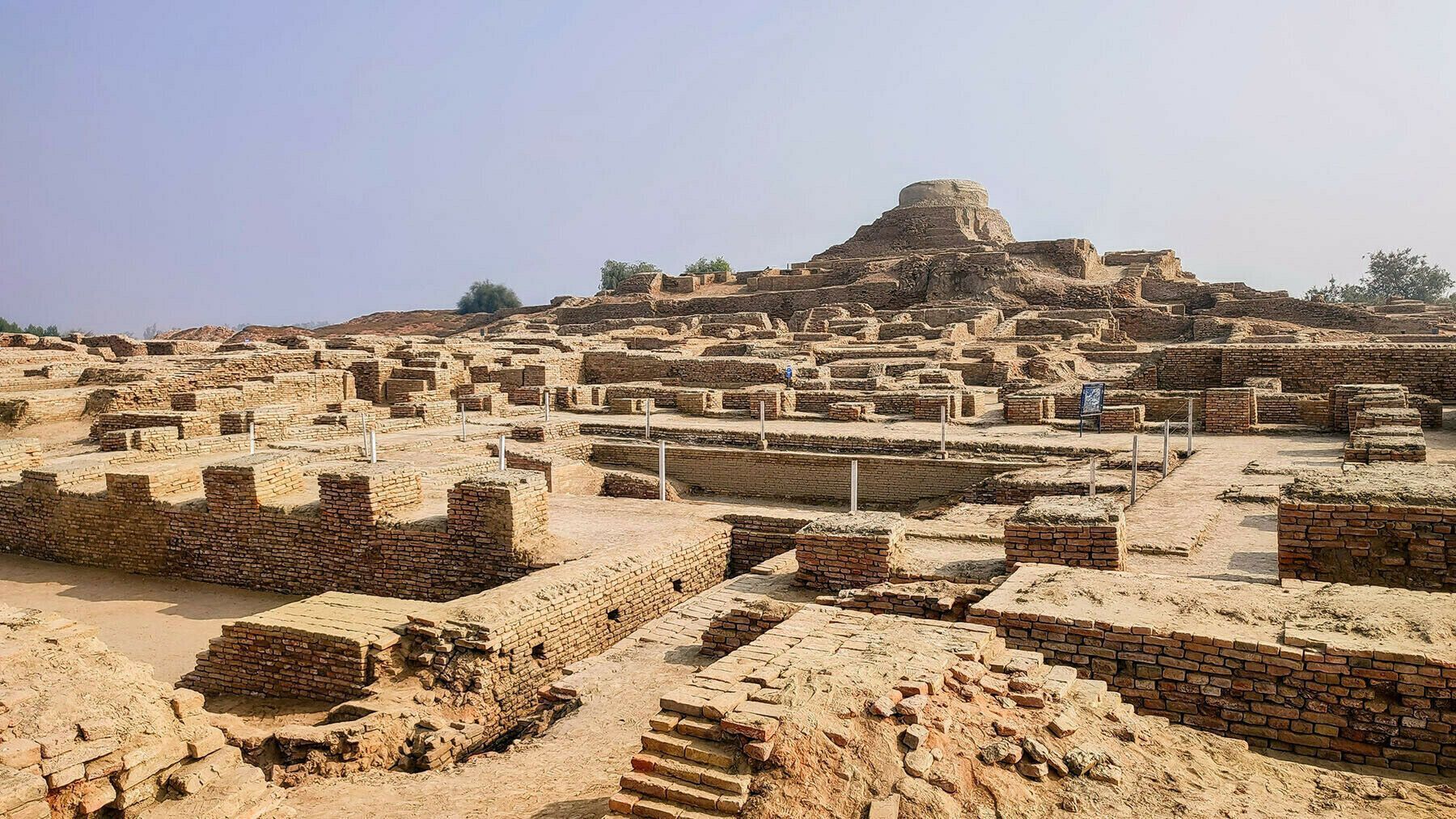
If you walk through the ruins of Angkor Wat in Cambodia, you see the roots of the banyan trees strangling the stone faces of gods. The trees are patient. They are indifferent. They represent the ultimate fate of any society that forgets its foundations.
The Angkorian Empire was the largest pre-industrial city in the world. Its water management system was a marvel of engineering. But when the climate shifted and the infrastructure became too complex to maintain, the city choked on its own ambition. The people didn't die all at once. They just slowly drifted away, leaving the temples to the jungle.
Collapse is rarely a cliff. It is a slope.
It is the moment you decide to ignore the crack in the dam because fixing it is too expensive. It is the moment you stop investing in the future because you are too busy trying to survive the present. It is the moment a society stops being a community and becomes a collection of individuals trying to grab what they can before the lights go out.
We look back at the people of the Bronze Age or the Maya and think of them as "ancient" or "primitive." We think their failures were a result of their ignorance. But they were just as smart as we are. They were just as resilient. They loved their children just as fiercely.
They simply ran out of margin.
Every civilization is a bet against entropy. We gamble that our systems, our stories, and our technologies can hold back the natural tendency of things to fall apart. For long stretches of history, we win that bet. We build cathedrals. We map the genome. We create art that moves the soul.
But the house always wins eventually.
The archaeology of the future will not find our tweets or our digital bank balances. They will find our "abandonment layers." They will find the plastic in the sediment and the strange, sudden thinning of the human record. They will wonder what it felt like to be alive in the years when the gears began to grind.
They will look at our ruins and see a reflection of their own fragility.
Humanity is a remarkably hardy weed. We have survived the Toba supervolcano, the Black Death, and the Great Frost. We will likely survive whatever comes next. But "humanity" is an abstract concept. The people who live through a collapse are not abstracts. They are individuals who have to decide what to do when the water stops running and the old songs are forgotten.
The silence of the cave in the Dordogne is a warning. It tells us that nothing is guaranteed. Not the city, not the state, not the future. The only thing we truly have is the thin, flickering flame of our connection to one another.
When that flame goes out, the jungle moves back in.
And it does so without making a sound.

.jpeg?width=1200&auto=webp&trim=37%2C0%2C37%2C0)