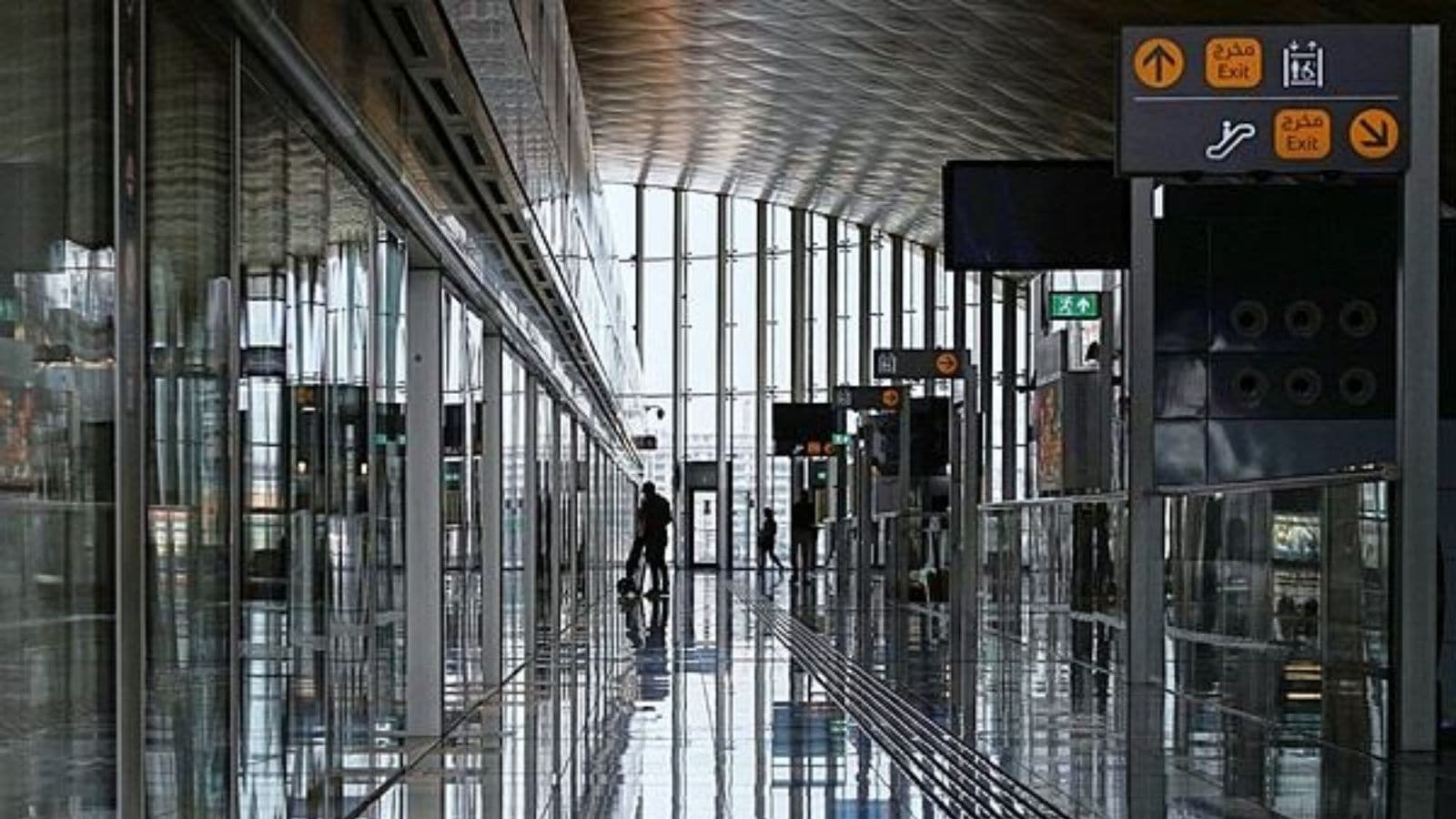
The "carnage" at Dubai International wasn’t a failure of logistics. It was a failure of expectation.
When a British couple spends 22 hours staring at a terminal wall, the media rushes to paint them as victims of a cold, mechanical system. They call it a nightmare. They use words like "stranded" and "abandoned." This narrative is a comfortable lie. It feeds the ego of the modern traveler who believes a $600 economy ticket entitles them to a friction-less existence regardless of the laws of physics or meteorology.
Dubai is one of the most complex transit hubs on the planet. When record-breaking rainfall—the kind that dumps a year’s worth of water in 24 hours—hits a desert city, the system breaks. It’s supposed to break. If it didn’t, it would be unsafe. The real story isn't the delay; it’s the hubris of the passenger who thinks their schedule matters more than the operational integrity of a global aviation network.
The Myth of the Innocent Traveler
Let’s be honest about what happened in that 22-hour window. Most people spent it complaining to underpaid gate agents who have zero control over the clouds. They stood in lines. They refreshed apps. They waited for a hand-out that was never coming.
I’ve spent fifteen years navigating logistics and high-stakes travel. I’ve been stuck in Istanbul during a coup and grounded in Tokyo during a typhoon. Here is the hard truth: If you find yourself waiting 22 hours for a solution, you failed to prepare. The average traveler treats a flight like a bus ride. They pack no contingencies, they carry no status, and they have no "Plan B." They rely entirely on the airline to be their parent, provider, and protector. When the airline inevitably fails—because airlines are businesses, not charities—the traveler collapses.
Logistics Are Not Magic
Dubai Airport (DXB) operates on a razor's edge of efficiency. On a normal day, it handles over 200,000 passengers. When a storm hits, that flow doesn't just slow down; it backs up like a blocked artery.
- Gate Congestion: Every plane stuck at a gate prevents another from landing.
- Crew Timing: Pilots and flight attendants have strict legal limits on how long they can work. A four-hour delay on the ground often means the crew "times out," and the flight is canceled because there is nobody left to fly it.
- Ground Handling: Flooded runways aren't just about water; they are about the electrical systems and the safety of the ground crew.
Critics point to the "lack of communication." This is a classic "lazy consensus" argument. What do you want them to tell you? "The weather is bad, and we don't know when it will stop"? They told you that. You just didn't like the answer. You wanted a specific time, a specific promise, and a guaranteed hotel voucher. In a mass-casualty event for schedules, those things don't exist.
The Status Quo is a Trap
The media loves the "helpless couple" trope because it generates clicks. It triggers a sympathetic response. But sympathy doesn't get you home.
The industry insider knows that the moment the word "carnage" starts appearing on Twitter, the traditional system is dead. The "standard procedure" for rebooking is now a lottery with 50,000 entrants. If you are standing in the line at the service desk, you have already lost.
Why You’re Doing It Wrong
- You Wait for Vouchers: A hotel voucher is a piece of paper that gives you the right to wait in another line at a hotel that is already full. Stop waiting for the airline to pay for your bed. Buy a room at the nearest available spot—even if it’s 30 miles away—and fight the insurance battle later.
- You Trust the App: Apps are the last to update during a crisis. By the time the "Canceled" notification hits your screen, the next three available flights are already booked by people who were watching the tail numbers on flight tracking software.
- You Lack "Interline" Knowledge: Most passengers don't know that airlines have agreements to put you on a competitor's flight. If you're stuck on Emirates, stop asking for an Emirates seat. Look for any carrier leaving the region and demand a shift.
The Cost of Cheap Connectivity
We have reached a point where air travel is too cheap for its own good. When you pay bottom-dollar for a long-haul connection through a hub like Dubai, you are participating in a high-volume, low-margin experiment.
The system works $99.9%$ of the time. But that $0.1%$ is the tax you pay for the privilege of crossing the globe for less than the price of a mid-range sofa. If you want a guarantee, fly private. If you want a safety net, buy high-tier travel insurance that includes independent "trip interruption" coverage.
Don't blame the "carnage" on the airport. Blame it on your own refusal to acknowledge the inherent fragility of global infrastructure.
How to Actually Surive the Next Meltown
If you want to avoid being the subject of a "stranded" headline, you need to change your operating manual.
1. The 2-Hour Rule
If a delay exceeds two hours and the weather isn't clearing, the "hub" is going to collapse. Do not wait for the announcement. Start booking a hotel on your phone immediately. You can always cancel it if the flight departs. If you wait until the flight is officially canceled, every room within 50 miles will be gone.
2. Physical Cash and Local SIMs
When the power goes out or the systems lag, your digital wallet is a brick. I’ve seen people go hungry in "world-class" airports because the credit card processors went down and they had no local currency.
3. Become Your Own Dispatcher
Use tools like FlightRadar24. If you see your incoming aircraft is diverted to another country, stop listening to the gate agent who says "we hope to depart soon." They are reading a script. The plane isn't there. Move to your backup plan.
The Hard Truth About Duty of Care
Airlines have a "Duty of Care," but in a massive weather event, that duty is a secondary priority to safety and clearing the tarmac. The law says they have to feed you and house you. It doesn't say they have to do it well, and it doesn't say they have to do it now.
The British couple in the news complained about the lack of blankets. While that’s uncomfortable, it’s not a human rights violation. It’s an inconvenience. We have become a culture that confuses discomfort with trauma. Waiting in a multi-billion dollar air-conditioned terminal with Wi-Fi and running water is not "carnage." It is a boring Wednesday.
The Geography of Entitlement
There is a specific irony in Western travelers complaining about the infrastructure in Dubai. This is a city built from the sand up to handle extremes. If this level of rain hit London or New York, the airports wouldn't just be delayed; they would be closed for a week.
Dubai’s "carnage" was actually a masterclass in recovery. They moved millions of gallons of water and cleared a backlog of thousands of flights in a matter of days. The fact that you had to sleep on a floor for one of those days is a statistical irrelevance.
Stop Asking "Why Me?"
When the system breaks, the "People Also Ask" section of Google fills up with queries like "How do I get compensation for a weather delay?"
The answer is usually: You don't.
Most jurisdictions (including the UK/EU under specific conditions) exempt airlines from paying out for "extraordinary circumstances." Weather is the ultimate "get out of jail free" card for carriers. Instead of looking for a payday, look for a way out.
The people who got home first weren't the ones complaining the loudest. They were the ones who realized the airline was underwater—literally—and took control of their own movement. They hopped on trains, they booked buses to neighboring cities, or they simply checked into a nice hotel and waited for the storm to pass with a drink in their hand instead of a frown on their face.
The next time you see a headline about "airport carnage," remember that the chaos isn't in the terminal. It’s in the minds of the people who forgot that flying is a miracle, not a mandate.
You aren't stuck in traffic. You are traffic.
Stop waiting for a handout and start navigating. The airline doesn't owe you a perfect life; they owe you a seat on a plane when it’s safe to fly. Everything else is on you.
Next time, pack a sweater, bring some backup cash, and grow up.