The headlines are designed to make you itch. "ER visits for tick bites hit decade highs." The subtext is clear: the woods are a biological minefield, every deer tick is a tiny grim reaper, and your only hope is a fluorescent-lit waiting room filled with coughing strangers.
It is a narrative built on fear, medical inefficiency, and a fundamental misunderstanding of risk.
If you find a tick on your leg and your first instinct is to drive to the Emergency Room, you aren't just wasting your Saturday. You are part of a systemic failure in health literacy. The surge in ER visits doesn't reflect a more dangerous environment; it reflects a population that has forgotten how to perform basic triage and a medical system that profits from your anxiety.
The Myth of the Emergency
The Emergency Room is for arterial bleeds, strokes, and crushed limbs. It is not a removal service for external parasites.
When you check into an ER for a tick bite, you are often waiting six hours to see a resident who will do exactly what you could have done with a pair of $5 tweezers: pull it out. The "highest level in nearly a decade" isn't a victory for public health surveillance. It is a blinking red light indicating that primary care is inaccessible and that the average person has been conditioned to treat a bug bite like a gunshot wound.
Let’s be precise. A tick bite is a potential exposure, not an immediate infection. Even in "hot zones" for Borrelia burgdorferi (the bacterium that causes Lyme disease), the tick usually needs to be attached for 36 to 48 hours before transmission occurs. If you find a tick that is flat, unengorged, and crawling, your risk is effectively zero. If it’s attached but you just got back from your hike, the risk is still negligible.
Yet, we see thousands of people clogging acute care corridors because they’ve been told that "early intervention" means "immediate panic."
The Tweezers Are Mightier Than The Triage Nurse
The "lazy consensus" pushed by mainstream health outlets suggests you should "consult a professional" immediately. This is bad advice wrapped in a layer of liability-dodging.
By the time you drive to the hospital, check in, and get seen, you have given that tick more time to secrete its saliva into your bloodstream. The most "professional" thing you can do is remove the tick the second you see it.
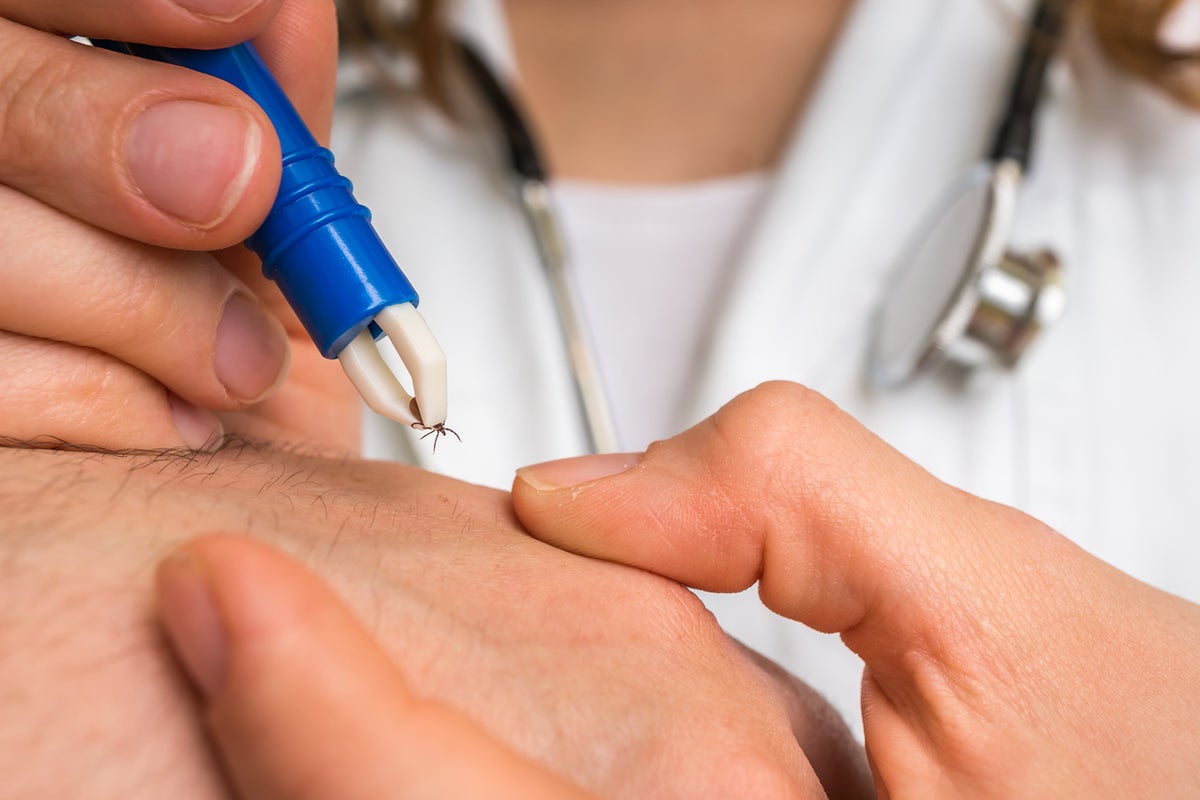
- Use fine-tipped tweezers.
- Grasp the head as close to the skin as possible.
- Pull upward with steady, even pressure.
- Clean the area with rubbing alcohol.
That’s the entire "procedure" for which hospitals will bill you upwards of $1,200. I have seen patients wait in an ER lobby for four hours with a tick in their arm, effectively incubating a disease while they waited for a "professional" to do what their grandfather did with his bare hands.
If the head breaks off and stays in the skin, stop digging. It’s like a splinter. Your body will push it out or heal over it. The infectious material is in the midgut and salivary glands, which you’ve already removed. Digging into your flesh with a needle in a frantic attempt to get the "head" out causes more localized infection than the tick ever would have.
The Prophylaxis Trap
One of the reasons people flock to the ER is the "magic pill" myth—the idea that a single dose of doxycycline will erase their mistakes.
The CDC guidelines do allow for a single 200mg dose of doxycycline if the tick was a deer tick, was attached for over 36 hours, and you’re within 72 hours of removal. But here is the nuance the news reports skip: the "single dose" is not a suit of armor. It reduces the risk of Lyme, but it doesn't do anything for Anaplasmosis, Babesiosis, or Powassan virus.
By hyper-focusing on getting that one pill from an ER doctor, patients develop a false sense of security. They stop monitoring for the actual symptoms that matter—fever, joint pain, and the erythema migrans rash—because they think they’ve been "cured."
We are over-prescribing single doses of antibiotics to the worried well while failing to educate them on the long-tail symptoms of the co-infections that a single pill won't touch. It is lazy medicine for a lazy patient base.
The Geography of Fear
The media loves a "spreading" map. They show the "invasion" of the Lone Star tick or the expansion of the black-legged tick as if these insects are an invading army.
Ticks aren't "invading." We are moving into their living rooms. Suburban sprawl has created the perfect "edge habitat" where deer, mice, and humans coexist in a cramped, suburban ecosystem. If you live in a house with a manicured lawn that backs up to a woodlot, you are living in a tick factory.
The contrarian truth? You don't need to fear the deep woods. You need to fear your own backyard.
Most people catch Lyme while gardening or playing fetch with their dog, not while trekking through the backcountry. Yet, these same people will douse themselves in DEET for a camping trip and then walk barefoot to their mailbox through tall grass.
The False Promise of Tick Testing
If you want to see a laboratory scientist roll their eyes, ask them to test a tick you pulled off your leg.
Many "innovative" companies will charge you $100 to mail them a dead tick and tell you what diseases it was carrying. This is the ultimate "anxiety tax." Even if the tick tests positive for Lyme, it doesn't mean it infected you. Conversely, if the tick tests negative, you might have been bitten by another one you never saw.
The results of a tick test should never dictate clinical treatment. If you have symptoms, you treat the symptoms. If you don't have symptoms, a positive tick test is just a piece of paper that makes you lose sleep. It is data without utility—the worst kind of information.
Reclaiming Rationality
We have commoditized the "tick bite" into a crisis. We have turned a routine part of being an outdoor-dwelling mammal into an expensive medical event.
The increase in ER visits isn't a sign that ticks are winning; it's a sign that we are losing our ability to assess risk. We have replaced "check your skin" with "check into the hospital." We have replaced "know the symptoms" with "demand a script."
The solution isn't more ER capacity or better "awareness" campaigns that show terrifying close-ups of arachnids. The solution is a return to basic self-reliance.
Buy a pair of tweezers. Keep a bottle of isopropyl alcohol in your cabinet. Learn what a bullseye rash actually looks like (and realize that 20% of Lyme cases never get one). Understand that a fever in July is Lyme disease until proven otherwise.
Stop treating the ER like a walk-in clinic for your neuroses. If the tick is out, the "emergency" is over. The rest is just waiting, watching, and being a rational adult.
Put the car keys down. Get the tweezers. Get back to your life.