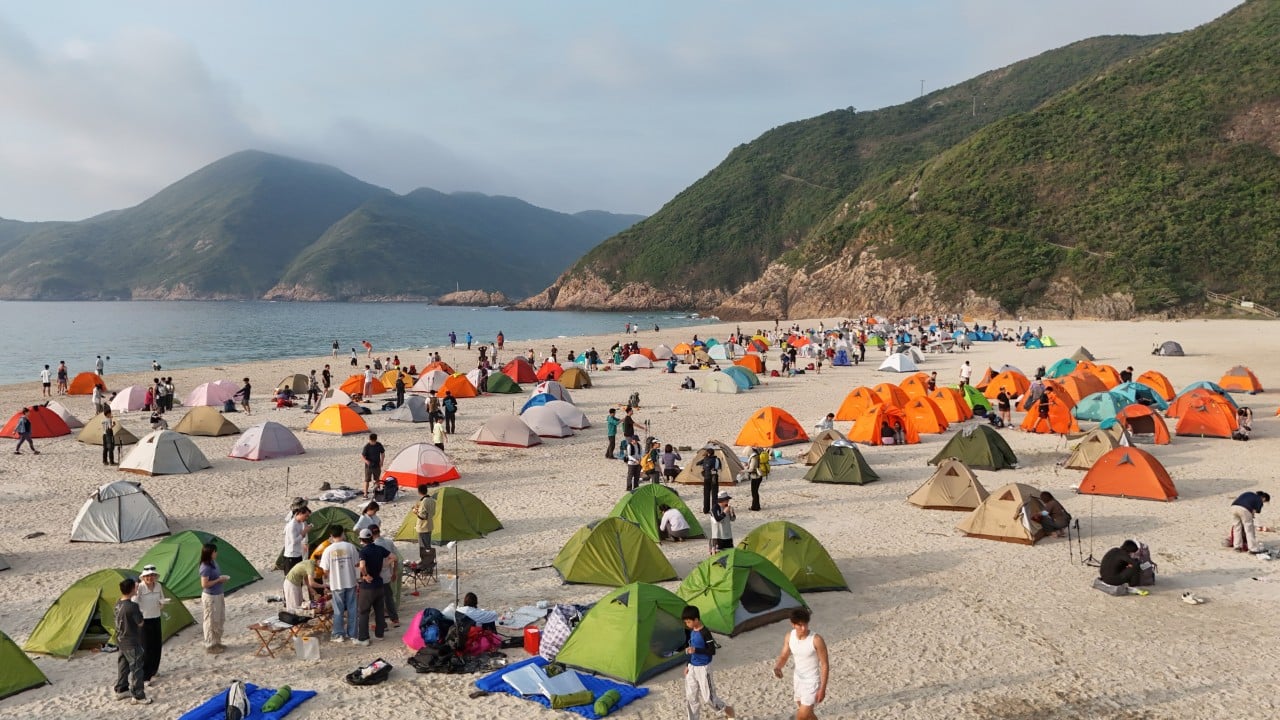
Every time a three-day weekend or holiday period rolls around, the media descends upon Hong Kong's Country Parks and outlying islands. They capture photos of overcrowded ferries, litter-strewn trails, and exhausted hikers queuing on Lantau Peak. The reaction from academics, environmentalists, and policymakers is as predictable as the crowd itself. They demand a top-down ecotourism policy. They insist on stricter government oversight, centralized zoning, and a heavy-handed bureaucratic framework to manage the sheer volume of tourists.
They are completely wrong.
The demand for a top-down policy is not a solution. It is an admission of failure masquerading as strategic vision. I have seen companies blow millions on government-mandated tourism initiatives that look brilliant on PowerPoint slides but collapse the moment real people enter the environment.
Let us dismantle the conventional wisdom right now.
The problem is not that Hong Kong lacks a top-down ecotourism policy. The problem is that Hong Kong relies on an outdated, free-for-all access model combined with abysmal infrastructure design. Adding more government layers will simply guarantee that bureaucrats dictate where you hike, how much it costs, and what you are allowed to see.
Let us look at the actual mechanics of the Golden Week surge.
The Flawed Premise of Centralized Control
The primary argument in the mainstream media is that overcrowding during peak holiday periods requires a centralized planning body to dictate tourist behavior. The assumption is that if a government agency sets strict quotas, assigns specific trails to specific groups, and mandates educational signage, the environment will magically heal itself.
This assumption relies on a fundamental misunderstanding of human behavior and urban-rural interaction.
Imagine a scenario where the government cordons off the MacLehose Trail and requires a government-issued permit to hike on Sunday. What happens to the people who are denied the permit? Do they suddenly stay home? No. They cram into the neighboring trails that do not require permits, causing hyper-localized devastation in those areas instead.
When you centralize, you do not solve the problem. You merely relocate the crowd.
Experience shows that top-down management in natural parks leads to two inevitable outcomes: bureaucratic bloat and the degradation of the visitor experience. When a regulatory body takes over a trail network, they build fences, construct concrete pathways, and install massive metal gates to control the flow.
In doing so, they destroy the very wilderness they claim to protect. A concrete trail is not ecotourism. It is a paved road for pedestrians.
Let us define our terms before we go any further. Ecotourism is not taking a selfie next to a water buffalo. It is responsible travel to natural areas that conserves the environment, sustains the well-being of the local people, and involves interpretation and education.
True ecotourism requires a local, organic approach, not a rigid, five-year plan drafted by a committee in an office tower in Admiralty.
Let's talk about the so-called experts for a second.
They sit in air-conditioned university offices, far away from the dirt and sweat of the trailheads. They see an Instagram post of an overflowing trash bin on Lamma Island, and their immediate response is to call for a task force. They want a committee. They want a policy paper.
They do not understand the sheer logistical nightmare of enforcing a top-down policy in a subtropical climate.
When you have a sudden burst of thirty thousand visitors on a single Sunday, a government task force cannot deploy resources quickly enough. The bureaucratic machinery is too slow. The paperwork takes weeks. By the time a committee approves a budget for additional trash bins, the holiday is over, the damage is done, and the bins are not even needed anymore.
True resilience requires agility. Agility comes from the private sector and from decentralized local communities.
Consider the case of the Ngong Ping cable car and the hiking trails on Lantau. The mainstream narrative argues that too many people hike up the Wisdom Path, leaving the trail eroded and dirty. The proposed solution is to restrict access.
But what if you allowed local operators to run pop-up food and beverage stalls that also function as trash collection points?
What if you offered hikers a free return cable car ticket if they brought down a full bag of trash?
That is an incentive-driven model. It uses the natural drive of human behavior to solve an environmental issue, rather than relying on a police officer to hand out fines.
We must also dismantle the idea that the natural world is a museum piece to be kept away from the public. Nature is resilient. Nature is self-healing, provided the underlying structural framework is sound.
Dismantling the Common Questions
When you look at the discussion surrounding Hong Kong's environmental tourism, a few recurring questions pop up on search engines and public forums. Let's tackle these inquiries without the sugarcoating.
Question: Should Hong Kong limit the number of hikers in country parks to prevent environmental damage?
The blunt truth: Restricting numbers does not fix environmental damage; it just penalizes the people who want to enjoy the outdoors. The damage to the trails is not caused by the number of footprints. It is caused by poor trail maintenance, inadequate drainage design, and a lack of proper waste disposal facilities.
If a million people walk on a well-designed, graded, stone-paved, and properly drained trail, the environmental impact is minimal. If a thousand people walk on an eroded, muddy slope, the slope collapses. Blaming the hikers for the erosion is like blaming the rain for a leaky roof. The issue is the infrastructure, not the amount of water coming down.
Question: Is ecotourism the solution to the Golden Week crowding?
It is actually the exact opposite. Ecotourism is designed for small, specialized groups. It functions on a premium, low-volume, high-value model. Applying an ecotourism label to the tens of thousands of mainland Chinese tourists and local residents who flood the trails during a holiday is a category error.
These are mass tourists. Trying to force mass-market tourism into an ecotourism box is a recipe for disaster. The moment you try to manage tens of thousands of people through a green policy, you end up with heavy-handed regulations that turn a fun hike into a compliance exercise.
Question: Does the government need to invest more in tourist infrastructure?
Yes, but not the kind they are building now. They do not need more visitor centers that sit empty for 360 days a year. They need dynamic crowd management, smart bins that compress waste, and high-frequency ferry schedules that adjust based on real-time data.
The Economics of Free Access
Why does the Golden Week crush happen in the first place? It happens because access to Hong Kong's nature is completely free and completely unrestricted.
When you make a resource free, consumption skyrockets. This is the classic economic principle of the Tragedy of the Commons. Because there is no marginal cost to entering the country parks, there is no incentive for hikers to self-regulate or choose off-peak times.
I have seen operators and park rangers struggle to handle the influx of thousands of hikers arriving simultaneously at 10:00 AM. It creates a bottleneck at the trailheads, stresses the local transit networks, and overwhelms the trash collection systems.
What is the alternative?
We need to introduce dynamic pricing to our natural attractions. This does not mean charging an exorbitant fee that prices locals out of their own backyards. It means a nominal congestion fee during peak holiday periods, with the proceeds going directly to trail maintenance and local community services.
Imagine paying a five-dollar or ten-dollar fee to hike on a holiday morning. This minor financial friction would instantly separate the casual walker from the serious hiker. It would spread the arrival times over the course of the day, reducing the morning bottleneck.
Critics argue that charging for nature is elitist. Let's deconstruct that argument. The current system, where the middle class can afford to take time off and travel, while the working class must endure overcrowded, unmaintained, and dangerous trails during their only days off, is the definition of elitist.
A dynamic pricing model democratizes the experience by ensuring that everyone gets a safe, clean, and uncrowded trail.
Battle Scars from the Front Lines of Tourism
I have spent over a decade working in the travel and hospitality sector across Asia. I have watched companies and municipalities blow millions on well-intentioned, government-mandated tourism schemes that look brilliant on PowerPoint presentations but collapse the moment real people enter the environment.
Let us examine a real-world parallel. In the early 2010s, a regional government in Japan implemented a highly restrictive, top-down policy to manage the influx of tourists at a sacred mountain trail. They required hikers to register weeks in advance, assigned them to specific groups with guides, and banned independent walking.
The result?
The independent, adventurous travelers abandoned the mountain. The guided groups moved too slowly, left behind a massive amount of trash because the guides could not monitor everyone, and the local businesses that relied on independent travelers suffered.
The mountain did not get cleaner. It became a highly regulated tourist trap.
The same fate awaits Hong Kong if it follows the advice of the experts who demand top-down ecotourism policies. You cannot regulate human movement through a spreadsheet.
Let's look at the mechanics of the current Hong Kong Country Park system. The Agriculture, Fisheries and Conservation Department (AFCD) does a commendable job maintaining the trails given their limited budget. However, their hands are tied by rigid civil service procurement rules and slow bureaucratic processes.
If you give the government more control, you are giving them the power to restrict access, increase fees without improving services, and stifle any organic innovation in the tourism sector.
The Unconventional Blueprint for Real Change
To fix the crowding and protect the environment, we must take the opposite approach to what the experts recommend. We must move away from top-down regulation and move toward decentralized, market-driven management.
Here is the exact blueprint you need to implement right now.
1. Decentralize the Trail Experience
Stop funneling every single tourist to the same three peaks. Hong Kong has over 400 kilometers of hiking trails. The information boards at the MTR stations should display real-time crowd data for different trails.
If Lantau Peak is at 200 percent capacity, the system should direct hikers to the less-traveled paths in the New Territories.
This is not a top-down mandate. It is a decentralized, information-driven nudge. People choose to go where they see the shortest lines. Give them the data, and the market will balance itself.
2. Implement Real-Time Data Collection
We do not need more rangers with clipboards. We need automated foot-traffic sensors placed at strategic points along the major trails.
This technology already exists and costs a fraction of the price of building a new visitor center. The data can be fed directly into a public app, allowing hikers to see exactly how crowded a trail is before they leave their homes.
If a trail is overcrowded, the app can offer a discount voucher for a nearby ferry or restaurant, effectively siphoning people away from the bottleneck.
3. Privatize the Waste Management
The government is terrible at cleaning up after large crowds during holidays. They rely on fixed-schedule pickups that cannot adapt to unexpected spikes in volume.
The solution is to contract waste management out to private operators who are incentivized to keep the trails clean. If a private operator fails to keep a specific section of the trail free of litter, they lose their contract.
4. Adjust the Transportation Supply
The bottleneck on outlying islands is not the trail itself; it is the ferry. The transport companies operate on a fixed schedule, ignoring the surges of mass tourism.
The government should allow dynamic ferry licensing, where operators can deploy extra vessels during peak hours and charge higher fares to cover the extra operational costs.
This allows the market to absorb the demand naturally without creating massive lines at the piers.
Stop Waiting for the Government to Save You
The experts are waiting for a bureaucratic savior that does not exist. They believe that a piece of paper, a new committee, or a zoning ordinance will stop the Golden Week crush.
It will not.
The only thing that stops a crowd is better infrastructure, better information, and the right economic incentives.
You do not need a new layer of government. You need to dismantle the barriers that prevent the market from solving the problem itself.
Stop trying to fix nature with rules. Build better trails, share the data, and let the people find their own path.