The geopolitical commentariat is losing its collective mind over a headline that should have been laughed out of the room. An Iranian lawmaker recently declared that Tehran is drawing up a mechanism to collect transit fees from ships passing through the Strait of Hormuz. The immediate reaction from regional analysts was predictable panic. They whipped out charts of global oil supply, recalculated insurance premiums, and warned of an impending energy stranglehold.
They are missing the entire point.
Iran cannot monetize the Strait of Hormuz. The threat of a maritime tollbooth is not a masterstroke of economic warfare; it is a confession of financial desperation and legal illiteracy.
Geopolitics watchers love to treat the chokepoint as a giant valve that Tehran can turn at will to squeeze the West. But treating a choke point like a private turnpike requires two things Iran completely lacks: the legal right to do so under international maritime law, and the economic leverage to enforce it without destroying its own remaining trade lifelines.
Let us dismantle the lazy consensus and look at the hard mechanics of maritime transit.
The Transit Passage Illusion
The fundamental flaw in the "Iran will tax the Gulf" narrative rests on a misunderstanding of how international waters work. Commentators look at a map, see that the shipping lanes clip Iran’s territorial waters, and assume ownership equals control. It does not.
The legal framework governing the strait is governed by the United Nations Convention on the Law of the Sea (UNCLOS). While Iran has signed but not ratified the 1982 convention, the rules of transit passage have achieved the status of customary international law.
- Transit Passage vs. Innocent Passage: Under transit passage, ships enjoy the freedom of navigation solely for the purpose of continuous and expeditious transit through the strait. Coastal states cannot suspend this passage, nor can they impose taxes, tolls, or arbitrary fees simply for passing through.
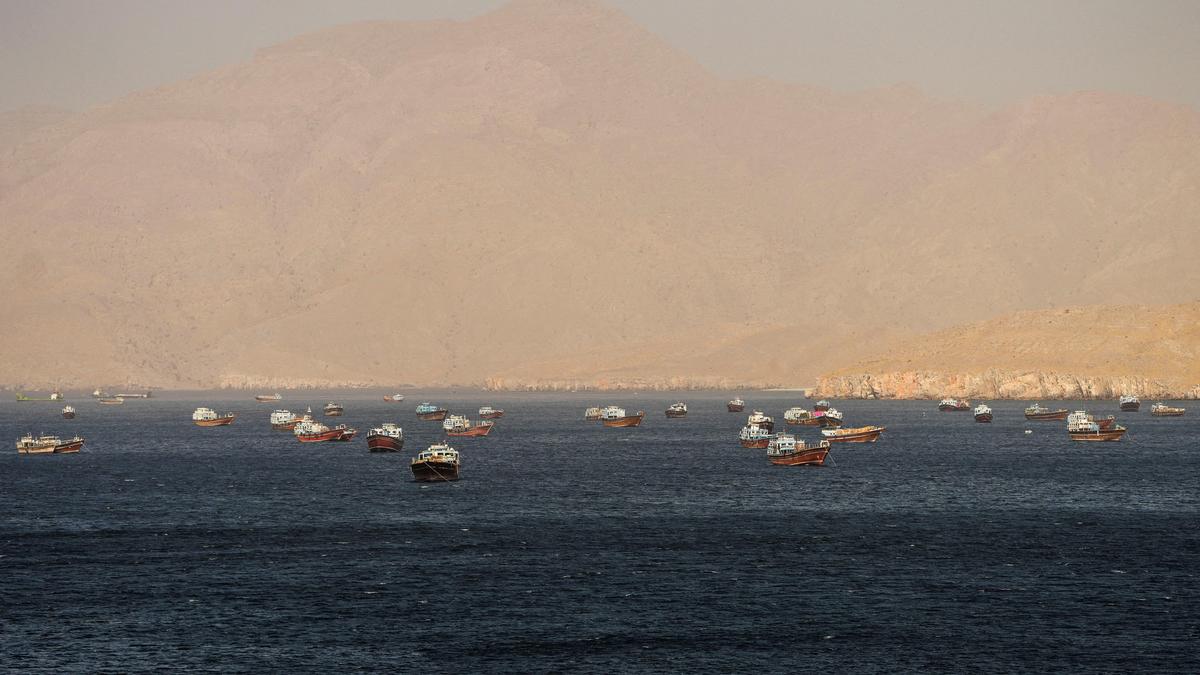
- The Territorial Overlap: The strait is narrow—roughly 21 miles wide at its tightest point. The inbound and outbound shipping lanes are each two miles wide, separated by a two-mile buffer zone. These lanes cross into both Iranian and Omani territorial waters.
If Iran attempts to formalize a tariff mechanism, it is not implementing a policy; it is committing an act of state piracy under international law. The moment Tehran demands a credit card swipe for a container ship to pass, it breaches the customary legal baseline that keeps global trade moving.
Imagine a scenario where a state decides to tax the air corridors above its territory for commercial flights that do not land there, outside of agreed international civil aviation treaties. The system collapses because the global community immediately reroutes or defies the mandate with military escorts. The maritime world operates on the exact same logic.
The Economic Suicide of Enforcement
Let’s play devil’s advocate. Assume Tehran decides it does not care about UNCLOS. It sets up the mechanism. What happens on day one?
To collect a fee, you must have the leverage to stop those who refuse to pay. This means the Islamic Revolutionary Guard Corps Navy (IRGCN) would have to physically intercept, board, or threaten commercial vessels that bypass the payment system.
I have tracked maritime risk metrics for over a decade. I have watched shipping lines absorb massive insurance hikes during periods of regional tension. But there is a massive difference between pricing in the occasional drone strike and factoring in a permanent, state-mandated shakedown.
If Iran enforces a toll, three things happen instantly, none of which benefit Tehran:
- The Internationalization of the Escort System: The U.S. Navy’s Fifth Fleet, alongside coalition forces under initiatives like the International Maritime Security Construct (IMSC), would pivot from passive monitoring to active, aggressive convoy escorts. Commercial vessels would simply form lines behind guided-missile destroyers and dare the IRGCN to fire the first shot.
- The Destruction of Insurance Viability: Marine insurers at Lloyd's of London would not tell clients to pay the Iranian fee. They would declare the entire Arabian Gulf a war risk zone, skyrocketing premiums to the point where shipping lines would demand alternative routes, forcing a structural shift in global logistics that permanently cuts the region out.
- The Retaliation on Iranian Shipping: Iran still relies heavily on the maritime commons to export its sanctioned crude via the "ghost fleet" and to import essential goods. If Tehran breaks the rules of free navigation, its own vessels lose the implicit protection of those same rules once they leave the Gulf.
The Misunderstood Premise of Energy Leverage
The standard "People Also Ask" query regarding this topic usually looks something like this: Can Iran close the Strait of Hormuz and crash the global economy?
The premise is flawed because it assumes the global energy market is static. The threat of a Hormuz closure or taxation scheme mattered immensely in 1980. It matters significantly less today.
Look at the structural shifts in regional energy infrastructure. Saudi Arabia operates the East-West Pipeline (Petroline), which can pump five million barrels of crude per day from its eastern oil fields directly to the Red Sea port of Yanbu, completely bypassing Hormuz. The United Arab Emirates runs the Abu Dhabi Crude Oil Pipeline, capable of moving 1.5 million barrels per day to Fujairah, outside the Persian Gulf.
Combined, these bypass routes can handle a massive chunk of the region's daily export capacity.
Furthermore, the biggest casualty of an Iranian tollbooth would not be Washington or London. It would be Beijing.
China is the primary buyer of Iranian illicit crude. China also relies heavily on the steady flow of oil from Saudi Arabia, Iraq, and Kuwait through that exact same waterway. By disrupting the strait with a commercial fee structure, Iran would be directly taxing its only major geopolitical patron and economic lifeline. Do the analysts honestly believe Beijing would quietly pay a premium to Tehran for the privilege of keeping the lights on in Shanghai?
A History of Empty Bureaucracy
This is not the first time an Iranian politician has floated this idea. In 2019, and again during various periods of economic sanctions tightening, backbenchers in the Majlis (the Iranian parliament) proposed charging "environmental fees" or "security taxes" on foreign vessels.
Every single time, the proposal died in committee. Why? Because the technocrats running Iran’s Ministry of Foreign Affairs and the Port and Maritime Organization understand what the hardline politicians do not: it is an unworkable bureaucratic fantasy.
To run a toll system, you need a clearinghouse. You need banking infrastructure. You need a way to process international currency transfers. Thanks to SWIFT sanctions and maximum pressure financial restrictions, Iran is fundamentally severed from the global financial architecture. How does a global shipping giant like Maersk or MSC pay an Iranian fee? They cannot. Doing so would violate US treasury sanctions, triggering catastrophic secondary sanctions that would wipe billions off their market caps.
The mechanism is dead before the ink even dries on the legislation.
The Real Move Behind the Rhetoric
Stop analyzing this statement as an actual economic policy. It is theater designed for domestic consumption and weak leverage in back-channel negotiations.
When an Iranian MP makes headlines promising to tax Western shipping, they are signaling defiance to a domestic base exhausted by hyperinflation and economic mismanagement. It is an attempt to project strength from a position of profound structural weakness.
The actionable takeaway for maritime operators and energy traders is clear: ignore the legislative noise out of Tehran. Do not price in a permanent "Hormuz Transit Tax" into your long-term cost models. Focus instead on the real risks—asymmetric sabotage, cyber interference with GPS signaling, and localized mine-laying operations. These are the tools of a state that knows it cannot control the water legally or economically, so it settles for making it dangerous in short, sharp bursts.
The Strait of Hormuz remains an open global highway, not because Iran wills it, but because Iran lacks the power to turn it into a toll road.