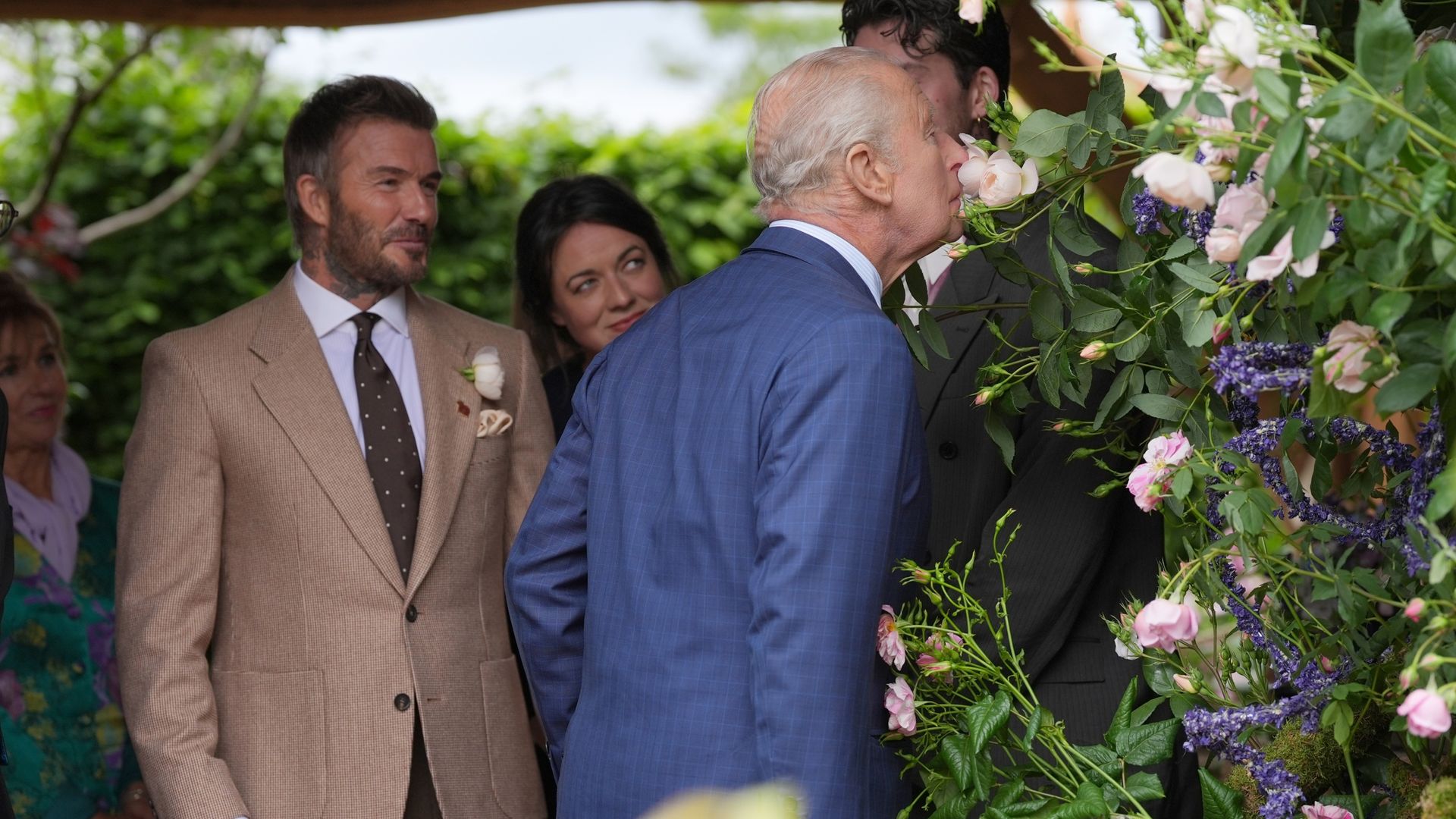
The convergence of the British Monarchy and global celebrity assets at the Royal Horticultural Society (RHS) Chelsea Flower Show represents a highly engineered exercise in institutional validation and brand equity alignment. While superficial media commentary reduces the interaction between King Charles III, Queen Camilla, and Sir David Beckham to a casual social encounter, a structural analysis reveals a sophisticated deployment of soft power. This interaction operates at the intersection of three distinct strategic imperatives: the modernization of royal public diplomacy, the institutionalization of the Beckham commercial portfolio, and the socio-economic curation of environmental sustainability.
To understand the mechanics of this high-value cultural intersection, one must move past the aesthetics of horticulture and analyze the underlying transactional framework that governs high-profile public appearances.
The Tri-Centric Stakeholder Framework
The event relies on a precise alignment of three distinct entities, each seeking to optimize specific institutional or personal metrics.
[RHS / Chelsea Flower Show] <--> [The Royal Family] <--> [The Beckham Portfolio]
         |                                |                        |
(Institutional Authority)       (Constitutional Continuity)  (Global Commercial Reach)
1. The Royal Family (The Anchoring Asset)
For the Monarchy, appearances at elite heritage events fulfill a core function of constitutional and cultural continuity. However, the modern strategic challenge is the mitigation of institutional obsolescence. By intersecting with high-net-worth cultural icons, the Royal Family cross-pollinates its traditional authority with contemporary global relevance. This creates a secondary layer of public engagement that appeals to demographics detached from traditional institutional loyalty.
2. The Beckham Portfolio (The Commercial Enterprise)
Sir David Beckham’s presence operates under a clear diversification strategy. As a global brand transitioning from athletic excellence to enterprise-level commercial stewardship, Beckham requires integration into spaces that signal permanence, civic responsibility, and high-status philanthropy. Alignment with royal patrons elevates a personal brand from a commercial commodity to a quasi-diplomatic institution, shielding the underlying portfolio from market volatility and changing consumer trends.
3. The Royal Horticultural Society (The Operational Platform)
The RHS acts as the structural venue that legitimizes the exchange of cultural capital. For the RHS, the dual endorsement of the Monarchy and a global sports icon maximizes media real estate value. This exposure directly drives ticket yields, membership acquisition, and corporate sponsorship retention, funding the organization's broader scientific and educational initiatives.
The Mechanics of Public-Facing Philanthropy
The core narrative driving the interaction at the Chelsea Flower Show centered on shared interests in apiculture, rural preservation, and mental health initiatives supported by the King’s Foundation. Evaluating this through a strategic lens reveals a clear methodology for converting soft influence into measurable public goodwill.
The exchange of home-produced honey between Sir David Beckham and King Charles III serves as a prime case study in symbolic value signaling. This exchange carries specific strategic utility:
- De-escalation of Elitism: Horticultural events can carry a reputational risk of elitism or exclusivity. Introducing accessible, ground-level ecological practices like beekeeping shifts the narrative toward universal environmental stewardship.
- Validation of Strategic Interests: King Charles III has maintained a multi-decade focus on organic farming and biodiversity. Beckham’s public alignment with these themes validates the King's personal platform, framing it as a forward-thinking environmental framework rather than an eccentric hobby.
- Brand Humanization: Complex institutional entities require accessible entry points for the public. A tangible, low-stakes interaction centered on shared rural hobbies provides a highly effective vector for humanizing larger organizational structures.
Measuring Cultural Capital Transfer
The primary objective of these curated appearances is the mutual transfer of specific brand attributes between participants. This process operates through a multi-stage distribution model.
Initial Asset Placement (Chelsea Flower Show Venue)
       │
       ▼
Symbiotic Attribution (Shared Photographic and Narrative Real Estate)
       │
       ▼
Audience Cross-Pollination (Combining Royalists, Horticulturists, and Sports/Fashion Demographics)
       │
       ▼
Equity Solidification (Long-Term Brand Elevation for All Parties)
The transfer mechanism relies heavily on visual symmetry. Images of the King and Queen interacting with a globally recognized style icon generate high-utility media assets. These assets are then distributed across distinct communication channels to achieve specific results.
The Royal Family secures a direct pipeline to younger, digitally native audiences who consume content through channels dominated by celebrity culture. Concurrently, the Beckham brand secures a level of prestige that cannot be purchased through standard advertising campaigns. This relationship increases the long-term value of both brands, enhancing their resilience against reputational risks.
Operational Constraints and Strategic Vulnerabilities
While the execution of high-level cultural alignments yields clear benefits, the strategy is subject to strict operational boundaries and structural risks. Failure to manage these variables can lead to diminishing returns or active brand dilution.
The Authenticity Bottleneck
The primary vulnerability in any high-profile alignment is the public detection of superficiality. If the shared interests—such as sustainability or community development—are perceived as purely transactional marketing tactics, the audience response shifts from validation to cynicism. This risk is managed by tying public appearances to long-term, verifiable commitments, such as official ambassadorships within the King’s Foundation or sustained financial support for RHS initiatives.
Saturation and Dilution
Cultural capital is subject to basic laws of supply and demand. If the Monarchy engages too frequently with commercial celebrities, the scarcity value of royal endorsement drops significantly. Conversely, if a celebrity aligns with too many disparate institutional causes, their personal brand loses its narrative focus. Maintenance of value requires strict curation and a low frequency of high-impact engagements.
Audience Disconnect
The demographic profile of the Chelsea Flower Show is traditionally affluent, older, and focused on heritage. Introducing a global pop-culture figure risks alienating this core base if the integration is handled poorly. The selection of Sir David Beckham—a figure who has successfully transitioned into tailored tailoring, British heritage style, and traditional rural pursuits—minimizes this friction by matching the aesthetic expectations of the core RHS audience.
Systemic Evaluation of Cultural Alignment Success
To determine whether an investment in a high-profile public alignment delivers a positive return on objectives, organizations must track indicators across three distinct dimensions.
| Evaluation Metric | Primary Data Source | Strategic Indicator |
|---|---|---|
| Narrative Control | Global media sentiment analysis | Shift from superficial lifestyle reporting to serious commentary on institutional relevance and environmental impact. |
| Demographic Expansion | Digital engagement and membership inquiries | Measurable growth in younger, urban demographics interacting with RHS and royal channels post-event. |
| Portfolio Valuation | Long-term commercial sponsorship yields | Increased institutional backing from premium corporate partners seeking association with the elevated brand ecosystem. |
Future Alignment Blueprint
To maximize the yield of future high-profile institutional integrations, planners must move away from reactive event-based planning and transition to a sustained, programmatic approach.
The immediate next step requires formalizing informal interactions into structural initiatives. The shared focus on rural craftsmanship and sustainable agriculture displayed at the Chelsea Flower Show should be converted into a joint educational program managed by the King's Foundation and backed by the Beckham corporate ecosystem. This initiative must feature clear, measurable milestones: funded apprenticeships in traditional rural crafts, measurable increases in urban green space development, and verifiable carbon-mitigation metrics across participating estates.
By anchoring high-status personal interactions within a structured corporate social responsibility framework, the participating entities convert temporary media visibility into permanent institutional equity. This approach ensures that future public appearances serve as operational progress reports for a deeper, ongoing collaboration, rather than isolated PR exercises.