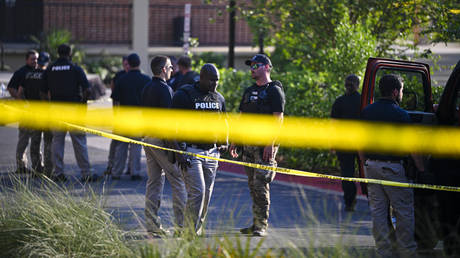
The headlines are predictable. They are designed to trigger a specific, reflexive outrage. When a report surfaces stating that Black children are eight times more likely to be strip searched by police than their white peers, the media machine grinds into its usual gear. Activists demand immediate bans. Politicians offer performative apologies. The "lazy consensus" settles on a single, binary diagnosis: systemic bias.
But if you stop screaming for five minutes and look at the actual mechanics of urban policing, you realize we are arguing about the wrong thing. We are obsessed with the outcome—the disparity—while completely ignoring the algorithm of deployment that makes that outcome inevitable. If you found value in this post, you might want to look at: this related article.
The focus on "bias" suggests that if we just "train" the prejudice out of individual officers, the numbers will magically level out. They won't. The disparity isn't just a symptom of human cruelty; it is the logical result of a data-driven policing model that has been broken for thirty years.
The Geography of Probable Cause
Policing is a game of density. If you concentrate thousands of officers in specific postcodes based on "predictive mapping" or historical crime data, you are creating a feedback loop. For another angle on this development, refer to the recent update from The Guardian.
I have spent years watching departments pour resources into "high-intensity" zones. When you increase the frequency of stops in a specific square mile, the probability of a search—and by extension, a strip search—skyrockets. If that square mile is 80% Black due to decades of housing policy, the "eight times more likely" stat is baked into the cake before the first patrol car even starts its engine.
The competitor articles love to treat these searches as if they happen in a vacuum, as if police are hunting for children in affluent suburbs to strip search. They aren't. They are hunting in the same five blocks they’ve been hunting in since 1994.
We aren't seeing a spike in "racism"; we are seeing the peak efficiency of a Saturation Model.
The False Idols of Safeguarding
Every time a report like this drops, the immediate "solution" offered is "better safeguarding." It is a hollow term that means nothing in the heat of a street-level interaction.
The current legal framework for a strip search—at least in the UK context often cited—requires "reasonable grounds" to suspect the person is concealing something like drugs or a weapon. Here is the uncomfortable truth: Reasonable grounds is a subjective elastic band.
In a "low-crime" area, an officer might see a teenager's nervousness as a sign of social anxiety. In a "high-crime" area, that same twitch is documented as "evasive behavior," which triggers a search, which triggers the discovery of a "smell of cannabis," which leads to the station, which leads to the strip search.
By the time the child is in the room being told to take off their clothes, the "safeguarding" has already failed. The system has already processed them.
The real problem isn't that the search is "unfair"; it’s that the search is often useless.
The Efficiency Myth: High Cost, Low Yield
If you want to dismantle the status quo, stop talking about feelings and start talking about ROI.
Police departments defend these tactics by claiming they "get weapons off the street." But look at the yield rates. In a staggering number of these intrusive searches, nothing is found. We are trading the psychological well-being of an entire generation of Black youth for a "hit rate" that would get a private-sector analyst fired in a week.
From a purely operational standpoint, strip-searching children is a high-risk, low-reward maneuver. It creates:
- Total Community Alienation: You lose the witnesses you need for actual murder investigations.
- Legal Liability: Millions are paid out in settlements that could have funded actual detective work.
- Institutional Trauma: You are training children to view the state as a predator, ensuring the cycle of friction continues for another thirty years.
The "contrarian" take isn't that the searches are fine; it’s that they are a lazy shortcut for officers who don't have the resources or the intelligence-gathering capabilities to do real investigative work. It is easier to "shake down" a neighborhood than it is to dismantle a supply chain.
The Myth of the "Bad Apple" Fix
We love the "Bad Apple" narrative because it’s easy to understand. Fire the guy, solve the problem.
It’s a lie.
If you replace every officer in a "biased" precinct with a social worker, but you keep the same Productivity Targets, the results will eventually converge. Policing is governed by quotas, even when departments claim they don't have them. They are called "performance indicators" or "activity levels."
When an officer's career progression depends on "proactivity," they will take the path of least resistance. The path of least resistance is the "stop and search" of vulnerable populations in over-policed areas.
We are asking the wrong questions. "Why are Black children searched more?" is a question that invites a circular debate about sociology. The better question is: "Why is the strip search still the primary tool for a police force that claims to be 'intelligence-led'?"
The Digital Fingerprint of Bias
We are moving into an era of AI-driven policing, and this is where the "eight times" statistic becomes truly dangerous.
Machine learning models are trained on historical data. If the historical data says Black children are searched more often, the AI will conclude that Black children should be searched more often to "optimize" crime prevention. We are digitizing the prejudices of the 1980s and calling it "Innovation."
If we don't disrupt the logic of the strip search now, we are going to see these disparities encoded into the very code of the city. It won't be an officer’s "gut feeling" anymore; it will be a "risk score" generated by an algorithm that the officer isn't allowed to question.
Stop Reforming, Start Deleting
The "consensus" wants more oversight. They want more "appropriate adults" in the room. They want body cameras on.
Oversight doesn't stop the trauma; it just records it in 1080p.
The only way to fix the disparity is to raise the threshold of legality to a point where a strip search of a minor is a rare, high-level event requiring a superintendent's sign-off before it happens, not a post-hoc justification written in a notebook.
We have normalized the extraordinary. A strip search is one of the most significant infringements on bodily autonomy the state can perform. Treating it as a routine "tactical option" in the war on drugs is a strategic failure.
The "disparity" isn't an accident. It is the intended output of a system that prioritizes "activity" over "outcome."
If you want the numbers to change, you have to stop the search. Not just for some, but for the vast majority of cases where "reasonable suspicion" is nothing more than a localized hunch backed by a badge.
The report says Black children are eight times more likely to be searched. I say the police are eight times more likely to use a child's body to hide their own lack of actual evidence.
Stop looking at the kids. Start looking at the spreadsheets.