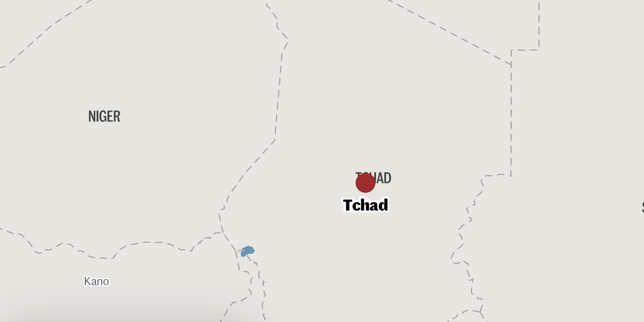
The recent violence in Eastern Chad resulting in at least 42 fatalities exemplifies a recurring failure in state-led conflict mediation and resource governance. This incident is not an isolated anomaly but the outcome of a predictable friction between sedentary agriculturalists and nomadic pastoralists within a landscape characterized by diminishing natural capital and weak central administrative reach.
The Economic Drivers of Communal Conflict
Conflict between agrarian and pastoralist groups in this region functions as a zero-sum game dictated by resource scarcity. The causal chain is identifiable:
- Environmental Degradation: Climate variability in the Sahelian-Saharan borderlands reduces the net primary productivity of rangelands.
- Spatial Competition: As grazing land contracts, pastoralist groups shift their transhumance routes southward and eastward, encroaching upon lands utilized by sedentary farmers.
- Institutional Vacuum: Formal legal frameworks governing land tenure are frequently superseded by informal, overlapping, or customary claims. When state authority fails to provide a credible dispute resolution mechanism, parties revert to extra-legal violence as a means of enforcing property rights.
This creates a self-reinforcing feedback loop. Violence destroys productive assets, including livestock and crops, which further increases the value of surviving resources, thereby raising the stakes for subsequent disputes.
The Cost Function of Governance Failure
The Chadian state’s inability to maintain a monopoly on the legitimate use of force in peripheral zones creates a security deficit. From an analytical perspective, this is a failure of centralized resource management. The state manages security through a reactive model—deploying forces after lethal thresholds are crossed—rather than a proactive model based on predictive conflict mapping.
Predictors of Escalation
- Temporal Synchronization: Conflict probability spikes during the harvest season. Pastoralist movement frequently overlaps with the presence of crops in fields, turning mobile capital (livestock) into a direct threat to fixed capital (crops).
- Armament Proliferation: The availability of illicit small arms reduces the threshold for escalation. Minor tactical grievances rapidly transform into high-fatality engagements when the marginal cost of lethal action is lowered by hardware availability.
- Information Asymmetry: In the absence of early-warning systems, local communities operate on worst-case scenario assumptions regarding the intentions of neighboring groups.
The Mechanism of Communal Insecurity
When analyzing the 42 reported deaths, one must differentiate between the proximate trigger and the structural cause. A specific altercation—such as a stolen cow or a vandalized field—is merely the catalyst. The underlying variable is the breakdown of the "coexistence equilibrium."
Historically, this equilibrium was maintained through traditional mediation councils. These councils operated on a principle of social debt, where conflicts were resolved through inter-tribal arbitration and compensation. The decline of these mechanisms coincides with the centralization of state power, which failed to effectively replace traditional systems with functional judiciary or administrative alternatives.
The resulting structure is a state with nominal sovereignty but practical irrelevance in the regulation of rural economic life.
Limitations of Current Interventions
State-level responses often focus on "stability" through military presence. This approach ignores the economic foundations of the conflict. Military intervention increases the cost of violence temporarily but does not resolve the competition for land and water.
True systemic mitigation requires a shift from military containment to land-tenure reform. Without clear, enforceable mapping of pastoralist corridors and agricultural zones, the overlap—and the subsequent conflict—remains mathematically inevitable.
Strategic Forecast and Required Actions
The trend line for conflict intensity in Eastern Chad is positively correlated with climate-driven resource depletion. Without radical policy adjustment, current patterns suggest an increase in both the frequency of skirmishes and the fatality counts per event.
Implementation of Spatial Regulation
The priority for regional authorities must be the establishment of fixed, protected corridors for transhumance that are legally codified and socially accepted by both sedentary and nomadic leadership. This reduces the surface area of potential friction between the two economic systems.
Decentralized Arbitration
The state should formalize the authority of local conflict-resolution committees, integrating traditional mediators into the formal legal hierarchy. This creates a bridge between informal social norms and state-backed legal enforcement, allowing for the mediation of disputes before they reach the point of lethal escalation.
Resource Investment
The development of deep-borehole water infrastructure in strictly pastoralist zones would diminish the necessity for migratory herds to enter agriculturally dense areas. By shifting the spatial distribution of water, the state can effectively re-engineer the geography of competition, creating a more sustainable equilibrium between the two distinct production systems.



